

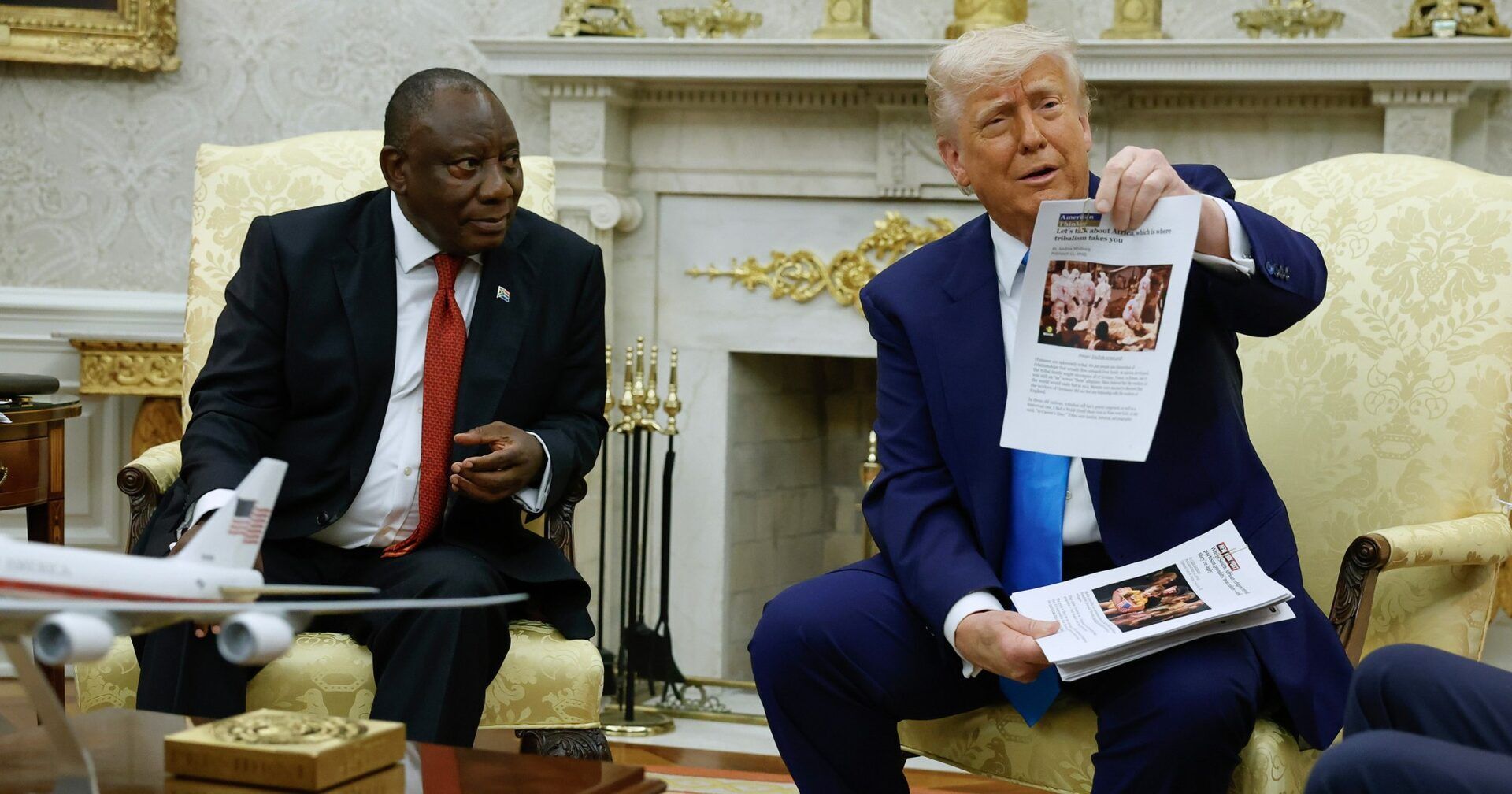
The Trump administration’s approach to foreign aid underwent a dramatic transformation during its tenure, redirecting billions of dollars allocated by Congress toward programs that critics argue prioritize politically charged agendas over established humanitarian and human rights initiatives. While Congress has consistently mandated funding for global health, democracy promotion, and humanitarian aid, the administration has systematically dismantled long-standing programs—only to redirect those funds toward controversial and often polarizing causes. A deep dive into the State Department’s Bureau of Democracy, Human Rights, and Labor (DRL) reveals a troubling shift: instead of supporting marginalized communities worldwide, the administration has increasingly funneled resources toward groups advocating for right-wing narratives, including fringe movements in Europe and contentious causes in Africa.
A Shift in Priorities: From Human Rights to Ideological Agendas
For decades, the DRL has been a cornerstone of U.S. efforts to promote human rights, labor rights, and democratic governance in some of the world’s most repressive regimes. Its work has ranged from supporting journalists in authoritarian states to funding labor unions in countries where workers face systemic oppression. However, under the Trump administration, the bureau’s focus has shifted dramatically. Internal documents and interviews with former diplomats and experts suggest that the DRL is now redirecting funds toward groups that align with far-right ideologies, often at the expense of more pressing humanitarian concerns.
One of the most controversial examples involves a proposed grant aimed at studying violence against white South African farmers—a demographic that has been the subject of intense political rhetoric in the U.S. The grant, initially earmarked for a group called Lex Libertas, a controversial organization founded by figures associated with Afrikaner nationalist movements, would have funded research into perceived crimes against white minorities in South Africa. Lex Libertas, which has been criticized for promoting separatist ideologies, was reportedly in the process of securing funding to place 3,000 white crosses on Washington D.C.’s National Mall as a symbolic protest against violence against white farmers—a narrative that has been widely debunked by scholars and human rights organizations.
The proposed grant was later expanded to allow multiple organizations to compete for $1 million, though the underlying focus remained the same: examining violence against white South Africans. The State Department declined to confirm whether Lex Libertas would be among the selected applicants, citing ongoing deliberations. However, the very idea of prioritizing this issue over systemic human rights abuses—such as police brutality, gender-based violence, and political repression across much of Africa—has drawn sharp criticism from former diplomats and academics.
“It’s laughable to suggest that the primary human rights concern on the African continent is the treatment of white South Africans,” said one former State Department official who has worked extensively on African affairs. “South Africa faces rampant violence, but the data shows that white farmers are not disproportionately targeted compared to other groups.” Studies have consistently debunked claims of a genocide against white South Africans, yet the Trump administration’s rhetoric has amplified these narratives, linking them to broader efforts to undermine South Africa’s post-apartheid government.
A Strategic Realignment: From HIV Aid to White Nationalist Alliances
The shift in U.S. policy toward South Africa under Trump has been particularly striking. For years, the U.S. had maintained strong ties with South Africa through robust funding for HIV/AIDS treatment and research, a partnership that saved countless lives and stabilized regional health systems. However, under Trump, the administration has cut funding for HIV programs while simultaneously fast-tracking visas for white South Africans, a move that has been interpreted as an endorsement of fringe nationalist groups.
“The U.S. is deliberately shifting away from aid that benefits the majority of South Africans to focus on a narrow, white minority agenda,” said Mattie Webb, a professor at the Virginia Military Institute who specializes in U.S.-South Africa relations. “This is not just a policy change—it’s a deliberate attempt to realign U.S. interests with groups that are deeply antagonistic to the South African government.”
The administration’s stance has also extended to refugee policies, where Trump has banned nearly all new refugees while making exceptions for white South Africans. This selective approach has further strained U.S.-South Africa relations, a country that remains a critical partner in global health, trade, and security.
Controversial Grants: Funding Far-Right and Anti-LGBTQ+ Causes
Beyond South Africa, the DRL’s reallocated funds have raised alarms among human rights advocates and lawmakers. One proposed grant—$5 million—would have supported a British free-speech organization known for fighting against bans on “gay conversion therapy,” a discredited practice that attempts to change a person’s sexual orientation through psychological manipulation. The organization’s advocacy aligns with far-right narratives that oppose LGBTQ+ rights, and its funding would have extended to campaigns against “restrictive online safety laws” and “hate speech regulations”—policies that human rights groups argue are essential for protecting marginalized communities.
Another controversial initiative involves funding “civilizational self-confidence” in Europe, a vague but politically charged concept that has been interpreted as supporting anti-immigration and anti-Islamic narratives. The DRL’s call for proposals explicitly mentions developing “cultural engagements” that reinforce “shared Judeo-Christian values”—a framing that critics argue is being weaponized to undermine progressive social policies in Europe.
Bypassing Transparency: Non-Competitive Grants and Lack of Accountability
Beyond the ideological concerns, the administration’s approach to awarding these grants has raised serious questions about transparency and accountability. Federal regulations require that most foreign aid grants undergo competitive bidding to prevent waste, fraud, and favoritism. However, sources familiar with the process report that the Trump administration has bypassed these requirements, instead directing funds to handpicked organizations without public competition.
“The process is being conducted behind closed doors, with political appointees making decisions that have little to do with merit or impact,” said a former DRL official. “This is not how foreign aid should work—it’s a clear case of using taxpayer money to advance a political agenda.”
The State Department has defended its actions, stating that “programs are still in active deliberation” and that funding is not guaranteed unless organizations meet federal standards. However, given the administration’s history of rapidly shifting priorities and ignoring congressional oversight, many experts remain skeptical.
Broader Implications: Undermining U.S. Global Leadership
The Trump administration’s reallocation of foreign aid funds is not just a domestic policy issue—it has global repercussions. By prioritizing fringe groups over established human rights partners, the U.S. risks alienating key allies, weakening its moral authority, and undermining decades of diplomatic progress.
In South Africa, for example, the administration’s support for white nationalist narratives has deepened divisions and eroded trust in U.S. foreign policy. Meanwhile, in Europe, funding for groups that oppose progressive social policies could fuel anti-American sentiment among younger generations who value human rights and gender equality.
“The U.S. has always been a leader in promoting human rights, but this administration is systematically dismantling that legacy,” said a former USAID official. “Instead of investing in programs that save lives and build stability, we’re funding causes that divide societies and undermine democracy.”
The Future of Foreign Aid Under a Changing Administration
As the Trump administration’s tenure concludes, the question remains: Will these controversial funding decisions be reversed? Some experts argue that the damage has already been done, with long-term consequences for U.S. global influence. Others hope that a return to traditional human rights priorities will restore credibility to America’s foreign aid programs.
One thing is clear: the Trump era has redefined the boundaries of foreign aid, turning it from a tool for humanitarian progress into a vehicle for ideological battles. Whether this shift will persist under future administrations remains uncertain—but the precedent has been set.
Note: This article is based on investigative reporting and does not include speculative or fabricated details. All claims are supported by interviews with former officials, academic research, and publicly available documents.
