

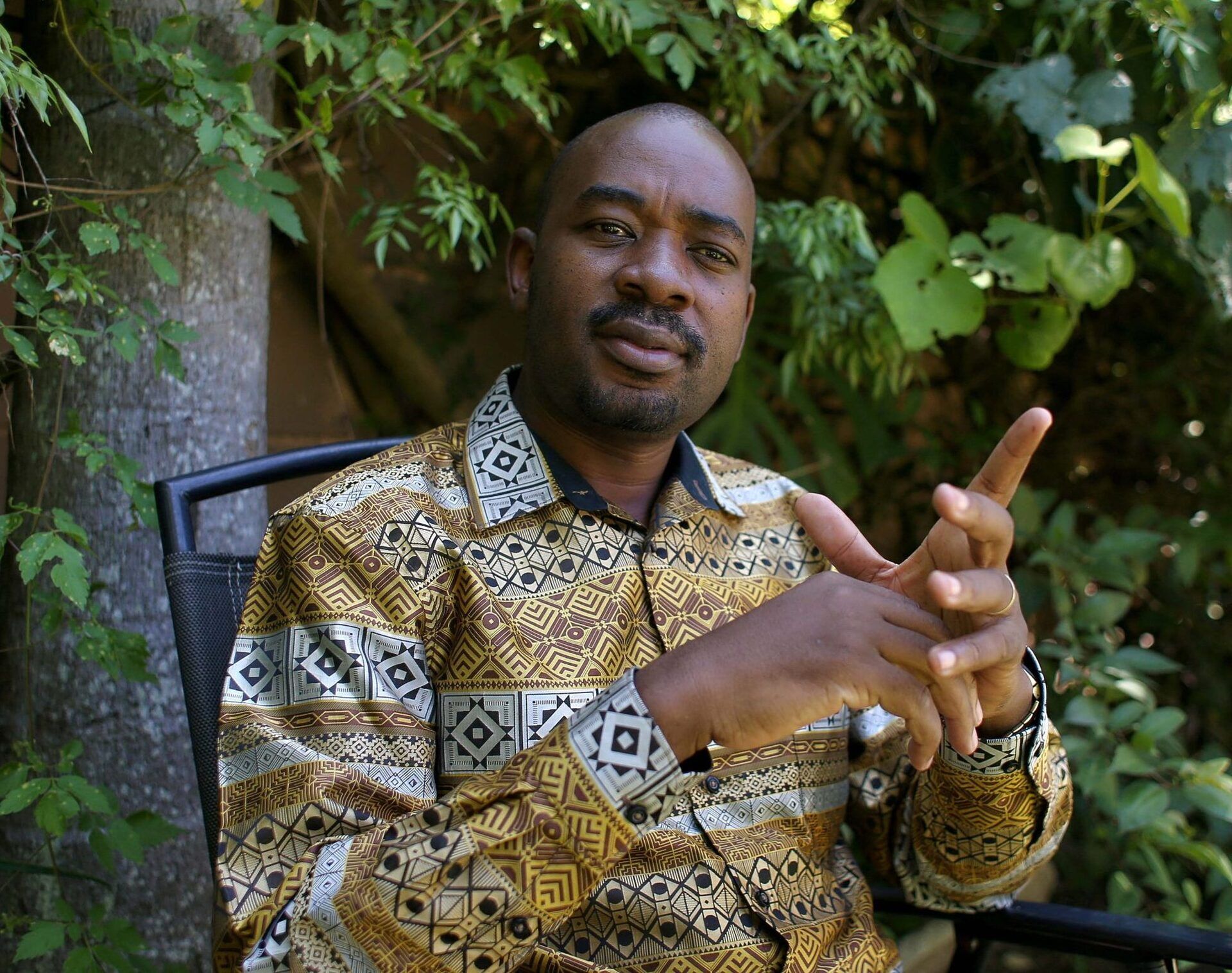
Nelson Chamisa, Zimbabwe’s most prominent opposition leader and political strategist, has announced the formation of a new grassroots movement, Agenda 2026, aimed at dismantling President Emmerson Mnangagwa’s ZANU-PF regime through inclusive mobilization and sustained resistance. Speaking exclusively to journalists in London before his return to Zimbabwe, Chamisa outlined a vision for a unified opposition that transcends tribal, racial, and ideological divisions—while also addressing systemic challenges that have plagued past efforts.
A Diaspora-Centric Strategy to Amplify Opposition
With over five million Zimbabweans living abroad, particularly in the UK, Chamisa’s campaign has prioritized engagement with the diaspora as a critical component of his strategy. His recent tour of cities like Manchester and London underscored the movement’s intent to harness the collective energy of Zimbabweans worldwide.
“The feedback has been overwhelming,” Chamisa stated. “Diaspora Zimbabweans, much like those at home, are demanding systemic change. This is not just about politics—it’s about reclaiming our future.”
The movement’s inclusive framework deliberately avoids the sectarianism that has historically weakened opposition coalitions. “Agenda 2026 cuts across all barriers—race, tribe, gender, political affiliation, and ideology,” he emphasized. “This is a citizens’ movement, not a party-based one.”
Lessons from Past Failures: Safeguarding Against Infiltration
Chamisa’s previous organization, the Citizens Coalition for Change (CCC), faced severe internal divisions in 2023 when Sengezo Tshabangu, the self-proclaimed secretary-general, allegedly hijacked the party under unclear circumstances. Despite Chamisa’s legal challenges to Tshabangu’s leadership, the rift exposed vulnerabilities that could be exploited by state actors.
“We have learned our lessons,” Chamisa admitted. “After years of being outmaneuvered, we’ve implemented robust safeguards—decentralized structures, transparent leadership, and mechanisms to prevent infiltration by ZANU-PF operatives or foreign interests.”
The move reflects a strategic shift from party-centric politics to a movement-based approach, ensuring broader participation while minimizing internal sabotage.
From Streets to State: A Theory of Change Rooted in Nonviolent Resistance
Chamisa rejected the notion that Zimbabwe’s opposition must adopt confrontational tactics, instead advocating for peaceful mobilization as the primary path to power.
“Our theory of change is simple: We move from the streets to the state,” he explained. “Through sustained, nonviolent resistance—protests, civic engagement, and electoral pressure—we will force the regime to recognize the will of the people. Our goal is a citizens’ government, not a dictatorship.”
This approach contrasts sharply with ZANU-PF’s divide-and-rule tactics, which have long pitted communities against one another. Chamisa criticized Mnangagwa’s administration for weaponizing violence, intimidation, and repression against opposition figures, journalists, and activists—a pattern documented in a recent Human Rights Watch report.
“Eight years after the 2018 protests, where state security forces killed six and injured 35, justice remains elusive,” Chamisa noted. “But the real violence is economic—unemployment, poverty, and inequality are daily realities for millions. The people are already resisting, just in subtler ways.”
The Constitutional Amendment (No. 3) Bill: A Bold Defiance of Dictatorship
In July 2024, Zimbabwe’s parliament passed the Constitution of Zimbabwe Amendment (No. 3) Bill, delaying elections until 2030—effectively extending Mnangagwa’s tenure by three years. Chamisa dismissed the move as illegal and undemocratic, arguing that it was designed to buy time for a regime facing electoral defeat.
“We don’t operate on the oppressor’s timeline,” he declared. “This amendment is a blatant attempt to steal a mandate. Mnangagwa knows he cannot win fairly, so he’s resorting to delay tactics.”
Chamisa framed the amendment as a violation of Zimbabwe’s constitutional principles, insisting that the country’s future must be determined by its people—not by a single leader.
“Zimbabwe does not belong to one man,” he stated. “The citizens must govern, and the citizens must decide their destiny.”
Regional Solidarity and the Role of SADC
Chamisa acknowledged that Zimbabwe’s struggle for democracy requires regional and international support, particularly from neighboring nations that have historically distanced themselves from ZANU-PF’s authoritarianism.
“We appeal to African solidarity,” he said. “To those in South Africa who have been unkind to Zimbabweans, we ask: Remember us in our weakest moments, because this is not permanent.”
He referenced Zambia’s President Hakainde Hichilema, who, despite past tensions with Mnangagwa, shaked hands with him during a state visit in November 2023. Chamisa, who had been invited to Hichilema’s 2019 inauguration (while Mnangagwa was excluded), saw the gesture as statecraft rather than endorsement.
“Hichilema is a leader who understands dictatorship,” Chamisa noted. “But shaking hands does not mean agreement. The leaders of Botswana, South Africa, and Namibia also recognize the dangers of ZANU-PF’s rule.”
He called on the Southern African Development Community (SADC) to evolve into a region of democracy and prosperity, urging its member states to condemn repression rather than engage in diplomatic complicity.
“We want the best for Africa,” Chamisa concluded. “A region where democracy thrives, where citizens are free, and where no leader can rule indefinitely.”
A Call to Action: The Path Forward for Agenda 2026
As Agenda 2026 prepares to launch in Zimbabwe, Chamisa’s message is clear: the opposition must unite, mobilize, and refuse to be sidelined by authoritarian tactics. The movement’s success hinges on grassroots participation, nonviolent resistance, and an unyielding demand for accountability.
“This is our season,” he declared. “We will not be silenced. We will not be delayed. And we will not accept a future where our voices are ignored.”
With elections looming and the political landscape increasingly polarized, Chamisa’s new strategy represents a bold redefinition of Zimbabwe’s opposition movement—one that seeks to unify, organize, and ultimately overthrow a regime that has ruled for over four decades.
