

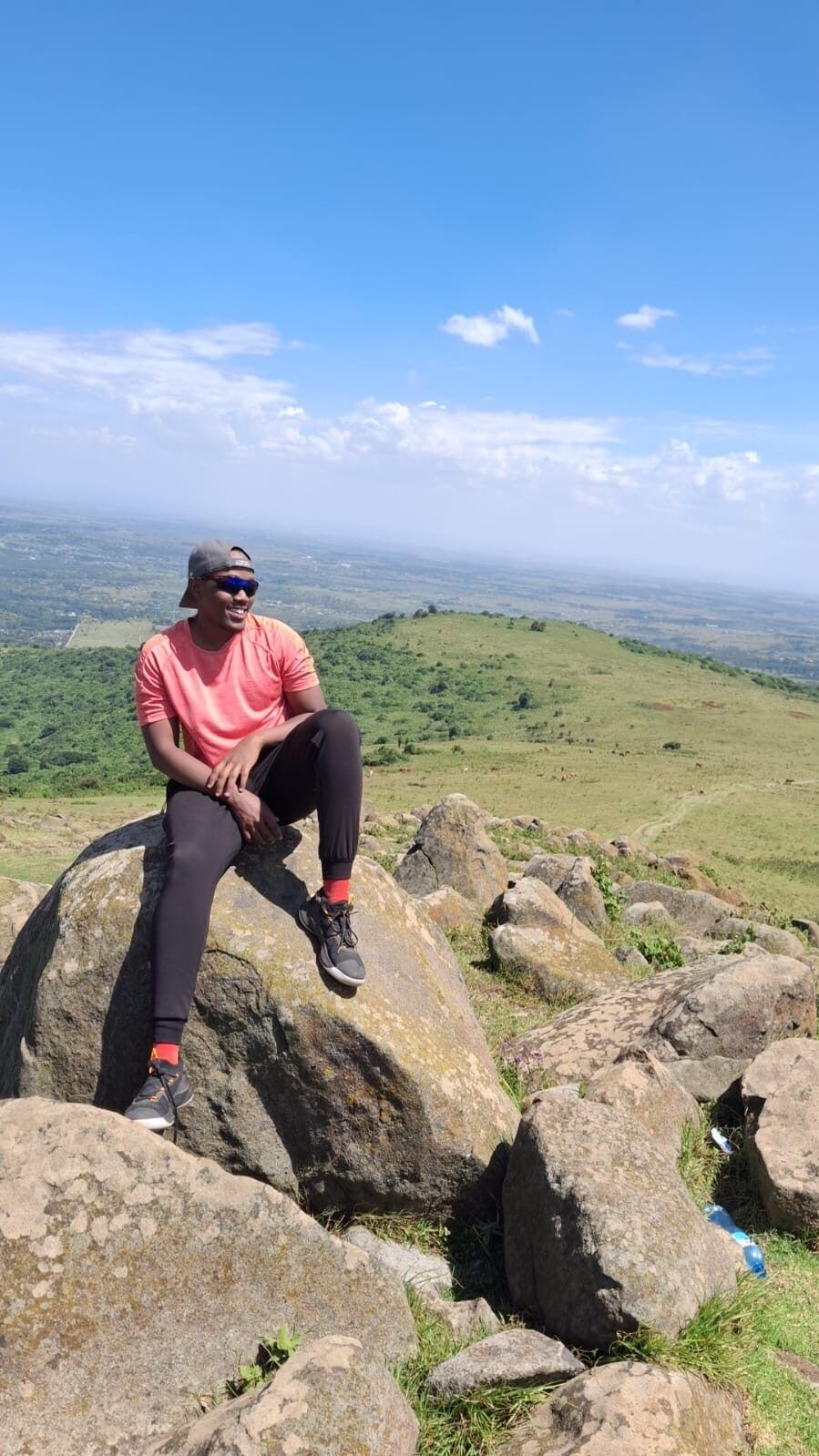
Guy Ningabo’s journey from a war-torn childhood in Burundi to becoming a trailblazer in climate finance is a testament to resilience, ambition, and the transformative power of education. Born in one of the world’s poorest nations—where a decade-long civil war (1993–2005) and a 2015 political crisis displaced millions—Ningabo’s story is one of perseverance. Fleeing to Rwanda at 15, he found refuge in education, a beacon that would later guide him toward a career dedicated to reshaping Africa’s renewable energy landscape through climate finance.
Now, as one of three recipients of the prestigious Stanley Park Climate Finance Scholarship at Columbia University’s M.S. in Climate Finance—a program jointly offered by the Columbia Climate School and Columbia Business School—Ningabo is poised to challenge systemic barriers that have long stifled Africa’s potential in sustainable development.
A Childhood Shaped by Crisis and the Power of Education
Ningabo’s early years were defined by instability. When he was just 15, his family was forced to flee Burundi due to escalating violence. Militias targeted families suspected of ties to military factions, leaving them with no choice but to seek safety in neighboring Rwanda. “They sent intelligence units to bring us back—or worse,” Ningabo recalled. “We had to act quickly, and education became our only escape.”
In Rwanda, he completed high school before securing a scholarship to Strathmore University in Kenya, where he pursued actuarial science. His academic path was not merely an academic pursuit; it was a strategic move toward stability and opportunity. While studying, he wrote a research paper analyzing weather-related insurance premiums for smallholder farmers. The data revealed a stark discrepancy: rainfall patterns between 1961–2000 and 2005 onward had shifted dramatically, a clear indicator of climate change’s growing impact. This revelation ignited his curiosity, steering him toward a deeper understanding of environmental challenges.
The Realization: Climate Finance as a Catalyst for Change
After graduating, Ningabo worked with SIMA Funds, an impact asset manager specializing in renewable energy projects across West Africa. What he observed was disheartening: while wealthy nations received favorable financing terms, poorer countries—like his own—were deemed too risky due to insufficient economic data. “They focused on the most developed countries in Africa,” he explained. “Poorer nations like Burundi didn’t have the data to justify loans, so they were left behind—even though they needed renewable energy the most.”
This injustice fueled his determination. He sought a way to redesign financial systems that unfairly penalized African economies. His breakthrough came when he discovered Columbia’s M.S. in Climate Finance, a program that aligned perfectly with his vision. During an information session, he listened to Lisa Sachs, a leading climate finance expert, whose insights resonated deeply. “She was speaking the same language as me,” Ningabo said. Without the Stanley Park Scholarship, he admitted, he might not have been able to pursue this life-changing opportunity.
Mentorship, Resilience, and the Role of Family
Ningabo credits his success to the mentorship of his family and institutions that recognize potential in unconventional backgrounds. His father instilled in him the belief that “success is objective, but discipline is the key.” Whether through entrepreneurship or academia, hard work and perseverance were non-negotiable. “He told us the only way out was through studies,” Ningabo recalled. “That mindset shaped everything I do.”
Beyond family, he acknowledges the role of institutions like Columbia, which actively seek students who have overcome adversity and systemic barriers. “If it weren’t for them,” he said, “I wouldn’t be here today.”
Challenging Financial Models to Unlock Africa’s Potential
Ningabo’s academic focus at Columbia is deliberate. He is eager to engage with credit rating agencies and private lenders who dictate financing terms for renewable energy projects in Africa. His goal? To debunk the myth that African economies are inherently risky.
Comparing France’s economic growth and debt-to-GDP ratios over the past decade to those of Kenya, Ethiopia, or Ivory Coast, he argues that African nations are often misrated. “France is rated higher, but these African economies are performing just as well—or better,” he stated. His mission is to reassess financial models and advocate for fairer credit evaluations that reflect Africa’s true potential.
Academic Excitement: Adaptation, Global Finance, and Renewable Energy
The curriculum at Columbia is tailored to his ambitions. He is particularly excited about:
– Climate Change Adaptation: While much of the climate discourse has focused on mitigation, Ningabo believes it’s time to prioritize adaptation strategies—especially for vulnerable regions like Burundi.
– International Climate Finance: Understanding the global financial mechanisms that govern climate investments will help him navigate complex funding landscapes.
– Financing Renewable Energy: An elective on renewable energy financing will equip him with the tools to accelerate off-grid solutions in Africa, where electrification rates remain abysmally low (Burundi’s stands at below 10%).
A Vision for Impact: Renewable Energy, Mining, and Sustainable Development
Ningabo’s long-term vision extends beyond finance. He envisions a future where impact finance, credit mechanisms, and renewable energy converge to power Africa’s growth. His interest in the mining sector reflects a broader concern: how can Africa leverage its natural resources without compromising climate goals?
“With climate change accelerating, we need sustainable innovations,” he said. “The challenge is balancing resource extraction with environmental responsibility.”
Ultimately, his work is not just about personal achievement—it’s about representing his family, his community, and his continent. “Whatever you’re going through,” he reflects, “there’s always a light at the end of the tunnel. Keep pushing.”
A Call to Action: Education as a Tool for Transformation
Guy Ningabo’s story underscores a critical truth: education is the most powerful force against adversity. For millions of young Africans displaced by conflict or poverty, institutions like Columbia provide a lifeline—not just to individual success, but to systemic change.
As he prepares to graduate, Ningabo’s message is clear: climate finance is not just about money—it’s about justice. By challenging outdated financial models and advocating for equitable investment, he aims to ensure that Africa’s renewable energy transition is inclusive, sustainable, and transformative.
His journey is a reminder that resilience, coupled with strategic vision, can redefine entire continents. For Guy Ningabo, the future of Africa’s energy landscape begins with better finance—and he is leading the charge.
