

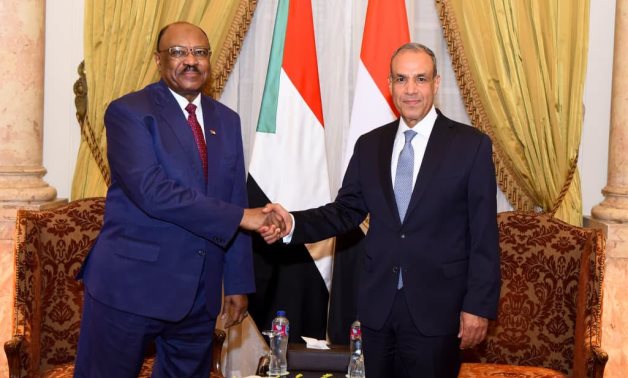
Egyptian Foreign Minister Badr Abdelatty engages in diplomatic discussions with Sudanese counterparts in Cairo, 2026.
CAIRO, 9 August 2026 – In a significant diplomatic gesture, Egyptian Foreign Minister Badr Abdelatty reaffirmed Cairo’s unwavering support for Sudan’s sovereignty, territorial integrity, and national unity during a high-level phone call with his Sudanese counterpart, Mohieldin Salem, on Sunday. The conversation, described as a continuation of bilateral consultations, underscored Egypt’s long-standing commitment to Sudan’s stability amid escalating regional tensions.
A Call for a Sudanese-Led Political Resolution
During the call, Abdelatty emphasized the critical importance of ensuring that Sudan’s political transition remains entirely Sudanese-owned. He stressed that any resolution to the ongoing conflict must preserve Sudan’s state resources, institutional stability, and the aspirations of its people for security and long-term prosperity. The Egyptian official reiterated that external interference must be minimized, allowing Sudanese stakeholders—including political leaders, civil society, and military factions—to chart the nation’s future path.
The Sudanese conflict, which erupted on 15 April 2023 between the Sudanese Armed Forces (SAF) and the Rapid Support Forces (RSF), has since devolved into one of Africa’s most devastating humanitarian crises. The war has claimed thousands of lives, displaced millions—both internally and across borders—including into Egypt—and left vast swathes of the country in ruins. Abdelatty’s remarks came against this backdrop, highlighting Egypt’s role as a regional mediator while advocating for a politically inclusive and sustainable peace framework.
Sudanese Foreign Minister Mohieldin Salem during a diplomatic engagement in Khartoum, 2026.
Strengthening Bilateral Ties Amid Crisis
Beyond the Sudanese conflict, the two ministers explored strategic avenues to deepen bilateral cooperation across economic, security, and developmental sectors. Abdelatty underscored Egypt’s commitment to fostering mutually beneficial partnerships, particularly in areas such as energy, trade, and infrastructure, where both nations share overlapping interests.
Historically, Egypt and Sudan have maintained deep fraternal ties, rooted in shared Nile River dependencies, cultural exchanges, and geopolitical alignment. Abdelatty’s remarks during the call reiterated Cairo’s pride in these historical bonds, framing them as a cornerstone of regional stability. However, the current crisis has tested these ties, prompting both governments to reassess diplomatic strategies while avoiding direct military confrontation.
Humanitarian and Strategic Concerns
The displacement crisis has placed significant strain on Egypt’s border regions, particularly in Northern State, where Sudanese refugees have sought shelter. Abdelatty’s statements hinted at ongoing coordination between Cairo and Khartoum to manage the humanitarian fallout, including border security, aid distribution, and long-term resettlement plans.
Egypt’s stance aligns with broader African Union (AU) and regional initiatives advocating for a ceasefire and political dialogue in Sudan. While Egypt has avoided direct military involvement, its diplomatic influence remains pivotal in facilitating indirect negotiations between the SAF and RSF. Abdelatty’s call with Salem was part of these quiet but persistent efforts to stabilize the region.
Egyptian and Sudanese officials discuss regional security cooperation in a closed-door meeting, 2026.
Economic and Energy Interdependencies
Beyond political stability, Egypt and Sudan share critical economic interdependencies, particularly in energy and agricultural trade. Sudan’s oil and gas reserves, along with its role as a key agricultural producer, make it a strategic partner for Cairo. Abdelatty’s emphasis on strengthening economic ties suggests an attempt to offset the instability by reinforcing commercial and infrastructural linkages.
Recent discussions have also included Nile Basin cooperation, given Sudan’s role as a downstream neighbor in the Grand Ethiopian Renaissance Dam (GERD) negotiations. While Egypt has historically prioritized water security, the Sudanese conflict has complicated regional water governance, prompting both nations to reassess their collective approach to the Nile’s management.
A map highlighting key economic and strategic ties between Egypt and Sudan, including trade routes and energy corridors.
Regional and International Implications
Egypt’s position on Sudan’s crisis carries broader regional implications, particularly in North Africa and the Horn of Africa. As a non-permanent member of the UN Security Council (2026-2027), Cairo has been actively engaging with international actors—including the U.S., EU, and AU—to pressure all parties toward a negotiated settlement.
The U.S. and EU, which have sanctioned key RSF and SAF figures, have expressed support for Egypt’s mediating role. However, some analysts warn that external pressures—particularly from Saudi Arabia and the UAE, which have backed the SAF—could undermine Sudan’s sovereignty if not carefully managed. Abdelatty’s insistence on a Sudanese-owned process reflects Egypt’s delicate balancing act between regional alliances and national interests.

Egyptian President Abdel Fattah El-Sisi addresses a joint session of parliament on Sudan’s crisis, 2026.
The Path Forward: Stability Through Diplomacy
As Sudan enters its third year of war, the international community—including Egypt—faces daunting challenges in achieving a durable peace. Abdelatty’s call with Salem signals Egypt’s continued engagement in facilitating dialogue, but the road ahead remains fraught with obstacles.
Key steps forward may include:
– Ceasefire enforcement with international monitoring to prevent further escalation.
– Inclusive political negotiations involving all major factions, including civilian leaders and military commanders.
– Humanitarian aid access to prevent further mass displacement and famine.
– Economic revival plans to restore Sudan’s state institutions and infrastructure.
Egypt’s role in this process is both diplomatic and strategic. By reaffirming its support for Sudan’s unity, Cairo not only protects its own security interests but also strengthens its position as a regional leader in conflict resolution.
Sudanese civilians seek refuge near the Egyptian border, highlighting the humanitarian impact of the conflict.
Conclusion: A Test of Regional Solidarity
The Sudanese crisis remains one of Africa’s most pressing challenges, and Egypt’s stance—advocating for a Sudanese-led solution while maintaining economic and strategic ties—reflects a nuanced approach to conflict resolution. As the war drags on, the international community’s ability to support Sudan’s stability will determine whether the nation can recover from its divisions or descend into further instability.
Egypt’s diplomatic efforts, as demonstrated in Abdelatty’s recent call, underscore the necessity of sustained political will to achieve a lasting peace. The coming months will be critical in determining whether Sudan can break free from its cycle of violence and rebuild toward a unified future.
Egyptian and Sudanese military officials conduct joint exercises to enhance border security cooperation.
A Sudanese refugee family crosses into Egypt, emphasizing the humanitarian dimensions of the conflict.
Egyptian Foreign Minister Badr Abdelatty addresses a press conference on Sudan’s political transition, 2026.
Historical ties between Egypt and Sudan, showcasing cultural and economic exchanges over centuries.
A timeline of key events in the Sudanese conflict, from 2023 to 2026.
Egyptian President Abdel Fattah El-Sisi meets with Sudanese military leaders to discuss peace efforts.
Sudanese civilians participate in a protest calling for an end to the conflict, 2026.
