
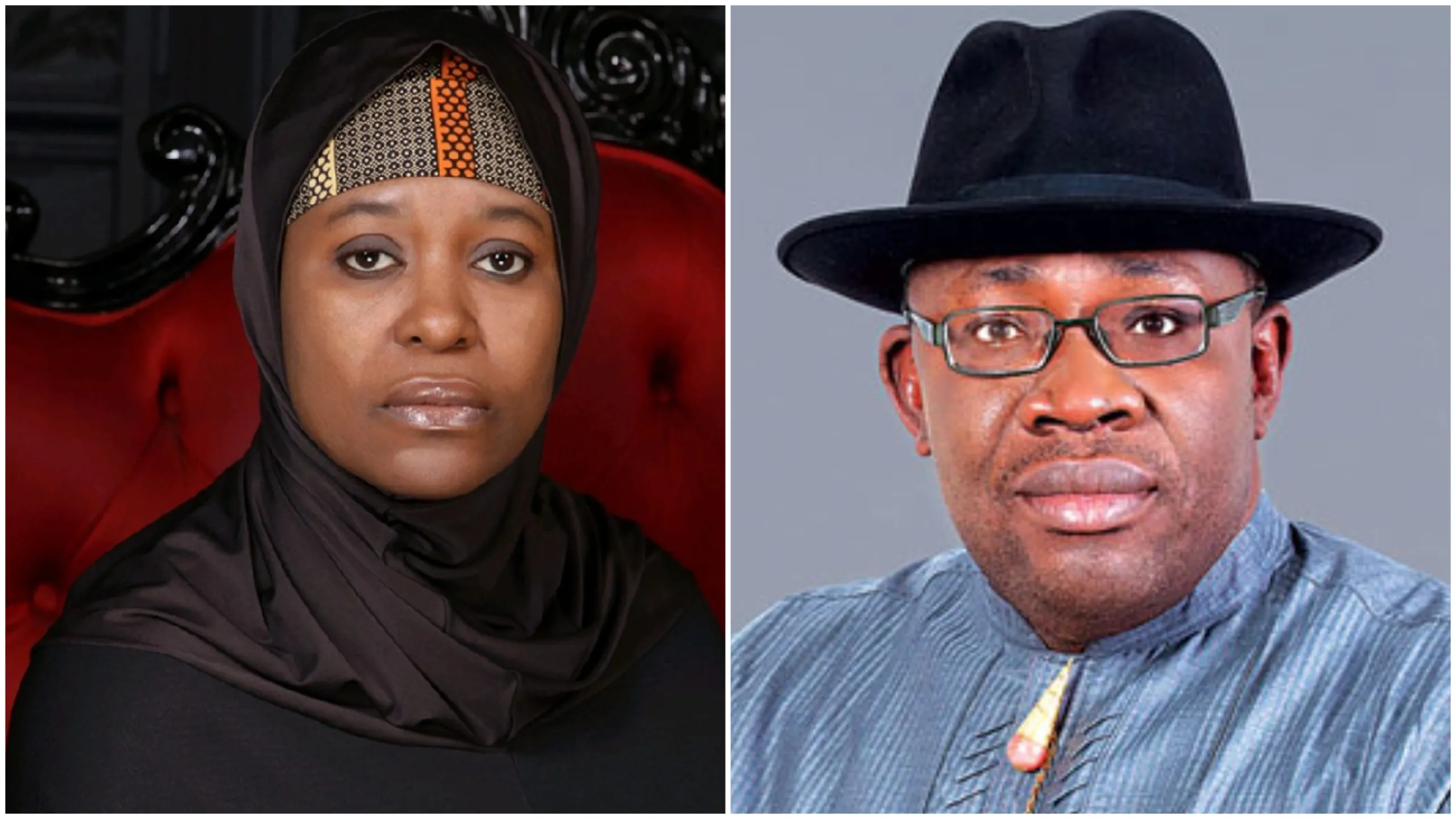
The airwaves crackled with tension this week as Nigeria’s political discourse took another dramatic turn. On a primetime Arise TV segment, former Bayelsa State governor Seriake Dickson made waves by suggesting he could have been the preferred presidential candidate of the National Democratic Congress (NDC)—and that Peter Obi, the party’s flagbearer, was merely doing the NDC a favor by flying its flag. The statement didn’t just land; it ricocheted across social media and newsrooms, sparking immediate reactions from political observers and activists alike.
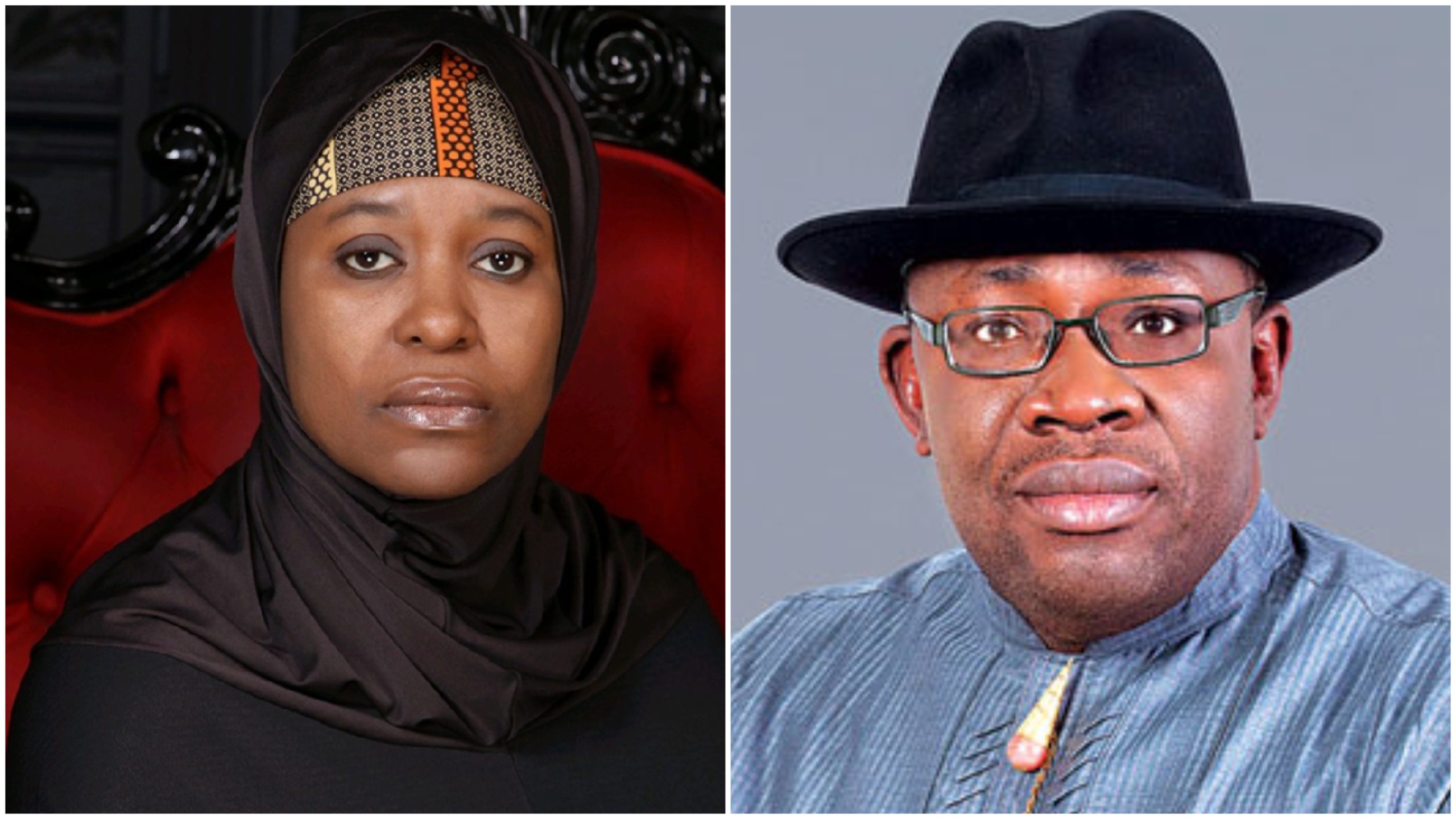
The response came swiftly and sharply from one of Nigeria’s most outspoken voices, Aisha Yesufu. In a public statement that has since gone viral, the co-founder of the Bring Back Our Girls movement didn’t mince words. “You appear insecure,” she declared, directly addressing Dickson’s televised assertions. “And in competition with Peter Obi, you’re revealing more about your own ambitions than the needs of this nation.” Her words cut through the usual political niceties, framing the debate not as a mere disagreement over party strategy but as a symptom of deeper, troubling insecurities within Nigeria’s political class.
Dickson’s comments, delivered with the confidence of a seasoned politician, were not isolated. They followed a pattern of public posturing that has become increasingly common in Nigeria’s political landscape. As parties jostle for positioning ahead of the next election cycle, personal ambitions often overshadow the urgent work of governance and policy. The NDC, like many other parties, finds itself navigating a delicate balance between internal cohesion and external appeal. Yet Dickson’s remarks risked reducing the conversation to a zero-sum game of egos rather than a substantive discussion about Nigeria’s future.
When Political Ambition Overshadows National Interest
At the heart of this exchange lies a critical question: How much of Nigeria’s political energy is being diverted into internal squabbles rather than addressing the country’s pressing challenges? Dickson’s assertion that he could have been the NDC’s presidential candidate is, in many ways, a microcosm of the broader issue. Political parties in Nigeria—and across Africa—often prioritize personal ambitions over collective progress. The result? A cycle of infighting that leaves citizens disillusioned and governance stalled.
Yesufu’s retort wasn’t just a personal attack; it was a challenge to the very premise of Dickson’s argument. By framing his comments as a sign of insecurity, she highlighted the thinly veiled competition that often lurks beneath the surface of Nigeria’s political rhetoric. The NDC, like other major parties, has struggled to present a unified front. Internal disagreements over leadership and strategy have at times overshadowed the party’s ability to articulate a clear vision for Nigeria’s future. In such an environment, statements like Dickson’s only serve to deepen divisions rather than bridge them.
The timing of Dickson’s remarks is also worth noting. With Nigeria’s political landscape already charged by the upcoming elections, every word carries weight. The NDC, in particular, has faced scrutiny over its ability to rally support beyond its traditional strongholds. Dickson’s comments, whether intentional or not, risked alienating potential allies and reinforcing perceptions of the party as fractured and self-serving.
The Role of Activists in Shaping Political Narratives
Aisha Yesufu’s intervention in this debate underscores the growing influence of activists in Nigeria’s political discourse. Unlike traditional politicians who often operate within the confines of party lines, activists like Yesufu bring a different perspective—one that prioritizes the needs of the people over the ambitions of the elite. Her willingness to call out political figures, regardless of their stature, has earned her both admiration and criticism. Yet her intervention in this case was a reminder that Nigeria’s democracy thrives when voices from outside the political establishment hold leaders accountable.
Yesufu’s critique of Dickson’s remarks wasn’t just about the substance of his claims; it was about the tone. In a political environment where personal attacks and ego clashes are increasingly normalized, her call for accountability stood out. It also highlighted the role of social media in amplifying such debates. Within hours of her statement, the exchange had become a trending topic, with Nigerians weighing in on both sides. The speed at which such conversations spread reflects the growing demand for transparency and authenticity in Nigeria’s political discourse.
For activists like Yesufu, the challenge is not just to challenge political figures but to steer the conversation toward issues that matter most to ordinary Nigerians. From insecurity to economic instability, the country faces a laundry list of challenges that demand urgent attention. Yet too often, political debates devolve into personality-driven clashes that do little to address these issues. Yesufu’s intervention was a small but significant step toward refocusing the narrative on what truly matters.
What This Debate Reveals About Nigeria’s Political Culture
The exchange between Dickson and Yesufu is more than a passing spat; it’s a window into the broader dynamics shaping Nigeria’s political culture. At its core, it reflects a struggle between old and new ways of doing politics. Dickson, a veteran politician, represents the traditional approach—one where power is concentrated among a select few, and internal competition is often fierce. Yesufu, on the other hand, embodies a growing movement that seeks to democratize political discourse, making it more inclusive and responsive to the needs of the people.
This tension isn’t unique to Nigeria. Across Africa, political landscapes are being reshaped by a new generation of activists, journalists, and citizens who refuse to accept the status quo. From Senegal to South Africa, young leaders are challenging entrenched elites and demanding accountability. In Nigeria, figures like Yesufu are at the forefront of this movement, using their platforms to hold leaders to account and push for meaningful change.
Yet the Dickson-Yesufu exchange also reveals the fragility of this new wave of activism. While voices like Yesufu’s are gaining traction, they still face significant pushback from traditional power structures. Dickson’s remarks, for instance, were not just a critique of Peter Obi or the NDC; they were a challenge to the very idea that Nigeria’s politics should be more inclusive and less hierarchical. His assertion that he could have been the NDC’s candidate was, in many ways, a reaffirmation of the old guard’s grip on power.
The NDC’s Dilemma: Unity or Division?
The National Democratic Congress finds itself at a crossroads. On one hand, the party must navigate the ambitions of its members, each vying for influence and position. On the other, it must present a united front to appeal to voters who are increasingly skeptical of political infighting. Dickson’s remarks, while perhaps intended to rally support within the party, risked doing the opposite. They highlighted the fractures within the NDC and raised questions about its ability to present a cohesive vision for Nigeria’s future.
For the NDC, the challenge is to balance internal competition with the need for unity. Peter Obi, as the party’s flagbearer, has already faced criticism for his perceived lack of control over party dynamics. Dickson’s comments only added fuel to the fire, suggesting that Obi’s leadership might not be as secure as some believe. Yet the NDC’s response to such challenges will be critical in determining its success in the coming elections. Will it double down on internal divisions, or will it find a way to unite around a shared vision?
Yesufu’s intervention serves as a reminder that the NDC’s internal struggles are not just a party matter; they have real consequences for Nigeria. When political parties are consumed by infighting, the country suffers. Essential policies are delayed, public trust erodes, and the people pay the price. The NDC’s ability to rise above these challenges will be a test of its commitment to Nigeria’s progress.
What’s Next for Nigeria’s Political Landscape?
The fallout from Dickson’s remarks and Yesufu’s response is still unfolding. Yet one thing is clear: Nigeria’s political landscape is at a pivotal moment. The old guard, represented by figures like Dickson, is being challenged by a new wave of activists and leaders who demand accountability and transparency. The outcome of this struggle will shape the country’s future in profound ways.
For Nigeria to move forward, its political leaders must recognize that their primary responsibility is to the people, not to their own ambitions. This means setting aside personal rivalries in favor of collective progress. It means listening to voices like Aisha Yesufu’s, who remind us that politics is not just about power—it’s about service.
As the debate continues, one thing is certain: Nigeria’s citizens are watching closely. They are tired of the infighting, the ego clashes, and the endless cycle of promises unfulfilled. They want leaders who are committed to addressing the country’s challenges—not those who are more concerned with their own positions. The Dickson-Yesufu exchange is a small but important reminder of what’s at stake. The question now is whether Nigeria’s political class will rise to the occasion.
Five Key Takeaways from the Dickson-Yesufu Exchange
- Personal ambition vs. national interest: Dickson’s remarks highlighted the tension between individual aspirations and the collective good, a recurring theme in Nigeria’s political landscape.
- The power of activists: Aisha Yesufu’s intervention underscored the growing influence of activists in shaping political narratives and holding leaders accountable.
- The fragility of new movements: While activism is gaining traction, it still faces significant pushback from entrenched power structures.
- The NDC’s unity test: The party’s ability to navigate internal divisions will be critical in determining its success in the coming elections.
- Citizens demand accountability: Nigerians are increasingly vocal in their expectations for transparent, responsive leadership.
As the dust settles on this latest political skirmish, one thing is clear: Nigeria’s democracy is evolving. The old ways of doing politics are being challenged, and new voices are demanding a seat at the table. Whether this evolution leads to meaningful change will depend on the choices made by the country’s leaders—and the citizens who hold them accountable.
Copyright notice: Images and source material are credited to their respective owners/source (original source where available). If you are the copyright owner and want an image or content removed, please contact us at topix.news/contact-us; we will review and remove it promptly.

Topix News Desk is a digital editorial team focused on delivering clear, timely, and useful news coverage for readers worldwide. Our reporting highlights African news with global context, including politics, business, economy, technology, health, sports, entertainment, travel, and culture. We aim to publish accessible, well-structured, and informative articles that help readers understand the stories shaping Africa and the world.