

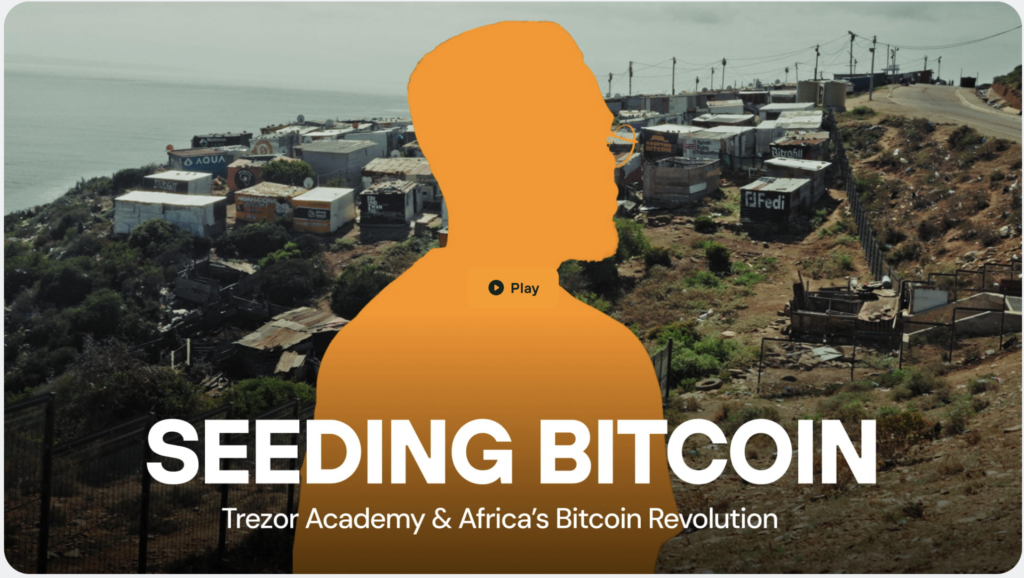
In a year dominated by headlines of Bitcoin’s dramatic market correction—plummeting from its October 2025 peak near $126,000—one organization has shifted focus to a far more impactful narrative: Bitcoin as a functional currency, not just a speculative asset. Trezor Academy, a leading provider of Bitcoin education and hardware wallets, has released a groundbreaking documentary, “Seeding Bitcoin: Trezor Academy and Africa’s Bitcoin Revolution,” which explores how Bitcoin is transforming lives across Sub-Saharan Africa. Simultaneously, the organization has introduced a donation program to fund Bitcoin literacy initiatives in the Global South, ensuring sustainable growth in regions where traditional financial systems fail the most vulnerable.
A Monetary Revolution in the Making
The documentary follows real-life stories of individuals, merchants, and educators who are leveraging Bitcoin not as a get-rich-quick scheme, but as a practical solution to financial exclusion. Unlike Western narratives that often frame Bitcoin adoption as speculative, the film highlights how ordinary people—refugees, orphans, and those without formal identification—are using Bitcoin to transact, save, and build economic independence.
One compelling case study features Bitcoin education centers in South Africa, where teenagers as young as 14 complete a Bitcoin diploma course and receive weekly rewards in sats (satoshis). Some students use these earnings to purchase groceries for their families, demonstrating how microtransactions in Bitcoin can create tangible economic mobility. The film also profiles a local shopkeeper who initially rejected Bitcoin due to volatility concerns, only to later adopt it after learning about stablecoin settlements—a hybrid approach that mitigates price fluctuations while maintaining Bitcoin’s core benefits.
Beyond commerce, the documentary captures the human stories behind Bitcoin adoption:
– A woman who traveled 14 hours to attend a grassroots Bitcoin conference, driven by a desire to learn how the technology could improve her livelihood.
– A former drug addict whose life transformed after engaging with a local Bitcoin circular economy, where spending Bitcoin within the network reinforces its utility.
– Communities of refugees and stateless individuals who, for the first time, have access to financial services without requiring government-issued IDs or bank accounts.
A recurring theme in the film is the systemic exclusion faced by millions in Africa. Traditional banking systems often reject individuals without formal addresses, credit histories, or government documentation, leaving them dependent on high-fee remittance services or informal money transfers. Bitcoin, as one participant in the documentary puts it, “doesn’t recognize if you’re poor or rich, what color your skin is, or whether you have a government ID.” This permissionless nature makes it an ideal tool for financial empowerment in regions where centralized institutions have historically failed.
Quantifiable Growth: Bitcoin’s Rise in Sub-Saharan Africa
The documentary aligns with real-world data demonstrating Bitcoin’s accelerating adoption in Africa. According to Chainalysis’ 2025 Global Crypto Adoption Index, Sub-Saharan Africa saw over $205 billion in on-chain value received in the year leading up to mid-2025—a 52% year-over-year increase, ranking it as the third-fastest growing region globally.
What sets Africa apart is the dominance of small-value transactions. Unlike other regions where institutional flows dominate, a larger share of transfers in Sub-Saharan Africa fall under $10,000, suggesting widespread everyday use rather than speculative trading. This pattern reflects how Bitcoin is being integrated into daily life, from remittances to local commerce.
The cost of remittances further underscores Bitcoin’s appeal. The World Bank reports that sending $200 to Sub-Saharan Africa through traditional channels incurs fees of nearly 9%, among the highest globally. In contrast, Bitcoin’s Lightning Network enables near-instant transfers for just a few cents, making it an economic game-changer for families relying on cross-border payments.
Currency instability has also played a pivotal role in Bitcoin’s adoption. When Nigeria’s naira was devalued in March 2025, on-chain activity in the region spiked dramatically as individuals sought to protect savings from inflation. For generations accustomed to hyperinflation and economic volatility, a fixed-supply, censorship-resistant asset like Bitcoin offers a practical alternative to government-controlled currencies.
Education as the Foundation of a Bitcoin Circular Economy
Trezor Academy’s approach to Bitcoin adoption is community-driven and decentralized. The documentary emphasizes that education, not hype, is the catalyst for sustainable growth. The organization has graduated over 2,000 students through its meetups and courses, operating in more than 30 countries worldwide.
The film features local educators who teach Bitcoin literacy in native languages, ensuring cultural relevance and accessibility. One participant states:
“This program won’t teach everybody in Africa about Bitcoin. What we’re doing here is planting seeds through local educators from which Bitcoin circular economies later grow.”
This grassroots strategy aligns with Trezor Academy’s broader mission: empowering individuals to become self-sufficient in understanding and using Bitcoin. By fostering peer-to-peer education, the initiative ensures that knowledge spreads organically, reducing reliance on centralized institutions.
A Call to Action: Donations for Global Bitcoin Literacy
To further support these efforts, Trezor has launched a donation program integrated into its online store. Customers can now contribute at checkout or donate independently, with 100% of proceeds allocated toward:
– Workshops and meetups in underserved regions.
– Project sponsorships for Bitcoin education initiatives.
– Grassroots Bitcoin literacy programs in the Global South.
This initiative reflects Trezor Academy’s commitment to democratizing access to financial freedom, ensuring that Bitcoin’s benefits extend beyond early adopters to those who need it most.
Conclusion: Bitcoin as a Tool for Economic Liberation
While Bitcoin’s price fluctuations dominate global headlines, the real story in Africa—and increasingly in the Global South—is one of economic resilience and empowerment. Trezor Academy’s documentary “Seeding Bitcoin” serves as a testament to Bitcoin’s transformative potential, proving that for millions, it is not just an asset class but a lifeline.
As Bitcoin continues to evolve, its role in bridging financial gaps will only grow. Initiatives like Trezor Academy’s education-driven approach and community-focused donations ensure that this revolution remains inclusive, sustainable, and rooted in real-world utility. The future of money may be digital, but its impact—on individuals, families, and entire economies—is undeniably human.
