

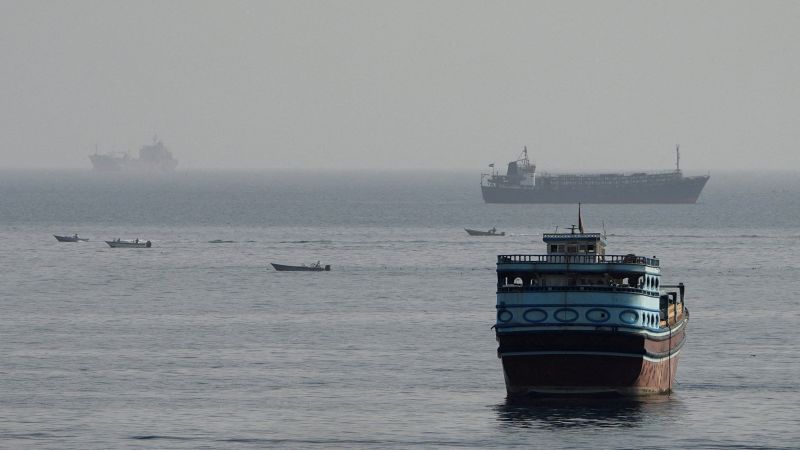
Iran-Oman Negotiations: A 50% Chance of Strait of Hormuz Deal by Friday, But Obstacles Remain
The strategic Strait of Hormuz, a critical global chokepoint through which 20% of the world’s oil supply passes annually, remains a flashpoint in the escalating tensions between Iran and Western powers. A senior Gulf official has indicated a 50-50 chance that Iran and Oman will finalize a bilateral agreement on safe shipping routes by Friday, though diplomatic sources warn that external pressures—particularly from the United States—could derail the process.
President Donald Trump has repeatedly signaled optimism, stating in a Fox News interview that the strait would be reopened “very soon” or face “a very hard hit” from the U.S. However, Iranian officials have vehemently denied that direct negotiations with Washington are underway, emphasizing that discussions with Oman are strictly bilateral. Iranian Deputy Foreign Minister Kazem Gharibabadi dismissed U.S. claims of ongoing talks, stating:
“The U.S. claim that negotiations with Iran are currently underway is false. There have been no negotiations with the Americans.”
Despite this, Tehran has acknowledged receiving U.S. messages expressing willingness to revive previous commitments, though Iran has not yet decided whether to proceed to a second phase of negotiations that could lead to a Memorandum of Understanding (MoU). The June 2024 ceasefire agreement between the U.S. and Iran collapsed following clashes over Hormuz, reigniting a regional conflict that now threatens global energy security.

Red Sea Attacks: Houthi Threats Disrupt Global Shipping, Sinking Vessels and Raising Alarm
The Bab al-Mandeb Strait, another vital maritime corridor at the southern end of the Red Sea, has become a new battleground as Iran-backed Houthi rebels escalate their campaign against commercial shipping. On Tuesday, a vessel was sunk after being attacked by an uncrewed surface vessel near Yemen’s coast, according to the UK Maritime Trade Operations (UKMTO). The 14-member crew, including 13 Indians, was rescued by Yemeni authorities, but the incident underscores the rising risks for global trade routes.
The Indian Ministry of Ports, Shipping and Waterways condemned the attack, calling it “unprovoked and deeply worrisome.” Yemen’s Transportation Ministry blamed the Houthis, who have repeatedly threatened to disrupt shipping through the strait—a key alternative route for Saudi Arabia’s oil exports after Hormuz was blocked.
The Houthis, an Iran-backed militia controlling parts of Yemen, have rapidly expanded their military capabilities, including anti-ship missiles, drones, and sea mines, according to a 2021 report by the Center for Strategic and International Studies (CSIS). Their actions have forced Saudi Arabia to reroute oil shipments, exacerbating global energy market volatility.

US Missile Defense Stockpiles Critically Depleted Amid Iran War
The U.S. military’s missile defense systems are facing a severe shortage, with nearly 80% of interceptors for key systems like THAAD (Terminal High Altitude Area Defense) and Patriot expended since the February 2024 conflict with Iran. Sources familiar with the matter warn that stockpiles are dangerously low, raising concerns about the U.S. and its Gulf allies’ ability to counter future Iranian missile and drone strikes.
Before the war, the U.S. had approximately 2,200 Patriot interceptors and 452 THAAD missiles in storage, according to CSIS estimates. Since then, four-fifths of THAAD missiles and half of Patriot interceptors have been used up, leaving limited capacity for future engagements. Gulf allies, which rely on U.S. air defense systems, are now worried about their own defense capabilities if tensions escalate further.
Israel-Lebanon Talks Collapse Amid Fresh Hezbollah Strikes
Efforts to stabilize the Israel-Lebanon border have stalled as US-mediated negotiations in Rome concluded prematurely on Wednesday due to escalating violence. The seventh round of talks, aimed at implementing a June 2024 ceasefire agreement, was suspended after Israeli strikes on southern Lebanon resumed following a Hezbollah violation of the ceasefire.
The Israeli Defense Forces (IDF) ordered evacuations in the Lebanese village of Mansouri, where two airstrikes killed one person and injured 12, according to Lebanon’s Ministry of Public Health. The IDF cited a “complete violation of the ceasefire” as justification for the strikes, which marked the first evacuation order since June 10.
Hezbollah, an Iran-backed militia, has opposed the talks, and its actions have undermined diplomatic efforts to prevent a full-scale conflict. The U.S. State Department described the discussions as “productive” but acknowledged that “significant developments on the ground” could prevent a resumption of negotiations.

Iran-Oman Shipping Deal: Progress, But External Pressures Loom
Iran and Oman have made technical progress on a safe shipping route through the Strait of Hormuz, with geographical coordinates for the proposed lane now agreed upon. Iranian Foreign Ministry spokesperson Esmaeil Baghaei confirmed that talks over the past two months have covered legal, security, and environmental aspects, with a joint statement nearly finalized.
However, Baghaei warned that external interference—particularly U.S. naval blockades and aggressive actions—could derail the agreement. He stated:
“Provided that certain third parties do not obstruct the process, the joint statement is in the final stage of review. However, the closure of the strait is due to U.S. and Israeli attacks on Iran.”
The Qatari Foreign Ministry echoed calls for diplomatic commitment, urging all parties to uphold the June MoU and ensure freedom of navigation while preserving regional stability.

Global Oil Markets React to Red Sea Disruptions
The unexpected attacks in the Red Sea have sent global oil prices surging, despite hopes of a Hormuz deal. Brent crude futures rose 1.3% to $80 per barrel, while WTI crude increased 0.6% to $76 per barrel, reflecting investor concerns over supply chain disruptions.
The Bab al-Mandeb Strait, a key alternative to Hormuz, has seen increased Houthi threats, forcing some vessels to avoid the region entirely. Saudi Arabia, which relies on the strait for oil exports, has faced reduced shipping capacity, according to Wood Mackenzie analyst Alexandre Araman:
“The sharp decline in Red Sea exports removes one of the Kingdom’s few remaining sources of export options.”
The Houthi rebels have claimed responsibility for multiple attacks, including a strike on a Saudi oil tanker on Wednesday, further destabilizing the region.

Iran’s Human Rights Crisis: Executions Rise Amid War
As diplomatic tensions mount, Iran’s domestic crackdown intensifies, with executions surging since March. The UN High Commissioner for Human Rights, Volker Türk, reported that at least 56 people have been executed on national security charges, including 27 linked to anti-regime protests earlier this year.
Critics argue that the June 2024 U.S.-Iran MoU failed to include human rights protections, allowing Tehran to accelerate executions under the pretext of national security. Former Iranian reformist politician Mostafa Tajzadeh, currently imprisoned, warned in an open letter that executions risk further destabilizing the country:
“Executions will only widen the divide between the state and society, reducing prospects for dialogue and peaceful change.”

Trump’s Threats and Iran’s Stance: A Deadlock in Diplomacy
President Trump’s repeated threats to “hit Iran very hard” if the Strait of Hormuz remains closed have clashed with Tehran’s official stance. Iranian state media has rejected the idea that a deal with Oman will lead to an immediate reopening, stating:
“If the United States continues its violations, the Strait of Hormuz will not be reopened even if Iran and Oman reach an agreement.”
Iranian officials, including National Security Spokesperson Hassan Ghashghavi, have rejected U.S. demands for a return to pre-war shipping lanes, insisting that any agreement must respect Iran’s sovereignty.

Conclusion: A Region on the Brink of Further Escalation
The Strait of Hormuz, Red Sea attacks, depleted U.S. missile defenses, and collapsing Israel-Lebanon talks paint a volatile picture of the Middle East. While Iran-Oman negotiations offer a glimmer of hope for restoring shipping, external pressures—particularly from the U.S. and Israel—could derail progress. Meanwhile, rising executions in Iran and Houthi aggression signal that regional instability is far from over.
As global oil markets react to disruptions and diplomatic channels remain fragile, the risk of further conflict looms large—threatening energy security, maritime trade, and regional peace.
