

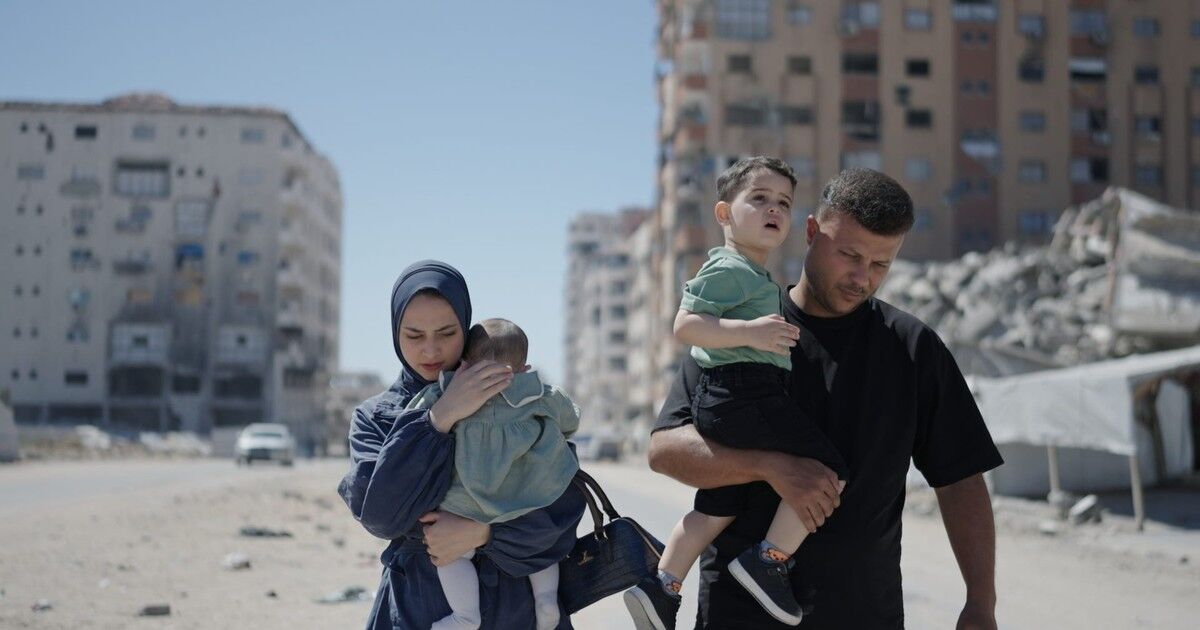

In the heart of Gaza, where the scent of spices once filled the air and laughter echoed through bustling markets, a young man named Hamada Shaqoura was building a life—one recipe, one video, one shared meal at a time. Before the war, he was a food blogger, capturing the vibrant essence of Gaza City through his lens, documenting the daily rhythms of life with his wife, Lamees, and their growing family. But when conflict erupted, everything shattered. Now, more than 1,000 days into a relentless war, Hamada’s story has been transformed into a profound, Emmy Award-winning documentary—a love letter to his children, Nizar and Maryam, born into displacement and famine.
Titled “Dear Nizar, Dear Maryam,” this groundbreaking feature-length documentary, set to premiere on the 2026-2027 international film festival circuit, is Business Insider Africa’s first-ever documentary project. It is not merely a film; it is a testimony of survival, resilience, and the unbreakable bond between a father and his children in the face of unimaginable hardship.
A Life Before the War: The Chef Who Fed Gaza’s Soul
Before the bombs fell, Hamada was a storyteller through food. His blog and social media channels were a window into Gaza’s pre-war existence—a place where markets buzzed with activity, restaurants overflowed with laughter, and families gathered around shared tables. He filmed everything: the artistry of a baker crafting fresh bread, the vibrant colors of a spice market, the simple joy of a family dinner. His work was more than content; it was a love letter to the Gaza he knew and cherished.
Then, war came.
The War That Stripped Away Everything
When conflict erupted, Hamada’s world collapsed. The restaurants he once filmed became battlefields. The markets he documented were reduced to rubble. The life he built with Lamees—a future filled with dreams, laughter, and the promise of a stable home—was shattered. Yet, even in the midst of destruction, Hamada refused to let his family starve. His transformation from food blogger to wartime chef became a symbol of defiance.
The documentary weaves together raw, intimate footage—family videos, mobile phone recordings, social media posts, and voice notes—to paint a harrowing yet deeply human portrait of life under siege. These fragments tell the story of a man confronting his own hunger, his fear of failure, and the desperate struggle to keep his children alive.
A Father’s Legacy: Preserving Gaza for His Children
Nizar was born into displacement. Maryam arrived as famine deepened. Hamada and Lamees, in their relentless love, tried to shield their children from the horrors of war—a reality no child should ever inherit. But the film is not just about survival; it is about preservation.
Through Hamada’s voice, the documentary becomes a chronicle of two Gazas—the one he remembers before the war, and the one his children are growing up in. It is a father’s attempt to document endurance, to leave behind a record of what was lost, and to ensure his children never forget the Gaza that once was.
From Emmy-Winning Short to a Full-Length Epic
The journey of this film began with a short documentary—“The Man Who Feeds Gaza’s Children”—which won the National Emmy Award for Outstanding Light Feature (Long Form) in 2025. That project captured Hamada’s early days as a wartime cook, but the story refused to end there.
For the past two and a half years, filmmaker Rana Jawad, a Palestinian journalist and filmmaker based in London, has been documenting Hamada’s life through ceasefires, destruction, and famine. The result is a deeply personal, unflinching look at parenthood in a war zone—a question that haunts every mother and father: How do you protect your children when survival is the only priority?
“I watched the war from afar, like so many Palestinians, with grief and helplessness,” Jawad reflects. “This film is my attempt to bring forward a voice from Gaza that audiences can recognize. Hamada wasn’t just a food blogger—he was a man building a life, full of ambition, creativity, and love. Then war took everything. Now, his story is a testament to what it means to fight for your family when the world has turned against you.”
The Language of Love and Loss
One of the most powerful aspects of the documentary is its linguistic authenticity. Hamada’s voice—raw, emotional, and unfiltered—is the heart of the film. Arabic, the language of his home, his children, his fears, and his love, is not lost in translation. Instead, it carries the intimacy of a father’s whispered words to his children, ensuring that the audience experiences the story as Hamada himself would tell it.
A Mother’s Question: How Do You Protect Your Children in War?
As a mother herself, Jawad admits she was haunted by the same question that drives the film: How do you shield your children from the horrors of war? “Dear Nizar, Dear Maryam” answers this through daily life, love, fear, and resilience. It is a documentary that forces viewers to confront the reality of war—not as a distant conflict, but as a lived experience.
What to Expect: A Film That Will Haunt and Inspire
This is not just a documentary about war. It is a story of human endurance, of love in the face of annihilation, and of a father’s unwavering commitment to his children. Through Hamada’s eyes, we see:
– The loss of a way of life—how Gaza’s vibrant culture was erased by conflict.
– The struggle to feed a family—the desperation of a man who once cooked for joy, now cooking for survival.
– The weight of fatherhood—the fear of failing his children, the hope of leaving them a legacy.
– The resilience of the human spirit—how love, even in its darkest form, refuses to die.
“Dear Nizar, Dear Maryam” is more than a film; it is a call to remember, to understand, and to never forget. It will be released on the international festival circuit, where it is destined to challenge, move, and inspire audiences worldwide.
As the war in Gaza continues, Hamada’s story serves as a reminder of the humanity behind the headlines—a father’s love, a family’s fight, and the enduring power of hope in the face of destruction.
