

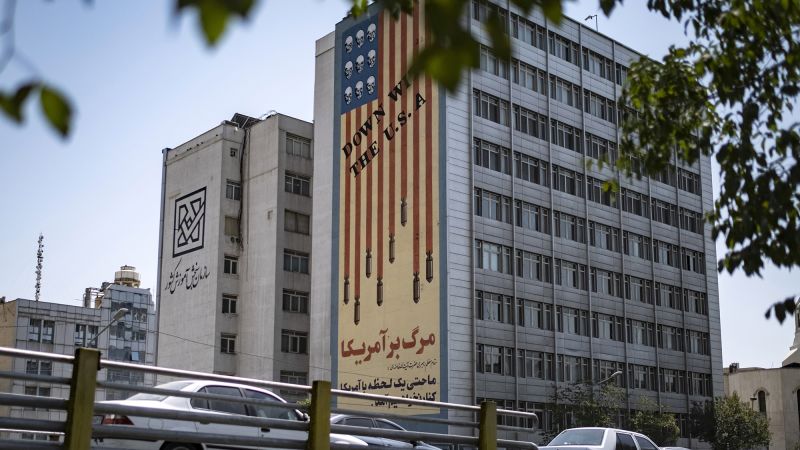
US Prepares for Weekend Strikes on Iran Amid Rising Regional Instability
The United States is reportedly finalizing plans for a new wave of military strikes against Iran as early as this weekend, according to multiple administration officials. While the exact targets and scope of the operation remain classified, White House sources confirm that the strikes could include high-priority military and energy infrastructure sites. President Donald Trump, in a recent Cabinet meeting, signaled an aggressive posture, declaring, “We’ll be hitting them very hard.” Officials, however, have not ruled out last-minute cancellations, citing the fluid nature of the situation.
The timing of these strikes coincides with a broader escalation in regional tensions, with Iran’s proxies and adversaries engaging in a series of provocative acts that have further destabilized the Middle East. The White House has framed the potential strikes as a necessary response to Iran’s continued aggression, including drone attacks, cyber warfare, and maritime sabotage. Yet, the administration’s reluctance to strike Iran’s energy sector—due to fears of retaliatory attacks on Gulf oil facilities—has sparked internal debates within the Pentagon and among allies.
 Israeli Strikes in Gaza Undermine Fragile Ceasefire Hopes
Less than 48 hours after President Trump announced a potential breakthrough in Israel-Hamas negotiations—including Hamas’ alleged agreement to disarm and Israel’s eventual withdrawal from Gaza—the region was rocked by a devastating Israeli airstrike. The attack, which targeted Hamas militants, instead obliterated two medical warehouses at Al-Aqsa Martyrs Hospital in Gaza City, leaving a massive crater and devastating critical medical supplies.
Dr. Munir Al-Bursh, director general of Gaza’s Health Ministry, condemned the strike as a deliberate assault on the enclave’s already fragile healthcare system, which suffers from a 51% shortage of essential medicines. “When medicines are bombed… illness becomes a weapon of war,” he stated. The attack also destroyed a nearby displacement camp, displacing hundreds of civilians and damaging tents housing internally displaced persons.
Since Trump’s announcement on Thursday, eight civilians have been killed and 76 injured in Gaza, according to the Palestinian Ministry of Health. Over 1,200 Palestinians have died since the October ceasefire agreement was first proposed, raising concerns that the fragile peace process may unravel before it even begins.
Israeli officials have not yet provided a detailed explanation for the strike, though they maintain that the operation targeted Hamas operatives. Meanwhile, Hamas has confirmed it will only disarm if Israel fully withdraws from Gaza and upholds its commitments under the ceasefire roadmap—a condition Israeli Prime Minister Benjamin Netanyahu has thus far refused to endorse publicly.
Iran’s Proxy Wars Spread: Drone Attacks, Maritime Sabotage, and Regional Retaliation
The Middle East has become a battleground of proxy conflicts, with Iran’s influence expanding through drone strikes, cyberattacks, and maritime aggression.
Kuwait Intercepts Iranian Drones in Early Morning Raid
Kuwaiti authorities reported early Saturday that their air defenses intercepted a wave of Iranian drones targeting government facilities and civilian vehicles in northern Kuwait. While no casualties were reported, debris from the intercepted drones caused material damage. This follows a pattern of Iranian aggression against Kuwait, including previous strikes on US military bases and infrastructure.
A spokesperson for Kuwait’s General Staff warned residents to remain vigilant, stating that any explosions heard were the result of successful interceptions. The attack underscores Iran’s willingness to escalate beyond direct military confrontation, targeting regional allies of the United States.
Tanker Attack Near Strait of Hormuz Raises Concerns Over Maritime Security
A commercial tanker operating near the Strait of Hormuz was struck by an unknown projectile on Friday, according to the UK Maritime Trade Operations (UKMTO). The vessel, which was not identified, suffered engine room damage but remained operational with no reported casualties. The attack occurred approximately 12 miles northeast of Oman, in a critical chokepoint for global oil shipments.
Iran’s Supreme National Security Council has previously threatened to tighten its closure of the strait in response to US sanctions, though shipping volumes have already plummeted—from 130 vessels per day pre-conflict to fewer than a dozen in recent weeks. The UKMTO has not attributed responsibility for the attack, but the incident follows a pattern of sabotage against commercial shipping in the region.
EU Naval Force Protects Merchant Ships Amid Red Sea Shipping Crisis
The EU’s ASPIDES naval operation, deployed to safeguard commercial vessels in the Red Sea, Indian Ocean, and Gulf, reported the successful transit of a merchant ship under Italian frigate protection. The operation comes as shipping through the Bab al-Mandeb Strait—a vital maritime corridor—has declined by 20% due to Houthi rebel attacks backed by Iran.
The Red Sea crisis has disrupted global trade routes, forcing shipping companies to reroute cargo around Africa’s Cape of Good Hope, adding weeks to transit times and millions in additional costs. The ASPIDES mission, launched in response to these threats, aims to restore stability but faces logistical and political challenges in countering Iran’s expanding influence.
Diplomatic Deadlock: Saudi Arabia Urges De-escalation While Israel Pushes for Harder Strikes
The White House has been caught in a diplomatic whirlwind, with conflicting messages from regional allies shaping the administration’s approach to Iran.
Saudi Arabia’s Secret Warning: Prolonging the War Carries Major Risks
In a high-stakes, unannounced visit to Washington, Saudi Defense Minister Khalid bin Salman delivered a direct message from his brother, Crown Prince Mohammed bin Salman, to President Trump and Vice President J.D. Vance. The Saudi delegation warned that escalating the conflict with Iran would destabilize the entire region, posing existential threats to Saudi security and economic interests.
The visit followed a tense meeting between Israeli Prime Minister Benjamin Netanyahu and Trump, in which Netanyahu dismissed diplomatic efforts with Iran as futile and instead advocated for renewed military pressure, including strikes on Iran’s energy infrastructure. Israeli Defense Minister Yisrael Katz echoed this sentiment, stating that while Israel supports targeting Iran’s energy sector, the US has not yet approved such actions.
The back-to-back meetings highlight the divergent strategies within Trump’s administration, with Saudi Arabia advocating for de-escalation while Israel pushes for a harder line. A senior US official confirmed that direct diplomacy with Iran remains stalled, with no imminent resumption of negotiations.
Trump’s Frustration Grows as Iran Resists Diplomatic Pressure
President Trump has expressed growing frustration with Iran’s refusal to engage in meaningful negotiations, calling the regime’s actions “unacceptable” in private meetings. Reports indicate that Trump has convened angry discussions with allies, including expletive-laced phone calls, as Iran continues to fire missiles at US troops and tighten control over the Strait of Hormuz.
The president’s Cabinet meeting at Camp David on Friday was framed as an attempt to rally support for a renewed military campaign, though officials have not outlined a clear exit strategy. With only 28% of Americans approving of his handling of the Iran conflict, according to recent polls, Trump faces mounting pressure from both Republicans—who demand an end to the war—and hawks who argue for a more aggressive response.
The Air Force One incident earlier this month, when the president’s plane was rerouted due to Iranian threats, further embarrassed Trump and raised concerns among allies about the administration’s ability to manage the crisis. Many GOP strategists now warn that the Iran war could derail Trump’s political prospects, particularly ahead of the midterm elections.
 Hamas’ Conditional Disarmament Deal Sparks Caution Among Peace Builders
While Trump celebrated a “historic agreement” for Hamas to disarm under the Board of Peace’s 15-point ceasefire roadmap, a senior Hamas official confirmed to CNN that the group’s compliance would be contingent on Israel’s full withdrawal from Gaza and adherence to the ceasefire terms.
The Board of Peace, chaired by Trump and including Netanyahu, Saudi Crown Prince Mohammed bin Salman, and Emirati President Mohamed bin Zayed, was initially proposed as part of a 20-point Gaza ceasefire plan in 2023. The revised roadmap, however, reduces the number of conditions, focusing on Hamas’ disarmament, Israeli troop withdrawal, and the establishment of a new Palestinian security force to govern Gaza.
Yet, key challenges remain:
– Israel has not yet confirmed its willingness to withdraw without Hamas’ full disarmament.
– Hamas insists on verification mechanisms to ensure Israel does not re-enter Gaza.
– Reconstruction and economic recovery in Gaza will require billions in international aid, which has yet to materialize.
The United Nations Security Council endorsed the Board of Peace’s mandate in November, lending it international legitimacy, but the path forward remains uncertain. If implemented, the agreement could mark a turning point in Gaza’s decade-long conflict—or it could collapse under the weight of unmet expectations.
 Cyber Warfare and Political Blame: Trump Dismisses Iran’s Role in Minnesota Attack
While Iran remains a primary suspect in a coordinated cyberattack on US critical infrastructure, including water systems in Minnesota, President Trump blamed the state’s Democratic leadership instead. During a Cabinet meeting at Camp David, Trump stated:
“I don’t think [the cyberattack] was Iran. I blame it on Minnesota because they’re grossly incompetent.”
Federal officials have not formally attributed the attack, which caused boil-water advisories and forced utilities to shut down automated systems, but Iran has been linked to similar cyber operations in the past. The president’s remarks came as a direct attack on Minnesota Governor Tim Walz, a 2024 Democratic vice-presidential nominee, whom Trump has frequently criticized.
The incident underscores the growing threat of cyber warfare in the US-Iran conflict, with Tehran allegedly using digital attacks to disrupt infrastructure, sow chaos, and avoid direct military confrontation. However, Trump’s political motivations in dismissing Iran’s involvement have raised concerns about the administration’s ability to distinguish between real threats and false flags.
The Road Ahead: A Region on the Brink
As the US prepares for potential strikes, the Middle East stands at a crossroads. Iran’s proxies continue to strike, Israel and Hamas remain deadlocked, and regional allies send conflicting signals to Washington. The Board of Peace’s ceasefire roadmap, while offering cautious optimism, faces insurmountable hurdles without full commitment from all parties.
With shipping routes under siege, cyberattacks escalating, and military tensions at an all-time high, the region appears poised for further instability. Whether through diplomatic breakthroughs or renewed conflict, the next weeks will determine whether the Middle East can avoid a full-scale regional war—or if the cycle of violence will continue unabated.
 –
–
(Visual markers preserved in original context—see full article for corresponding images.)
