

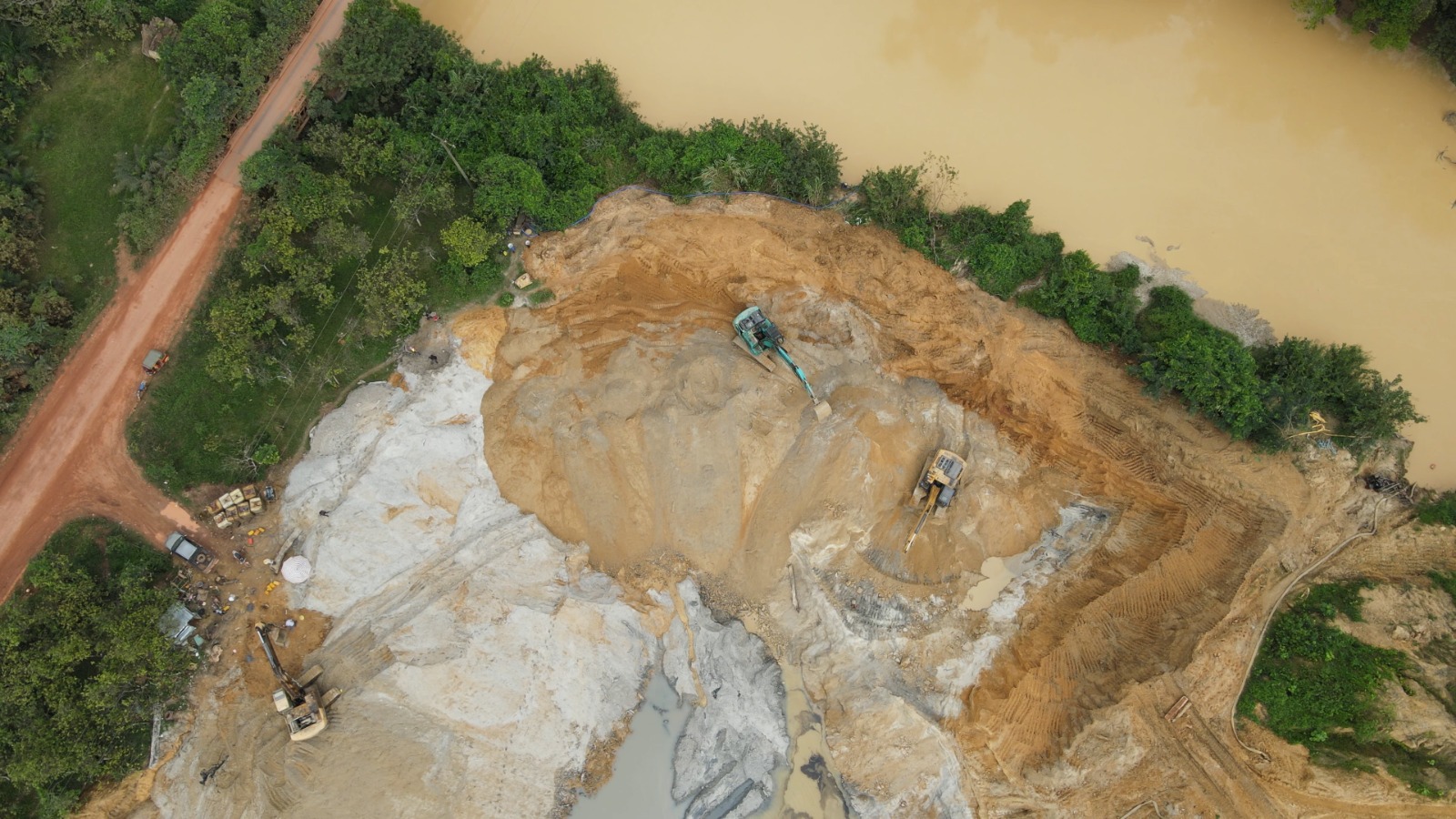
Accra, Ghana — In a historic judicial decision that has sent shockwaves through Ghana’s political and environmental sectors, the Accra High Court has sentenced Bernard Antwi Boasiako, a prominent regional chairman of the New Patriotic Party (NPP), to 20 years in prison for his role in facilitating unlicensed mining operations within the Samreboi concession in Ghana’s Western Region. The ruling, delivered on July 20, marks one of the most severe penalties imposed on a high-profile individual in Ghana’s ongoing battle against galamsey—the local term for illegal small-scale mining—which has devastated the country’s fragile ecosystems and local communities.
The Environmental and Ecological Crisis of Samreboi
The Samreboi concession lies within the Upper Guinean Forest Belt, a critical transboundary ecosystem stretching from Togo and Ghana in the east to Guinea in the west. Once a dense expanse of tropical rainforest, much of the region has been deforested over the past few decades, with vast areas repurposed for cocoa plantations, agricultural expansion, and urban development. However, significant remnants of natural forest persist, including the Tano Nimiri and Aboi forest reserves, which remain vital for biodiversity conservation and hydrological stability.
Yet, the unregulated mining activities in Samreboi have accelerated ecological degradation, with galamsey operations leaving behind a scarring landscape of abandoned pits, soil erosion, and contaminated waterways. The destruction of farmland, disruption of natural drainage systems, and pollution of water sources have had devastating consequences for both wildlife habitats and human settlements.
The most recent and visceral manifestation of this environmental destruction occurred in June 2024, when heavy monsoon rains caused the Tano River to overflow its banks, submerging over 200 homes in Samreboi and neighboring communities. Entire structures collapsed under the weight of the floodwaters, displacing hundreds and leaving families homeless and destitute. Experts and local residents have directly linked the severity of the flooding to the altered hydrological patterns caused by uncontrolled mining excavations, which have disrupted natural water absorption and increased surface runoff.
A Political and Legal Turning Point
Antwi Boasiako’s conviction stems from his alleged involvement in orchestrating illegal mining through his company, Akonta Mining, which was accused of colluding with unlicensed operators to exploit the Samreboi concession without proper permits. The case, which unfolded over months of legal proceedings, highlighted the deep-rooted corruption, political patronage, and weak enforcement that have long perpetuated galamsey despite multiple government crackdowns.
The 20-year sentence—one of the longest ever imposed in Ghana for illegal mining-related offenses—has sparked widespread debate on whether the judicial system is finally taking decisive action against environmental crimes. While some laud the ruling as a necessary deterrent, others argue that systemic issues—including political interference, inadequate law enforcement, and economic incentives for illegal mining—remain unaddressed.
Industry Leaders and Environmentalists Weigh In
Kenneth Ashigbey, the Chief Executive of the Ghana Chamber of Mines, a body representing legitimate mining and mineral processing companies, endorsed the severity of the sentence while emphasizing the broader environmental and public health crises caused by galamsey.
“We are witnessing the destruction of our water bodies through the use of changfans (floating diesel dredges), excavators, and illegal dredging equipment,” Ashigbey stated. “These machines are polluting rivers with mercury, cyanide, arsenic, and heavy metals, which are seeping into our drinking water and soil. The consequences are horrifying—women are giving birth to stillborn babies, infants are born with deformities, and entire communities are suffering from chronic illnesses.”
He further criticized the economic disparity created by illegal mining, where a few individuals amass wealth while local communities bear the brunt of environmental degradation.
“The royalties from gold mining in Samreboi have not trickled down to improve the lives of the people here,” Ashigbey noted. “Instead, we see poverty, lost livelihoods, and social vices—prostitution, drug abuse, and crime—flourishing in these communities. Farmers have lost their land, and timber workers have been left jobless because the ecosystem itself is collapsing.”
Awula Serwah, the convener of the environmental NGO Eco Conscious Citizens, welcomed the sentencing as a potential deterrent but warned against political favoritism in environmental enforcement.
“This sentence should send a strong message to those considering illegal mining,” Serwah said. “However, the real challenge is ensuring that laws are applied uniformly, regardless of political affiliation or social status. When powerful individuals hide behind politics, thinking they are above the law, the fight against environmental destruction becomes impossible to win.”
She also highlighted the need for a nationwide crackdown*, as illegal mining persists in *multiple regions beyond Samreboi, including Ahafo, Bono, and Ashanti, where forest reserves and water sources continue to be exploited without consequence.
The Broader Implications for Ghana’s Environmental Future
Antwi Boasiako’s conviction is not merely a legal victory but a symbolic one, signaling that Ghana’s courts may finally be prioritizing environmental protection over political and economic interests. However, experts warn that enforcement alone will not suffice—systemic reforms are required to address the root causes of illegal mining, including:
- Strengthening regulatory bodies to effectively monitor and penalize violations.
- Improving alternative livelihood programs for small-scale miners to reduce dependence on illegal operations.
- Investing in sustainable agriculture and reforestation to restore degraded lands.
- Enhancing public awareness campaigns to educate communities on the dangers of galamsey.
The flooding disaster in Samreboi serves as a cautionary tale—one that underscores the irreversible damage caused by unchecked environmental exploitation. As Ghana grapples with climate change, deforestation, and water scarcity, the judicial response to illegal mining will play a critical role in determining whether the country can balance economic development with ecological preservation.
For now, Bernard Antwi Boasiako’s 20-year sentence stands as a landmark in Ghana’s environmental justice movement, but the real test will be whether this ruling translates into lasting change—or if political and economic pressures will continue to undermine enforcement efforts.
