

In a dramatic turn of events that has sent ripples through Nigeria’s political and security circles, the family of a former federal minister has been released after a tense kidnapping ordeal in the heart of Ibadan, Oyo State. The victims—Mrs. Busayo Adegoke John-Paul, the sister of ex-Minister of Power Bayo Adelabu, and her twin sons—were abducted in broad daylight, sparking a frantic search that ended only after days of uncertainty and negotiation. The ordeal, which unfolded against the backdrop of Nigeria’s worsening insecurity crisis, has once again thrust the issue of kidnapping for ransom into the national spotlight, raising urgent questions about the state’s response and the resilience of communities caught in the crossfire.
The abduction, which occurred in the bustling Bodija area of Ibadan, was not just a personal tragedy for the Adelabu family but a stark reminder of the pervasive insecurity gripping Nigeria’s southwestern region. Kidnappers, operating with alarming precision, struck during daylight hours, snatching the mother and her two children from their residence before vanishing into the labyrinth of the city’s streets. Eyewitnesses described the scene as chaotic, with neighbors and passersby helpless as the abductors fled the scene, leaving behind a trail of fear and outrage.

For days, the whereabouts of the family remained unknown, plunging relatives and well-wishers into a state of despair. Security agencies, including the Nigeria Police Force and the Oyo State Security Network (Amotekun), launched a massive manhunt, scouring the state’s dense forests and remote villages in a desperate bid to locate the victims. The search was further complicated by the kidnappers’ apparent familiarity with the terrain, as well as their use of sophisticated communication tools to evade detection. Meanwhile, the Adelabu family, known for its political influence, found itself navigating a delicate balance between public pressure and private grief, with calls for restraint from those who feared the abduction could escalate into a larger crisis.
Then, on a quiet Friday evening, the news broke: the family had been freed. Details of the rescue operation remain scarce, but reports suggest that a combination of intelligence-led operations and backchannel negotiations ultimately secured their release. While authorities have yet to confirm the exact circumstances of the abduction or the terms of the family’s freedom, the development has been met with a mix of relief and skepticism. Some have praised the swift action of security agencies, while others have questioned why such a high-profile case required days of uncertainty before resolution. The incident has also reignited debates about the effectiveness of Nigeria’s anti-kidnapping strategies, particularly in regions where armed gangs operate with near-impunity.

Nigeria’s Kidnapping Epidemic: A Crisis That Won’t Quit
The abduction of the Adelabu family is not an isolated incident but part of a disturbing trend that has plagued Nigeria for years. Kidnapping for ransom has evolved from a sporadic crime to a lucrative industry, with victims ranging from schoolchildren and farmers to politicians and business tycoons. In the first half of 2026 alone, over 300 kidnapping cases were recorded across the country, according to data from the Nigeria Security Tracker. The southwestern states, including Oyo, Ondo, and Osun, have become hotspots for these crimes, with armed gangs targeting both urban and rural areas with impunity.
The motives behind these abductions vary. Some are purely financial, with kidnappers demanding ransoms that can run into millions of naira. Others are politically motivated, as in the case of the Adelabu family, where the abduction may have been an attempt to extract concessions or send a message. Then there are the ideological kidnappings, where armed groups—often linked to separatist movements or bandit gangs—use abductions to fund their operations or exert pressure on the government. Whatever the motive, the human cost is devastating. Families are left shattered, livelihoods destroyed, and communities gripped by fear. Children who survive such ordeals often suffer long-term psychological trauma, while those who do not return home become cautionary tales in a nation where security seems increasingly elusive.
The rise in kidnappings has also exposed the limitations of Nigeria’s security apparatus. Despite repeated assurances from the federal government and state authorities, the problem persists, fueled by a combination of weak law enforcement, porous borders, and a culture of impunity. In many cases, kidnappers operate with the tacit approval of local communities, who either fear retaliation or are complicit in the crimes. The result is a cycle of violence that shows no signs of abating, even as the government deploys additional troops and implements new security measures.
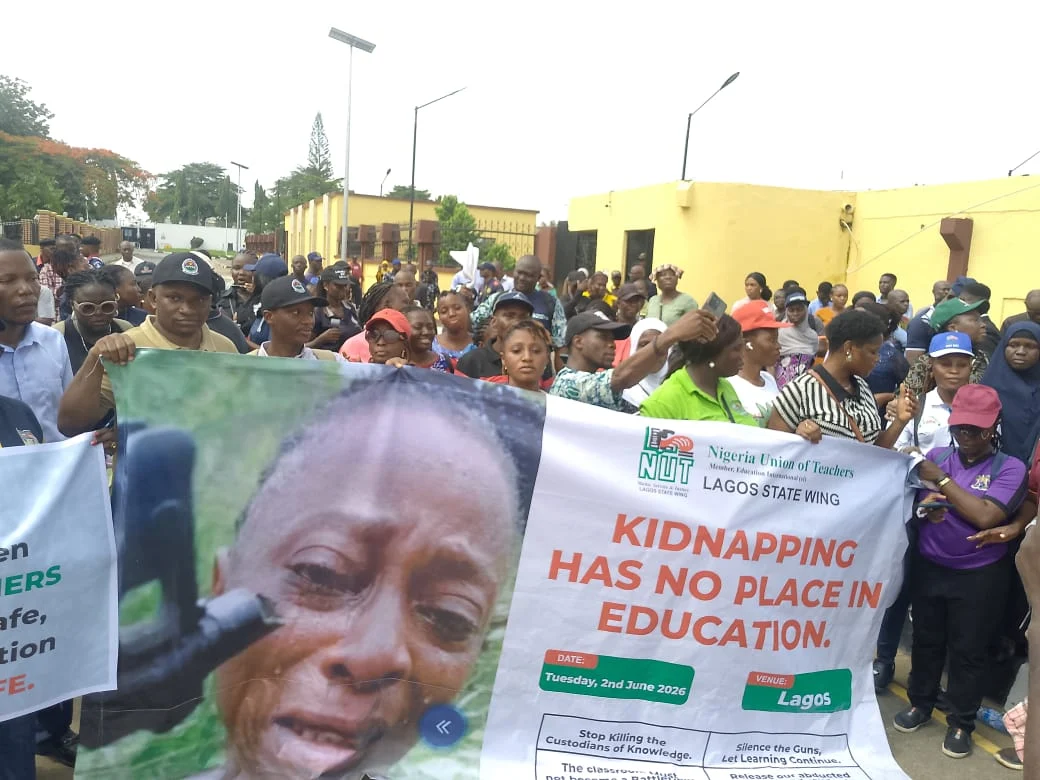
Political Fallout: The Adelabu Family’s Ordeal and Its Implications
The kidnapping of Mrs. Busayo Adegoke John-Paul and her twin sons has inevitably drawn political attention, given her brother’s status as a former federal minister and prominent political figure. Bayo Adelabu, who served as Nigeria’s Minister of Power under former President Muhammadu Buhari, has long been a polarizing figure in Nigerian politics. His family’s ordeal has thrust him back into the spotlight, not just as a victim’s relative but as a symbol of the broader security challenges facing Nigeria’s elite.
While Adelabu has largely stayed out of the public eye since the incident, his silence has not gone unnoticed. Some analysts suggest that the abduction may have been an attempt to pressure him or his political allies, given his influence in Oyo State and beyond. Others speculate that the kidnappers may have targeted the family due to their perceived wealth or political connections, hoping to extract a hefty ransom. Whatever the case, the incident has raised questions about the safety of public officials and their families in a country where kidnapping has become a tool of intimidation and extortion.
The political fallout has also extended to the Oyo State government, which has faced criticism for its handling of the crisis. While Governor Seyi Makinde has pledged to bring the perpetrators to justice, many residents remain skeptical, citing a pattern of delayed responses and inadequate security measures. The incident has further strained the relationship between the state government and local communities, some of whom accuse officials of prioritizing political optics over tangible action. In a region where trust in authorities is already fragile, the Adelabu family’s ordeal has only deepened the sense of disillusionment.

Community Resilience: How Nigerians Are Fighting Back
Amid the gloom of the Adelabu family’s ordeal, there are glimmers of hope in the form of community-led initiatives aimed at combating kidnapping and insecurity. Across Nigeria’s southwest, vigilante groups, neighborhood watch programs, and local intelligence networks have emerged as critical players in the fight against armed gangs. These groups, often operating with minimal resources, have proven remarkably effective in tracking down kidnappers and rescuing victims, sometimes even before security agencies arrive on the scene.
One such example is the Oodua Peoples Congress (OPC), a Yoruba socio-cultural organization that has taken on a quasi-security role in parts of Oyo and Ondo states. While the group has faced criticism for its vigilante tactics, its members have also been credited with disrupting kidnapping rings and providing a sense of security to local communities. Similarly, the Oyo State Security Network (Amotekun) has become a symbol of grassroots resistance against insecurity, with its operatives working closely with traditional rulers and community leaders to identify and neutralize threats.
The role of traditional institutions cannot be overstated in this fight. In many rural areas, monarchs and chiefs have become the first line of defense against kidnappers, using their influence to mobilize communities and coordinate security efforts. Their efforts are often complemented by religious leaders, who have used their platforms to condemn kidnapping and urge followers to resist the culture of violence. These initiatives, though fragmented, represent a growing movement of Nigerians taking matters into their own hands—a testament to the resilience of communities that refuse to be cowed by fear.
Yet, for every success story, there are countless failures. The Adelabu family’s ordeal is a stark reminder that community efforts, while commendable, cannot replace the need for a robust and coordinated national security strategy. Until the Nigerian government addresses the root causes of insecurity—ranging from poverty and unemployment to corruption and weak institutions—the cycle of kidnapping and violence will continue unabated.

What’s Next for Nigeria’s Security Landscape?
The release of the Adelabu family offers a momentary respite in Nigeria’s ongoing security crisis, but it is far from a resolution. For the victims, the road to recovery will be long and arduous, marked by psychological scars and a lingering sense of vulnerability. For the nation, the incident serves as a grim reminder that the fight against kidnapping requires more than just reactive measures—it demands a holistic approach that addresses the underlying drivers of insecurity.
In the short term, security agencies must redouble their efforts to track down the kidnappers and bring them to justice. This will require not only improved intelligence gathering but also greater collaboration between federal and state authorities. The Oyo State government, in particular, must demonstrate a commitment to transparency and accountability, ensuring that no stone is left unturned in the pursuit of justice for the Adelabu family and other victims of kidnapping.
In the long term, Nigeria must confront the systemic issues that have allowed kidnapping to flourish. This includes addressing the economic desperation that drives many young men into armed gangs, as well as the corruption that enables these groups to operate with impunity. It also means investing in education, job creation, and social welfare programs that can provide alternatives to a life of crime. Only by tackling these root causes can Nigeria hope to break the cycle of violence that has plagued the country for far too long.
For now, the Adelabu family’s ordeal serves as a cautionary tale—a reminder that no one is immune to the scourge of kidnapping in Nigeria today. As the nation grapples with this latest crisis, the question remains: will this be the turning point that finally forces authorities to take decisive action, or will it be just another chapter in a story of unending insecurity?

Lessons from Nigeria’s Kidnapping Epidemic
The abduction of the Adelabu family is a microcosm of a much larger crisis that has gripped Nigeria for years. To understand the scale of the problem, consider these sobering statistics:
- Over 2,000 kidnapping cases were recorded in Nigeria in 2025 alone, with ransom payments exceeding ₦5 billion ($6.25 million) according to security analysts.
- The southwestern states of Oyo, Ondo, and Osun accounted for nearly 40% of these cases, reflecting the region’s vulnerability to armed gangs.
- Children make up a significant portion of kidnapping victims, with many taken from schools or while traveling to and from home.
- Despite the deployment of thousands of security personnel, the arrest rate for kidnapping cases remains alarmingly low, with less than 10% of perpetrators brought to justice.
These numbers paint a grim picture, but they also highlight the resilience of Nigerians who continue to resist the culture of fear. From community vigilantes to traditional rulers, the fight against kidnapping is being waged on multiple fronts. Yet, without sustained political will and a commitment to addressing the root causes of insecurity, these efforts will remain piecemeal and ineffective.
The Adelabu family’s ordeal is a stark reminder that Nigeria’s security crisis is not just a matter of law enforcement—it is a reflection of deeper societal failures. Until these failures are addressed, the cycle of kidnapping and violence will persist, leaving behind a trail of broken families and shattered communities. For Nigeria to move forward, it must confront this reality head-on, with a strategy that is as bold as the challenges it faces.

Copyright notice: Images and source material are credited to their respective owners/source (original source where available). If you are the copyright owner and want an image or content removed, please contact us at topix.news/contact-us; we will review and remove it promptly.

Topix News Desk is a digital editorial team focused on delivering clear, timely, and useful news coverage for readers worldwide. Our reporting highlights African news with global context, including politics, business, economy, technology, health, sports, entertainment, travel, and culture. We aim to publish accessible, well-structured, and informative articles that help readers understand the stories shaping Africa and the world.