
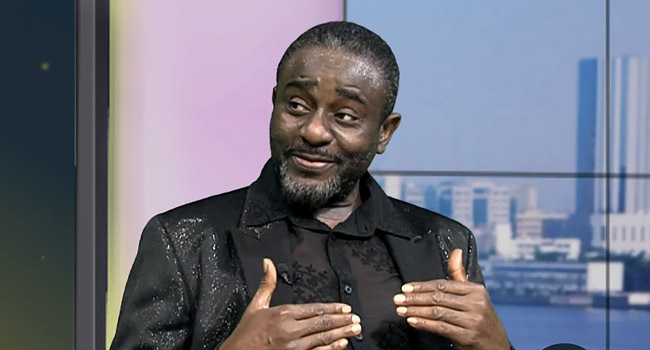
In a dramatic escalation of Nigeria’s ongoing political tensions, Nollywood heavyweight Emeka Ike has drawn a line in the sand over what he calls a brazen violation of his privacy. The actor-turned-politician is preparing to drag Lere Olayinka, media aide to Federal Capital Territory Minister Nyesom Wike, before the courts following the unauthorized release of his voter registration details from the Independent National Electoral Commission’s database. What began as a routine political skirmish has now spiraled into a full-blown legal showdown, with implications that stretch far beyond Ike’s personal reputation.

The controversy erupted when Olayinka, a vocal member of Wike’s inner circle, took to X (formerly Twitter) to share what appeared to be Ike’s voter information—complete with his full name, state of registration, and polling unit number. The aide’s post, which quickly went viral, came amid a heated exchange between political allies and opponents in Nigeria’s capital region. But what should have remained a private matter between citizens and the electoral body suddenly became a public spectacle, thrusting Ike—one of Nollywood’s most recognizable faces—into an unwanted spotlight.
Ike’s response was swift and unequivocal. Through his legal team, he issued a stern warning to Olayinka, demanding immediate retraction of the post and threatening legal action for what he describes as a deliberate breach of Nigeria’s Data Protection Act. “This is not just an attack on me as an individual,” Ike stated in a press statement. “It is an attack on every Nigerian whose personal data is entrusted to institutions meant to protect, not exploit.” His words resonate in a country where data breaches have become alarmingly common, from banking systems to government portals, leaving citizens vulnerable to identity theft and targeted harassment.
The timing of the leak adds another layer of intrigue. It surfaced just days after Nigeria’s electoral body, INEC, confirmed the integrity of its Continuous Voter Registration system following widespread allegations of manipulation during the 2023 general elections. Critics had long warned that Nigeria’s voter database—containing sensitive information on over 93 million registered voters—was a ticking time bomb for privacy violations. Ike’s case may now force authorities to confront these concerns head-on.
For Olayinka, the fallout has been immediate. While his supporters claim the post was merely an attempt to expose alleged discrepancies in voter rolls, legal experts argue that such actions violate Nigeria’s strict data protection laws. Section 17 of the Nigeria Data Protection Act (2023) explicitly prohibits the unauthorized processing or disclosure of personal data, with penalties including fines of up to ₦10 million ($12,000) and potential imprisonment. If Ike’s legal team pursues the matter, Olayinka could face severe consequences—far beyond the political fallout.

The incident also casts a shadow over the FCT Minister’s office. Nyesom Wike, a former Rivers State governor known for his combative political style, has not publicly distanced himself from Olayinka’s actions. Instead, Wike’s camp has doubled down, with some allies dismissing Ike’s outrage as political grandstanding. “Emeka Ike is not a saint,” remarked a Wike aide who declined to be named. “If he’s worried about his data, he should ask why his name keeps appearing in INEC’s controversies.” The jab refers to past allegations linking Ike to multiple voter registration anomalies, though no formal charges have ever been filed.
But the stakes are higher than personal vendettas. Nigeria’s electoral integrity remains fragile, with opposition parties and civil society groups increasingly vocal about the need for transparency in voter registration. The National Democratic Congress (NDC), for instance, has accused INEC of systemic bias in favor of the ruling All Progressives Congress (APC), citing irregularities in voter transfers and duplicate registrations. While the NDC has not directly commented on Ike’s case, its leadership has repeatedly called for an independent audit of the voter database—a demand that now seems more urgent than ever.

Ike’s legal battle could set a precedent for how Nigeria handles data breaches in its electoral system. If successful, it may compel INEC to tighten its security protocols and hold officials accountable for mishandling voter data. But the road ahead is fraught with challenges. Nigeria’s judiciary is notoriously slow, and political interference remains a persistent obstacle. Still, Ike’s high-profile status gives him a unique platform to amplify the issue, potentially pressuring authorities to act where others have failed.
Beyond the legal and political ramifications, the incident has reignited debates about privacy in Nigeria’s digital age. With social media platforms serving as battlegrounds for political warfare, the line between public interest and personal intrusion has never been thinner. Olayinka’s post, for example, was shared thousands of times within hours, with users dissecting Ike’s voter details as if they were public records. Yet, under Nigerian law, voter registration data is classified as sensitive personal information—meant to be protected, not weaponized.
For Ike, the fight is personal. A household name in Nollywood for decades, he transitioned into politics with ambitions of shaping Nigeria’s future. But now, his political career hangs in the balance, not because of policy failures or corruption allegations, but due to a single viral post. His supporters argue that the leak was a deliberate attempt to sabotage his credibility ahead of upcoming elections. “This is not about data protection,” said a close associate of Ike. “It’s about silencing a voice that challenges the status quo.”
The coming weeks will determine whether Ike’s legal threat carries weight. If he proceeds with the lawsuit, it could force INEC to confront its vulnerabilities and push Nigeria closer to adopting stronger data protection measures. But if the case fizzles out—dismissed on technicalities or buried under political pressure—it will send a clear message: in Nigeria, personal data is fair game, and privacy is a privilege, not a right.
As the drama unfolds, one thing is certain: the fallout from this incident will ripple far beyond Abuja’s political corridors. For Nigeria’s 200 million citizens, the stakes couldn’t be higher. In a country where trust in institutions is already fragile, the unauthorized exposure of voter data isn’t just a legal issue—it’s a threat to democracy itself.
Why Nigeria’s Voter Data Crisis Demands Urgent Action
Nigeria’s voter registration system has long been a source of controversy. Allegations of ghost voters, duplicate registrations, and underage enrollments have plagued INEC for years. The 2023 elections were no exception, with opposition parties crying foul over irregularities in voter transfers and missing polling units. Yet, despite these red flags, little has been done to address the root causes of these problems.
- Lack of transparency: INEC’s voter roll is notoriously opaque, with no public access to detailed breakdowns of registrations by state or local government.
- Weak enforcement: Nigeria’s Data Protection Act is rarely enforced, leaving citizens with no recourse when their data is mishandled.
- Political weaponization: As seen in Ike’s case, voter data is increasingly used as a tool to intimidate opponents or discredit rivals.
Without systemic reforms, incidents like Ike’s will continue to erode public trust in Nigeria’s electoral process. The question now is whether his legal battle will spark the change the country desperately needs—or if it will be another forgotten casualty in Nigeria’s endless cycle of political intrigue.
The Human Cost of Nigeria’s Data Privacy Failures
Behind the headlines and legal threats lies a more troubling reality: the human cost of Nigeria’s data privacy failures. For every high-profile case like Emeka Ike’s, there are thousands of ordinary Nigerians who suffer silently when their personal information is exposed. Identity theft, financial fraud, and targeted harassment are just a few of the consequences.
In 2025 alone, Nigeria recorded over 12,000 cases of identity theft linked to breaches in government and corporate databases. Victims often struggle to clear their names, facing bureaucratic hurdles and outright denial from institutions that should protect them. The irony? Many of these breaches occur in systems designed to serve the public, from INEC to the Nigerian Communications Commission (NCC).
Emeka Ike’s case shines a spotlight on this crisis. If a celebrity with resources and a platform can’t secure his data, what hope is there for the average Nigerian? The answer may lie in collective action—pressure on lawmakers to enforce existing laws, demands for greater transparency, and a cultural shift that treats privacy as a non-negotiable right.
What’s Next for Emeka Ike and Nigeria’s Political Landscape
As Emeka Ike prepares for his legal showdown, the political landscape in Nigeria grows increasingly volatile. With general elections on the horizon, every move—no matter how small—could have outsized consequences. Will Ike’s lawsuit force INEC to act, or will it be buried under layers of bureaucracy? Will Wike’s camp double down, or will they seek a quiet resolution to avoid further embarrassment?
One thing is clear: Nigeria cannot afford another election marred by data irregularities. The lessons of 2023 must not be repeated. Whether through legal battles, advocacy, or systemic reform, the protection of voter data must become a national priority. For Emeka Ike, this fight is about more than his reputation—it’s about the future of Nigeria’s democracy.
Lessons for Africa: Protecting Voter Data in the Digital Age
Nigeria’s voter data crisis is not unique. Across Africa, countries are grappling with the challenges of digital governance, from biometric voter registration to online disinformation campaigns. Yet, few have implemented robust data protection frameworks to safeguard citizens’ information.
Ghana, for example, has faced repeated controversies over its voter roll, with opposition parties alleging manipulation. Kenya’s Independent Electoral and Boundaries Commission (IEBC) has also come under fire for data security lapses, including the infamous 2017 “hack” that exposed voter details. Meanwhile, South Africa’s Protection of Personal Information Act (POPIA) remains underutilized, leaving millions vulnerable to breaches.
Africa’s democracies must learn from Nigeria’s missteps. Stronger data protection laws, independent audits of voter rolls, and public awareness campaigns are essential steps. Without them, the continent risks repeating the same mistakes—where elections are won or lost not on the strength of ideas, but on the fragility of data security.
Copyright notice: Images and source material are credited to their respective owners/source (original source where available). If you are the copyright owner and want an image or content removed, please contact us at topix.news/contact-us; we will review and remove it promptly.

Topix News Desk is a digital editorial team focused on delivering clear, timely, and useful news coverage for readers worldwide. Our reporting highlights African news with global context, including politics, business, economy, technology, health, sports, entertainment, travel, and culture. We aim to publish accessible, well-structured, and informative articles that help readers understand the stories shaping Africa and the world.