
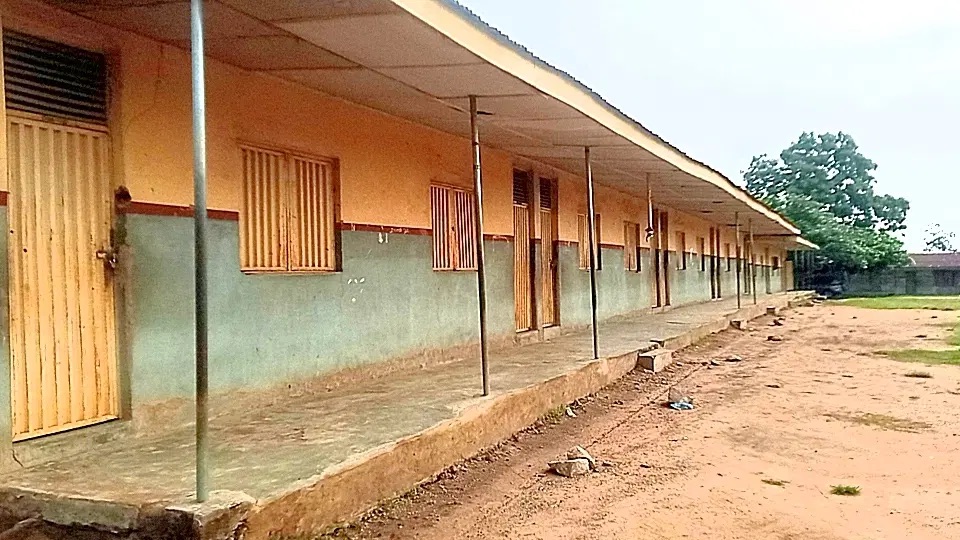
The air over Ibadan thickened with tension yesterday as a wave of protests rippled through Oyo State, grounding public schools to a halt. The strike action, called by the state’s largest teachers’ union, wasn’t just a routine walkout—it was a defiant response to an escalating crisis that has left communities reeling. For weeks, the abduction of pupils and educators from Oriire Local Government has festered into a national wound, and now, the very institutions meant to nurture young minds stand empty, their doors locked in solidarity.

The strike directive came down like a hammer. Thousands of teachers, many of whom had already endured months of unpaid salaries and deteriorating conditions, laid down their chalk and closed their classrooms. The message was clear: no business as usual until the government acts. But this wasn’t just about wages or working conditions—it was about the safety of children, the integrity of education, and the unspoken fear that has crept into every parent’s mind when sending their child to school.
The abduction, which unfolded in the dead of night, targeted a remote community where fear had already taken root. Armed men stormed the school, snatching students and teachers alike, leaving behind only shattered windows and the echoes of terrified screams. The attack wasn’t an isolated incident; it was a symptom of a larger, creeping insecurity that has plagued Nigeria’s southwest for years. Yet, when the news broke, the outrage wasn’t just confined to the state capital—it spread like wildfire, igniting protests in towns and villages far beyond the epicenter of the crisis.

When the Classroom Falls Silent: The Human Cost of the Strike
For parents in Oyo, the strike wasn’t just an inconvenience—it was a daily reminder of the fragility of their children’s futures. With schools closed, the streets filled with idle students, their uniforms hanging limply in closets as they waited for news that never came. Some families, already stretched thin by economic hardship, struggled to find alternative care for their children, while others simply resigned themselves to the uncertainty. The strike had turned the clock back on years of progress, reducing classrooms to ghost towns where laughter and learning had once thrived.
Teachers, too, were caught in the crossfire. Many had spent decades molding young minds, only to see their efforts undone by violence and neglect. The strike was their last resort—a desperate plea for a government that seemed more interested in political posturing than the welfare of its citizens. “We didn’t choose this path,” said one striking teacher, her voice trembling with exhaustion. “But how can we return to work when our students are still missing, when our colleagues are traumatized, and when no one in power seems to care?”
The Government’s Dilemma: Between Promises and Paralysis
In Abuja, the federal government scrambled to respond, but its actions so far have done little to reassure Oyo’s residents. Officials issued statements condemning the abduction, pledged to deploy security forces, and promised swift action—yet the strike continued, a stark indictment of the gap between words and deeds. Critics argue that the crisis is a symptom of deeper systemic failures: underfunded schools, poorly trained security personnel, and a culture of impunity that allows armed groups to operate with near-total disregard for the law.
The strike has also exposed the fractures within Oyo’s political leadership. The state governor, facing mounting pressure, convened an emergency meeting with union leaders, but the talks yielded little beyond vague assurances. Meanwhile, opposition figures seized on the crisis to score political points, further polarizing a situation that demanded unity. The abduction wasn’t just a security failure—it was a governance failure, one that has left citizens questioning whether their leaders are truly equipped to protect them.
Beyond Oyo: How This Crisis Reflects a National Emergency
Oyo’s ordeal isn’t an anomaly. Across Nigeria, schools have become battlegrounds, not just for education, but for survival. From Borno to Zamfara, armed groups have turned classrooms into hunting grounds, turning the act of learning into a gamble with life itself. The federal government’s response has been inconsistent at best, with military operations often failing to secure the release of hostages or prevent further attacks. The result? A generation of children growing up in fear, their futures held hostage by forces beyond their control.
Yet, the strike in Oyo has done something remarkable: it has forced the nation to confront an uncomfortable truth. The abduction of students and teachers isn’t just a local tragedy—it’s a national shame. It’s a stain on Nigeria’s reputation, one that threatens to undermine decades of progress in education and social development. If the government cannot guarantee the safety of its children, what hope is there for the country’s future?
Voices from the Ground: Fear, Anger, and the Fight for Justice
The protests in Ibadan were raw and unfiltered, a mix of grief, anger, and defiance. Parents carried signs with the faces of their missing children, their pleas for justice echoing through the streets. “We want our babies back!” screamed one woman, her voice breaking as she clutched a photograph of her daughter. “What are they teaching our children in the bush? How to be kidnappers? How to be afraid?”
Among the crowd were teachers who had risked their lives to shield students during the abduction, only to find themselves abandoned by the system. “We gave everything to this profession,” said a retired educator, her hands shaking as she spoke. “We built schools from nothing. We fought for better pay. And now, they want us to go back to work while our students are still in the hands of monsters?”
The strike has also drawn international attention, with human rights groups and global education advocates condemning the government’s inaction. Yet, for those on the ground, the outpouring of support from abroad feels distant—a drop in the ocean compared to the scale of the crisis. “We don’t need pity,” said a local activist. “We need action. We need our children home. We need our schools open. And we need leaders who will stop talking and start doing.”
What Comes Next? The Path Forward for Oyo and Beyond
As the strike enters its third day, the question on everyone’s lips is simple: what happens now? For the government, the options are limited. A heavy-handed crackdown on the strike could spark further unrest, while a weak response would embolden armed groups and erode public trust even further. The only viable path, many argue, is a coordinated effort involving federal and state authorities, security agencies, and community leaders to secure the release of the abducted and restore normalcy to Oyo’s schools.
But time is running out. Every day that passes without a resolution deepens the trauma for the victims and their families. It also sends a dangerous message: that Nigeria’s children are expendable, that education is a luxury, and that violence is the only language some leaders understand. The strike may have forced the issue into the spotlight, but the real test will come when the cameras turn away and the politicians return to their comfort zones.
For now, Oyo remains a powder keg, its people caught between despair and defiance. The strike has become more than a labor action—it’s a movement, a cry for justice, and a demand for a future where no parent has to fear sending their child to school. Whether that future materializes depends on whether Nigeria’s leaders finally decide to act.
Lessons from the Strike: Can Nigeria’s Education System Be Saved?
The crisis in Oyo has laid bare the rot at the heart of Nigeria’s education system. Decades of underfunding, corruption, and neglect have left schools ill-equipped to handle the challenges of the 21st century. Teachers, once the backbone of the nation’s intellectual growth, now struggle to survive on meager wages, while students learn in crumbling buildings with broken windows and missing roofs. The abduction was the tipping point—but it wasn’t the cause of the rot.
- Security must come first. No amount of infrastructure or curriculum reform matters if students and teachers cannot walk into a classroom without fear. The government must prioritize the protection of schools, deploying adequate security personnel and investing in intelligence-gathering to preempt attacks.
- Teachers deserve dignity. The strike wasn’t just about pay—it was about respect. Teachers who dedicate their lives to shaping the next generation should not have to beg for basic necessities. Competitive wages, professional development, and safe working conditions are non-negotiable.
- Community engagement is critical. Parents, local leaders, and civil society must be part of the solution. Trust between schools and communities can deter violence and create a support network for students and teachers alike.
- Federal intervention is overdue. The abduction in Oyo is not an isolated incident. The federal government must treat the insecurity in schools as a national emergency, coordinating with state authorities to ensure a unified response.
Without these changes, Oyo’s strike will be remembered as a fleeting moment of defiance rather than the catalyst for lasting reform. The question is whether Nigeria’s leaders have the will to turn this crisis into an opportunity—or if they will let another generation slip through their fingers.
As the sun sets over Ibadan, the streets remain tense, the schools remain closed, and the families of the abducted wait in silence. The strike may have ended, but the fight for justice has only just begun. For Oyo’s children, the dream of a safe education hangs in the balance—and with it, the future of a nation.
Copyright notice: Images and source material are credited to their respective owners/source (original source where available). If you are the copyright owner and want an image or content removed, please contact us at topix.news/contact-us; we will review and remove it promptly.

Topix News Desk is a digital editorial team focused on delivering clear, timely, and useful news coverage for readers worldwide. Our reporting highlights African news with global context, including politics, business, economy, technology, health, sports, entertainment, travel, and culture. We aim to publish accessible, well-structured, and informative articles that help readers understand the stories shaping Africa and the world.