
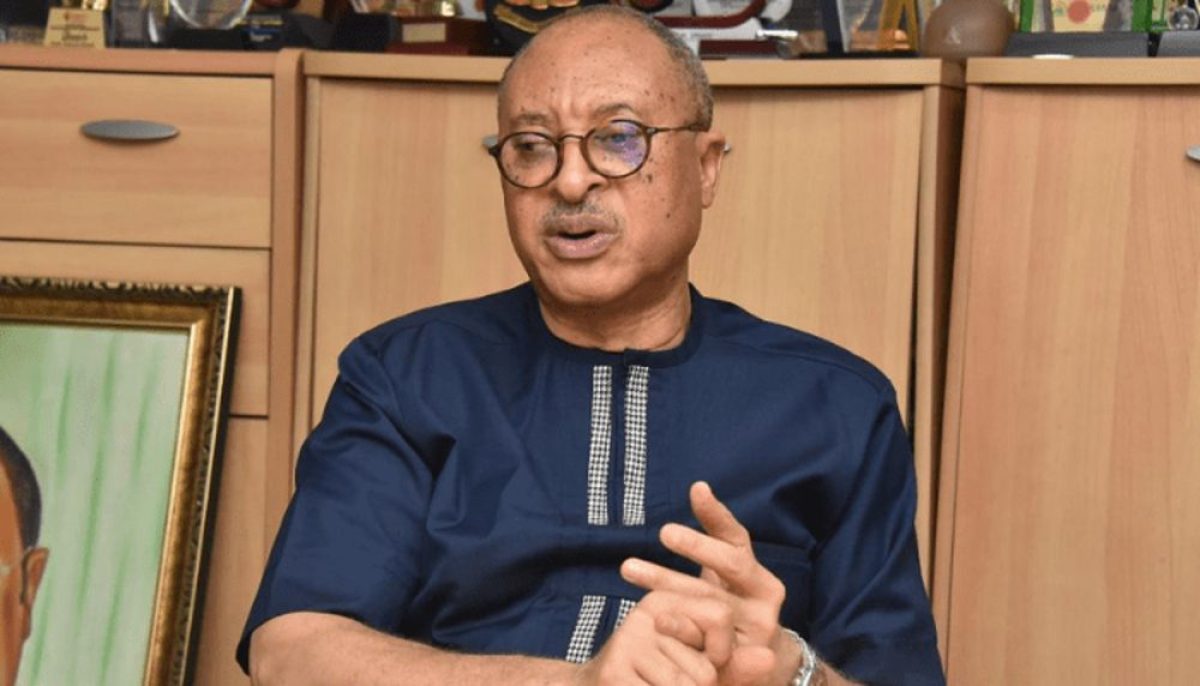
In a political landscape where loyalty often trumps integrity, Peter Obi’s decision to walk away from the African Democratic Congress (ADC) wasn’t just bold—it was a calculated gamble that could redefine Nigeria’s 2027 presidential race before it even begins. The move, described by veteran economist and political strategist Pat Utomi as a “necessary escape,” signals more than a shift in allegiance; it’s a seismic tremor in Nigeria’s already volatile political terrain.
Utomi, a scholar whose influence stretches from academia to the highest echelons of policy-making, didn’t mince words when he framed Obi’s exit as a masterstroke. “The ADC was a sinking ship,” he asserted, “and Peter Obi, with his sharp political instincts, recognized the storm long before others did.” The timing of the departure—amid whispers of internal discord and allegations of compromised processes—suggests Obi wasn’t merely reacting to pressure; he was dictating the pace of his political future.
For a man who once carried the hopes of millions as the Labour Party’s presidential flagbearer in 2023, Obi’s political journey has been anything but linear. His decision to sever ties with the ADC, a party he joined after his Labour Party bid faltered, speaks volumes about his evolving strategy. It’s a narrative that transcends party politics; it’s about survival in a system where principles often take a backseat to power.
The ADC’s Fractured Foundation: Why Obi Had No Choice
To understand the weight of Obi’s departure, one must first dissect the cracks in the ADC’s foundation. Reports of infighting, allegations of financial mismanagement, and a leadership crisis had turned the party into a liability rather than an asset. “A party that cannot govern itself internally will never govern a nation,” Utomi remarked, his words echoing the frustrations of many Nigerians who’ve watched political parties crumble under the weight of ego and incompetence.
The ADC’s struggles aren’t isolated. Nigeria’s political ecosystem is littered with parties that rise on the backs of charismatic leaders, only to collapse under the weight of their own contradictions. Obi’s exit isn’t just about avoiding a sinking ship; it’s about positioning himself as a leader who prioritizes substance over spectacle. In a country where political careers are often built on fleeting alliances, his move is a rare display of foresight.
The 2027 Election Chessboard: Where Does Obi Stand Now?
With the 2027 presidential election looming, Obi’s political future is now a puzzle that analysts are scrambling to solve. His departure from the ADC leaves a void, but it also opens doors—doors that may lead to a third-party bid, a reinvigorated Labour Party alliance, or even an independent run. The question isn’t whether Obi will run; it’s how he’ll run.
Utomi’s endorsement of Obi’s decision adds another layer to the intrigue. Known for his sharp critiques of Nigeria’s political elite, Utomi’s praise carries weight. “Peter Obi understands that politics isn’t about clinging to power; it’s about serving the people,” he said. Whether this philosophy will resonate with Nigeria’s electorate remains to be seen, but it’s a narrative that could set Obi apart in a crowded field.
Yet, the road ahead isn’t without obstacles. Obi’s past associations—both with the Labour Party and now the ADC—have left some voters skeptical. His ability to rebuild trust will depend on his next moves. Will he forge new alliances? Will he focus on grassroots mobilization? The answers to these questions could determine whether his political capital grows or erodes.
Nigeria’s Political Culture: A System in Need of Reform
Obi’s exit from the ADC is more than a personal decision; it’s a reflection of Nigeria’s broader political culture. A system where parties are often vehicles for ambition rather than platforms for change is one that stifles genuine leadership. Utomi, a longtime advocate for political reform, has long argued that Nigeria’s democracy will remain fragile until its institutions are strengthened.
The ADC’s struggles are symptomatic of a larger issue: the lack of ideological clarity in Nigerian politics. Parties rise and fall based on personalities, not policies, leaving voters disillusioned. Obi’s decision to distance himself from such an environment isn’t just strategic—it’s a statement. It suggests that the future of Nigerian politics may lie in leaders who are willing to challenge the status quo, even if it means walking away from the crowd.
The Ripple Effect: How Other Leaders Might Follow
Obi’s move could have a domino effect. If his decision inspires other high-profile politicians to reassess their alliances, Nigeria’s political landscape could undergo a seismic shift. “When a leader of Obi’s stature makes a bold move, others take notice,” Utomi observed. “It forces a reckoning—one that could either cleanse the system or deepen its fractures.”
Already, whispers are circulating about other politicians quietly exploring their options. The ADC’s loss could be another party’s gain, or it could signal the beginning of a new political realignment. What’s clear is that Obi’s exit has injected fresh uncertainty into an already unpredictable race.
For voters, the uncertainty is both frustrating and intriguing. On one hand, it underscores the lack of stability in Nigeria’s political ecosystem. On the other, it offers a glimmer of hope—that perhaps, just perhaps, the tide is turning toward leaders who prioritize integrity over expediency.
What’s Next for Peter Obi? The Road Ahead
Obi’s political future is now a blank canvas, and the brushstrokes are his to make. Will he return to the Labour Party, or will he carve out a new path entirely? The coming months will reveal his strategy, but one thing is certain: his decision to leave the ADC has already cemented his reputation as a leader who isn’t afraid to take risks.
- Reassess alliances: Obi may need to rebuild bridges or forge new ones to strengthen his 2027 bid.
- Grassroots engagement: A renewed focus on local politics could help him reconnect with voters disillusioned by elite-driven parties.
- Policy clarity: With the ADC’s ideological void, Obi has an opportunity to define a clear, compelling vision for Nigeria’s future.
Utomi’s words serve as both a warning and an endorsement. “Nigeria’s political space is unforgiving,” he cautioned. “But those who dare to challenge its norms often leave the deepest marks.” Obi’s next steps will determine whether he becomes a footnote in Nigeria’s political history or a chapter that reshapes its future.
One thing is undeniable: Peter Obi’s exit from the ADC wasn’t just a tactical retreat. It was a declaration that in Nigeria’s high-stakes political game, survival often depends on knowing when to fold—and when to double down.
Copyright notice: Images and source material are credited to their respective owners/source (original source where available). If you are the copyright owner and want an image or content removed, please contact us at topix.news/contact-us; we will review and remove it promptly.

Topix News Desk is a digital editorial team focused on delivering clear, timely, and useful news coverage for readers worldwide. Our reporting highlights African news with global context, including politics, business, economy, technology, health, sports, entertainment, travel, and culture. We aim to publish accessible, well-structured, and informative articles that help readers understand the stories shaping Africa and the world.