

Norway’s Scatec Unveils Ambitious $5 Billion Investment Plan to Transform Egypt’s Green Economy
In a landmark meeting aimed at accelerating Egypt’s transition toward a sustainable and low-carbon economy, Norwegian renewable energy giant Scatec has announced plans to inject $5 billion over the next two years into Egypt’s burgeoning green energy sector. The investment will span renewable energy, desalination, green hydrogen, battery storage, and AI-driven data centers, positioning Egypt as a regional powerhouse in clean energy innovation.
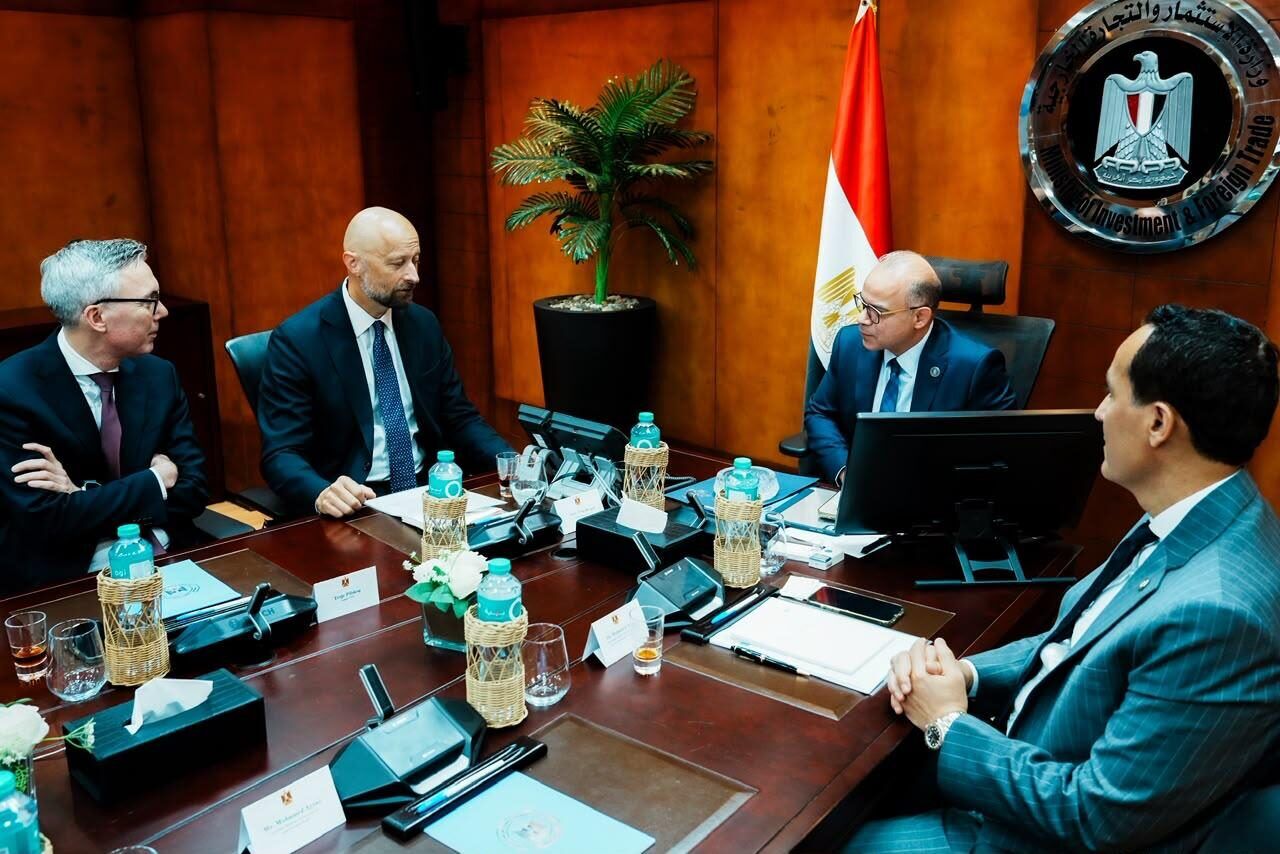
The strategic discussions took place between Egypt’s Minister of Investment and Foreign Trade, Mohamed Farid, and senior executives from Scatec, including Terje Pilskog (CEO), Mohamed Amer (EVP for MENA), and Norway’s Ambassador to Egypt, Erik Husem. Also present were Mohamed Awad (CEO of Egypt’s General Authority for Investment and Free Zones, GAFI), reinforcing the government’s commitment to fostering foreign direct investment (FDI) in high-impact sectors.
A $5 Billion Boost: Scatec’s Vision for Egypt’s Green Future
Scatec, already a major player in Egypt with existing investments totaling $5 billion, is set to double its financial commitment through a series of cutting-edge projects. The company’s expansion strategy focuses on four key pillars:
-
Renewable Energy & Wind Power Expansion
Scatec is accelerating the development of large-scale wind farms, leveraging Egypt’s consistent wind resources—particularly in the Red Sea region and the southern governorates. The company has already commissioned multiple wind projects, including the Benban Solar Park, one of the world’s largest solar installations. Future expansions will integrate advanced turbine technology to enhance energy output and grid stability. -
Green Hydrogen & Ammonia Production
Recognizing Egypt’s potential as a global hub for green hydrogen, Scatec is investing in electrolyzer-based hydrogen production facilities, powered entirely by renewable energy. The initiative aligns with Egypt’s National Hydrogen Strategy, which aims to position the country as a key exporter of green hydrogen to Europe and Asia. Additionally, Scatec plans to develop green ammonia plants, a critical feedstock for shipping and industrial decarbonization. -
Desalination & Water Security Solutions
With water scarcity being a pressing challenge, Scatec is exploring renewable-powered desalination plants to convert seawater into freshwater. These projects will not only reduce reliance on fossil fuels but also supplement Egypt’s water reserves, particularly in coastal regions. The integration of solar and wind energy into desalination processes will make these facilities highly efficient and sustainable. -
AI-Optimized Data Centers & Green Computing
Scatec is also eyeing data center development, with a focus on carbon-neutral infrastructure. By powering data centers with 100% renewable energy, the company aims to reduce Egypt’s digital sector’s carbon footprint while supporting the growing demand for cloud computing and AI services. These facilities will incorporate advanced cooling systems and energy-efficient server technologies to maximize sustainability.
Egypt’s Strategic Advantages: Why Scatec Chose the Nile Delta
During the meeting, Minister Mohamed Farid underscored Egypt’s unparalleled strategic advantages in attracting green energy investments:
- Prime Geographical Location: Egypt’s position at the crossroads of Africa, Europe, and Asia makes it an ideal transit hub for renewable energy exports, particularly green hydrogen and ammonia.
- Robust Infrastructure: The country boasts developed ports (e.g., Alexandria, Damietta), high-capacity transmission grids, and industrial zones like the Egypt Economic Zone (EEZ) and 6th of October City, which are primed for large-scale green projects.
- Favorable Regulatory Framework: Egypt has implemented tax incentives, feed-in tariffs, and renewable energy certificates (RECs) to encourage private sector participation in the green transition.
- Abundant Renewable Resources: With over 10,000 hours of sunshine annually and strong offshore wind potential, Egypt is one of the most solar- and wind-rich nations in the world.
Farid further emphasized the government’s commitment to supporting investors who contribute to job creation, technology transfer, and export growth. He highlighted ongoing efforts to streamline investment procedures, reduce bureaucratic hurdles, and ensure a stable policy environment for green industries.
Green Hydrogen & Desalination: The Keys to Egypt’s Competitive Edge
The discussion also centered on green hydrogen and desalination as game-changers for Egypt’s economy:
-
Green Hydrogen as an Export Commodity:
Egypt’s low-cost solar and wind energy makes it a cost-competitive producer of green hydrogen, with potential to supply European markets under the EU’s Green Deal. Scatec’s investments will help develop the necessary infrastructure, including hydrogen pipelines and export terminals, to facilitate large-scale trade. -
Desalination for Food & Industrial Security:
By integrating renewable energy into desalination, Egypt can reduce water scarcity pressures while cutting greenhouse gas emissions from traditional thermal desalination plants. This dual benefit—water security and climate resilience—positions Egypt as a regional leader in sustainable water solutions. -
Data Centers & the Digital Economy:
The rapid growth of AI, blockchain, and cloud computing in Egypt has created demand for energy-efficient data centers. Scatec’s green data center projects will not only lower operational costs but also align with Egypt’s Vision 2030, which aims to boost digital transformation and attract tech-driven investments.
Norway’s Ambassador Praises Egypt as a Gateway to Africa
Erik Husem, Norway’s Ambassador to Egypt, described the country as a strategic partner for Norwegian businesses, particularly in renewable energy and green technology. He noted that bilateral economic relations have seen steady growth, driven by Norway’s expertise in offshore wind, hydrogen, and sustainable infrastructure.
Husem highlighted Egypt’s role as a bridge between Norway and Africa, stating:
“Egypt’s dynamic investment climate and strong government support make it an ideal partner for Norway’s green energy transition. We are confident that this $5 billion investment will not only benefit Egypt but also contribute to Africa’s broader energy security and sustainability goals.”
Scatec CEO Affirms Unwavering Commitment to Egypt’s Green Revolution
Terje Pilskog, CEO of Scatec, reaffirmed the company’s long-term commitment to Egypt, calling it one of the most strategic markets in Africa and the Middle East. He stated:
“Egypt’s vision for a green economy aligns perfectly with Scatec’s global strategy. With strong government backing, world-class renewable resources, and a growing demand for clean energy solutions, Egypt is poised to become a regional leader in sustainable development. Our $5 billion investment over the next two years will accelerate this transformation, creating jobs, reducing emissions, and securing Egypt’s energy future.”
Pilskog also emphasized that Scatec’s success in Egypt is built on a foundation of partnership with local stakeholders, including Egypt’s Ministry of Electricity, the New & Renewable Energy Authority (NREA), and private sector entities. The company’s local workforce development programs and technology transfer initiatives are designed to ensure long-term sustainability** beyond initial project phases.
The Road Ahead: Challenges & Opportunities
While the $5 billion investment marks a historic milestone, several key challenges must be addressed to ensure its success:
-
Grid Integration & Storage Solutions:
Egypt’s electricity grid must be upgraded to accommodate high volumes of intermittent renewable energy. Scatec’s battery storage projects will play a crucial role in balancing supply and demand, but large-scale grid modernization remains essential. -
Financing & Debt Structuring:
The high upfront costs of green energy projects require innovative financing models, including green bonds, international climate funds, and public-private partnerships (PPPs). Egypt’s Egyptian Sovereign Fund (ESF) and multilateral institutions (e.g., AfDB, World Bank) are expected to play a key role in mobilizing capital. -
Workforce Training & Localization:
To maximize economic benefits, Egypt must upskill its workforce in renewable energy technologies, hydrogen production, and data center operations. Scatec has already initiated training programs, but scaling these efforts will be critical for local job creation. -
Policy Stability & Regulatory Clarity:
While Egypt has made significant progress in green energy legislation, consistent policy frameworks are needed to attract long-term investors. The Renewable Energy Law (2020) and Green Hydrogen Law (2023) provide a strong foundation, but ongoing refinements will ensure investor confidence.
Conclusion: Egypt’s Green Energy Renaissance
Scatec’s $5 billion investment is more than just a financial commitment—it is a testament to Egypt’s potential as a global leader in clean energy. By leveraging its strategic location, abundant renewables, and progressive policies, Egypt is positioning itself as a regional hub for green hydrogen, desalination, and sustainable data centers**.
As Terje Pilskog noted, this partnership is not just about energy production—it is about building a sustainable future that boosts economic growth, creates jobs, and reduces carbon emissions. With strong government support, international collaboration, and Scatec’s cutting-edge technology, Egypt is well on its way to becoming Africa’s green energy powerhouse.

Scatec executives and Egyptian officials discuss the $5 billion green energy expansion plan.

Aerial view of Egypt’s Benban Solar Park, one of Scatec’s flagship renewable energy projects.

Conceptual illustration of Egypt’s future green hydrogen and desalination infrastructure.
