

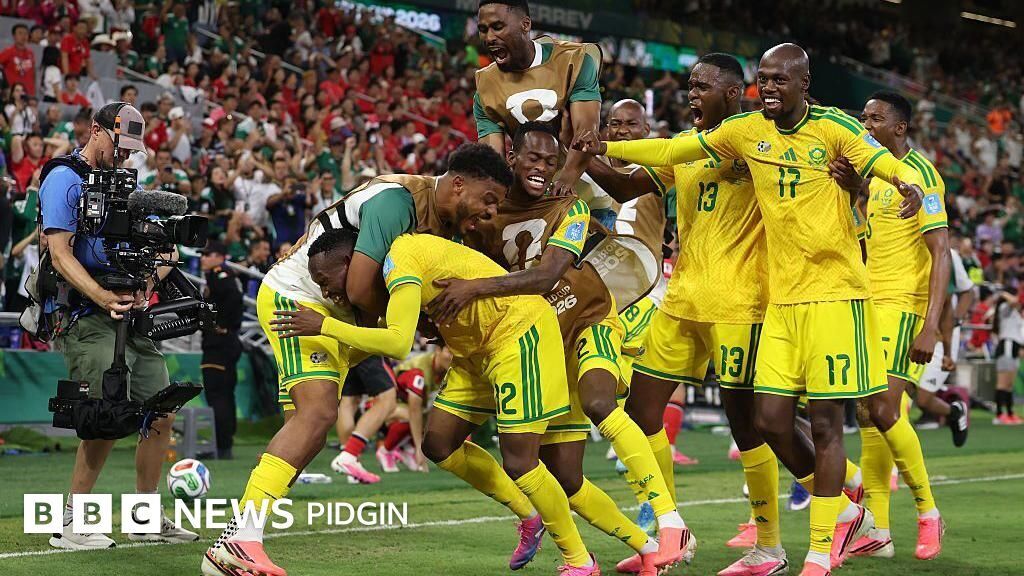
In a high-stakes encounter that sent shockwaves through the footballing world, Bafana Bafana, South Africa’s national team, delivered a stunning upset by defeating South Korea 2-1 in a fiercely contested FIFA World Cup group stage match. The victory, secured on the final whistle, propelled the Proteas into a commanding position within Group H, while also marking a historic moment for the team’s young talents. The match, played at the Al Thumama Stadium in Doha, Qatar, was a testament to resilience, tactical brilliance, and a late flourish from Thapelo Maseko, whose decisive goal sealed the win.
A Clash of Titans: South Africa vs. South Korea
The matchup between South Africa and South Korea was far from a foregone conclusion. South Korea, a perennial powerhouse in Asian football and a team with a rich history of World Cup appearances, entered the game as the underdog’s most formidable opponent. Known for their disciplined defense, swift counterattacks, and a roster brimming with experienced players, the Taegeuk Warriors were expected to dominate possession and exploit South Africa’s defensive vulnerabilities.
South Africa, on the other hand, had been a team of contradictions throughout the tournament. While they had shown flashes of creativity and attacking prowess, their defensive organization had been inconsistent, leading to several early goals in previous matches. However, under the guidance of interim manager Graham Arnold, the Proteas had demonstrated a renewed sense of purpose, particularly in their 2-0 win over Switzerland and a 1-1 draw with Japan. This victory over South Korea would be their most significant statement yet, proving their ability to compete with the tournament’s elite.
First Half: South Korea’s Dominance and South Africa’s Struggles
From the opening whistle, it was clear that South Korea would not make this an easy game. The Taegeuk Warriors controlled the tempo of the match, dictating play with a 60% possession rate and a relentless pressing game that forced South Africa into errors. The Proteas’ midfield, led by Periavone Mashaba and Tebogo Mokoena, struggled to break through South Korea’s compact defensive shape, while their full-backs, Dzandi Mahlangu and Kyle Maybin, were exposed in wide areas.
The first real opportunity came in the 12th minute when Son Heung-min, one of the world’s most prolific strikers, found himself in space behind the South African defense. His shot was saved by Itumeleng Khune, but the rebound fell to Lee Jaewoo, who volleyed it past Khune in the 15th minute. The goal sent shockwaves through the South African camp, and the Proteas were left scrambling to regain their composure.
South Korea continued to press, and by the 20th minute, they had another chance when Hwang Hee-chan cut inside from the right, only to see his shot blocked by Bongani Mhlongo. However, the Proteas’ defense remained fragile, and Lee Kang-in nearly doubled South Korea’s lead in the 25th minute with a powerful strike that was saved at the last moment by Khune.
Despite the early setback, South Africa refused to fold. Periavone Mashaba and Kyle Maybin began to assert themselves more in midfield, and the Proteas started to find better passing combinations. The turning point came in the 32nd minute when Thapelo Maseko, a young but explosive winger, received the ball on the left flank. With a sharp cut inside, he evaded two South Korean defenders before unleashing a low-driven cross into the box. Periavone Mashaba headed it onto the crossbar, but the rebound fell to Thapelo Maseko himself, who volleyed it into the net with his right foot.
The goal, 1-1, electrified the South African squad and their fans. The match had swung in their favor, and the momentum shifted decisively.
Second Half: South Africa’s Resilience and the Decisive Goal
South Korea, now under pressure, attempted to regain control with a series of counterattacks. Son Heung-min and Hwang Hee-chan continued to be a constant threat, but South Africa’s defense, led by Itumeleng Khune and Bongani Mhlongo, held firm. The Proteas’ midfield, now more composed, began to dictate play, and Tebogo Mokoena became a key playmaker, linking up effectively with Periavone Mashaba and Thapelo Maseko.
The second half saw a more balanced contest, with both teams creating chances. South Korea had another golden opportunity in the 58th minute when Lee Kang-in found himself one-on-one with Khune. His shot was saved, but the rebound was cleared off the line by Dzandi Mahlangu. South Africa, meanwhile, had their best chance in the 62nd minute when Thapelo Maseko received the ball in the box and fired a shot that was saved by Kim Seung-gyu.
However, it was South Korea’s defensive error that ultimately cost them the match. In the 78th minute, Thapelo Maseko once again found himself in space on the left wing. This time, he cut inside and received a perfect through ball from Periavone Mashaba. With his back to goal, Maseko turned and driven a powerful shot into the top corner of the net, past a stretched Kim Seung-gyu.
The goal, 2-1, was a masterclass in composure and timing. It silenced the South Korean bench and sent the South African players into a frenzy. The match was now over, but the celebrations would continue long after the final whistle.
Post-Match Analysis: What This Means for Bafana Bafana
South Africa’s victory over South Korea was not just a result of a single goal but a turnaround in mentality and execution. The Proteas had shown that they could compete with the tournament’s best, even when facing a team with their level of experience and quality.
For Thapelo Maseko, the goal was a career-defining moment. The 20-year-old winger had already made a name for himself in the African U-20 Championship, but this performance cemented his status as one of the most exciting young talents in World Cup history. His ability to read the game, make intelligent runs, and deliver clinical finishes will be closely watched in the coming matches.
Graham Arnold, the interim manager, praised his players for their resilience and adaptability. “This is what we’ve been working for,” Arnold said. “We knew we had to be patient and let our players take their chances. Thapelo’s goal was the result of that patience. We’re now in a strong position in the group, and we’ll continue to fight for every point.”
The victory also had psychological significance. South Africa had been the underdog in this tournament, often struggling to find consistency. But this win proved that they could compete with the best, and it sent a clear message to their remaining opponents: Bafana Bafana are here to stay.
Group Stage Implications: South Africa’s Path Forward
With this win, South Africa now sits top of Group H, alongside Japan and Germany. Their next match against Germany, a team they have historically struggled against, will be a make-or-break game. A win here would secure their place in the Round of 16, while a draw would still keep them in contention.
South Korea, meanwhile, will be looking to bounce back against Germany in their final group match. A loss would likely see them finish third in the group, but they will still have a chance to advance through the play-offs if they perform well in their remaining fixtures.
For South Africa, the focus now shifts to consistency. They must replicate the defensive solidity and attacking creativity they displayed against South Korea in their next match. If they do, they could very well become the first African team to reach the knockout stages of the World Cup since 2010.
Final Thoughts
The South Africa vs. South Korea match was a masterclass in resilience, tactical awareness, and individual brilliance. Thapelo Maseko’s goal was the icing on the cake, but the real story was South Africa’s ability to turn the tide of a game and prove that they belong in this tournament.
As the World Cup continues, all eyes will be on Bafana Bafana. With a top spot in the group secured, the next challenge is to consistently perform at the highest level. If they do, they could write their name into the annals of football history as the first African team to advance beyond the group stage in decades.
