

A Nation on Edge: South Africa’s Looming Anti-Immigration Protests and Government Measures
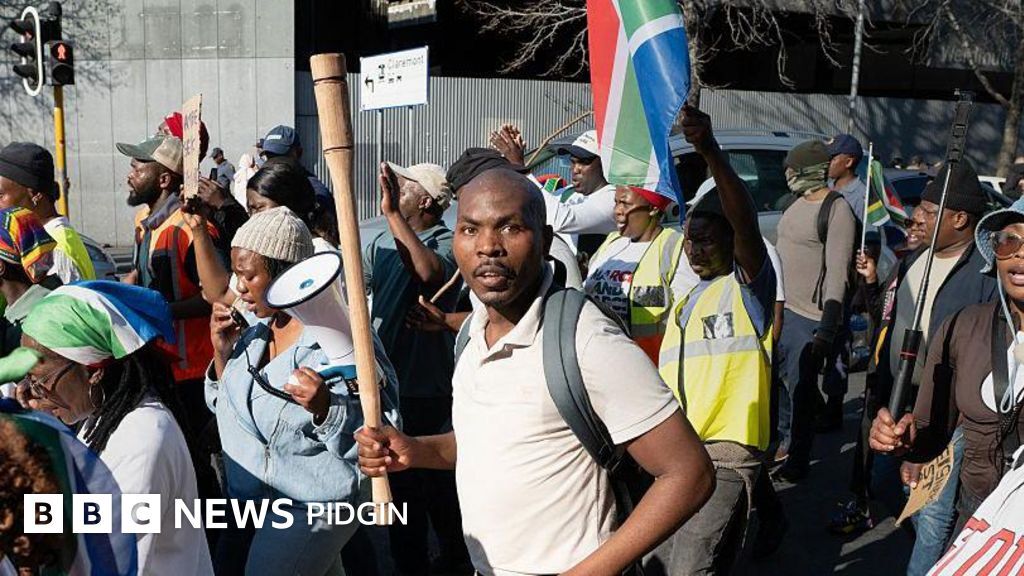
South Africa stands at a critical juncture as the June 30 deadline looms for undocumented migrants to leave the country voluntarily or face potential enforcement actions. The tension has escalated following a series of violent protests targeting foreign nationals, prompting the government to mobilize security forces, review immigration policies, and engage in high-stakes diplomatic discussions. The Acting Minister of Police, Firoz Cachalia, and Defence Minister Angie Motshekga have met to coordinate strategies ahead of what could become one of the most significant anti-immigration demonstrations in the country’s history.
The June 30 Deadline: A Government Mandate or a Warning Shot?
The South African government, under President Cyril Ramaphosa, has made it clear that illegal migration will not be tolerated. In a live national address on June 7, 2026, Ramaphosa announced a series of measures to curb undocumented immigration, citing concerns over job displacement, economic strain, and the exploitation of foreign nationals. The president emphasized that South Africa would no longer turn a blind eye to illegal migration, a stance reinforced by recent protests where foreign nationals—particularly from Ghana, Nigeria, and Malawi—have been targeted.
The June 30 deadline was set as a final warning to undocumented migrants to self-deport or risk legal consequences. While the government has not explicitly stated that forced removals will commence on that date, the message is clear: compliance is mandatory.
Protest Groups Demand Action: The March and March Movement
One of the most vocal factions pushing for the June 30 deadline is the March and March movement, a South African-based group advocating against illegal immigration. In a public statement, the group outlined its demands, including:
– A direct address from President Ramaphosa before June 30 to outline the government’s stance on undocumented migrants.
– Mass street occupations in major cities to pressure authorities into enforcing immigration laws.
– A non-violent protest but one that sends a clear message: “No more exploitation of our economy by illegal migrants.”
The group’s rhetoric has been uncompromising:
“This is not about chasing migrants out—it is a war against the exploitation of our people. We want stability, not chaos. We want illegal immigrants to self-deport before June 30.”
Despite calls for peaceful demonstrations, the potential for unrest remains high, with reports suggesting that some protesters may occupy streets and public spaces to draw attention to their cause.
Government Crackdown: Police Readiness and Identity Document Scrutiny
In preparation for the protests, the South African Police Service (SAPS) has been placed on high alert. Acting Police Minister Firoz Cachalia confirmed that security forces are fully prepared to manage demonstrations while ensuring constitutional rights to protest are upheld. However, any violence, lawlessness, or illegal activities will be met with a firm response.
Cachalia’s statements to local media, including DailyMaverick, underscored the government’s stance:
“South Africans have the right to protest, but we will not tolerate any acts of violence or lawlessness. Our operations are focused on ensuring that all foreign nationals in the country are legally documented and compliant with immigration laws.”
The Department of Home Affairs has also taken proactive steps, blocking the identity documents of suspected undocumented migrants and initiating investigations into the validity of certain IDs. Officials have warned that failure to resolve discrepancies could lead to permanent cancellation of documents, effectively rendering individuals stateless or leaving them vulnerable to deportation.
Diplomatic Fallout: Repatriation Efforts and Regional Tensions
The protests have not gone unnoticed by South Africa’s neighbors. Countries like Ghana, Nigeria, and Malawi have already begun repatriating their citizens from South Africa, citing safety concerns and the need to protect their nationals from potential violence. While the South African government has not confirmed exact numbers, sources indicate that organized bus evacuations have been arranged, with some migrants voluntarily returning home.
Minister of Justice Mmamoloko Nkhensani Kubayi, who chairs the Inter-Ministerial Committee (IMC) on Migration, has been actively involved in coordinating these efforts. The committee has engaged with regional leaders, including King Misuzulu kaZwelithini of KwaZulu-Natal, to discuss managed migration policies and ensure that repatriation processes are conducted orderly and without undue hardship.
Security and Military Coordination: A Unified Front
The June 30 protests have prompted unprecedented coordination between the police, military, and Home Affairs. While details of the closed-door meeting between Minister of Police Firoz Cachalia and Defence Minister Angie Motshekga remain undisclosed, sources suggest that the discussion centered on:
– Enhanced border security to prevent illegal crossings.
– Rapid response units to manage protests and potential unrest.
– Logistical support for mass deportations if necessary.
The military’s involvement has raised questions about whether South Africa is preparing for large-scale forced removals, though officials have denied any immediate plans for mass expulsions. Instead, the focus remains on encouraging voluntary departures while maintaining law and order.
International Watch: How the World is Reacting
The situation in South Africa has drawn global attention, with human rights organizations and neighboring governments monitoring developments closely. Critics argue that the government’s approach risks violating international law, particularly if forced deportations occur without due process. However, supporters of the anti-immigration stance contend that South Africa’s sovereignty must be protected from what they describe as an economic and social burden.
As the June 30 deadline approaches, the world will be watching to see whether South Africa’s response will be diplomatic, coercive, or somewhere in between. One thing is certain: the stakes have never been higher, and the consequences of miscalculation could be profound and long-lasting.


