

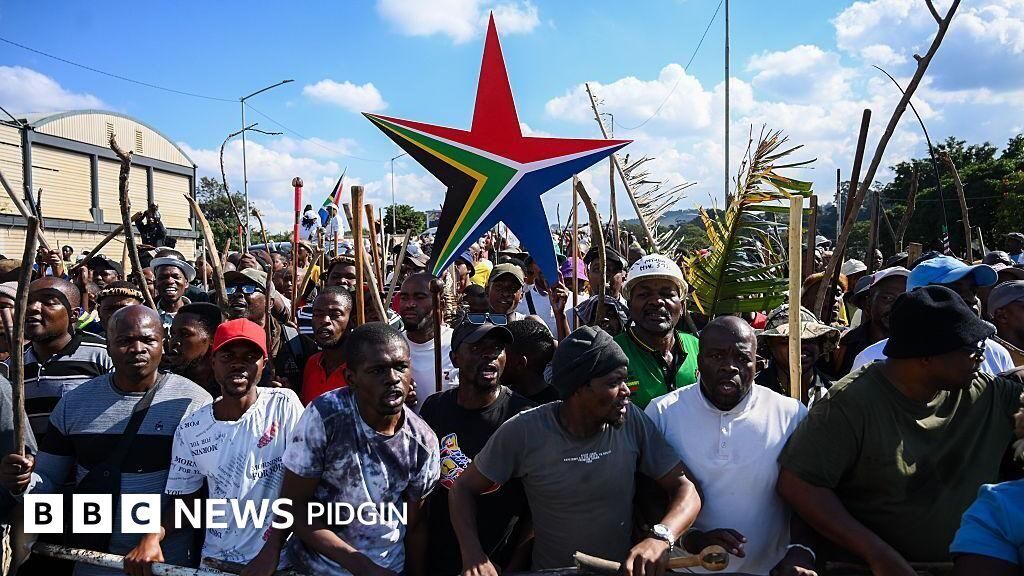
A Nation on Edge: South Africa’s June 30 Anti-Immigration Protests and Government Response
South Africa stands at a critical juncture as anti-immigration protests scheduled for June 30 gather momentum, with organizers, law enforcement, and affected communities preparing for what could be one of the most significant public demonstrations in recent years. The protests, spearheaded by groups such as March and March and the Labour and Civic Organisation (LACO), aim to address what organizers describe as an “illegal immigration crisis” and push for stricter border controls and deportation policies. Meanwhile, authorities have deployed an unprecedented number of security personnel to prevent violence and ensure public order. Below is a detailed breakdown of the key locations, organizers, and law enforcement strategies in place ahead of the protests.
Major Protest Hubs and Organized Marches
1. Johannesburg: A Focus on Youth and Community Services
The March and March coalition has announced its first major march in Johannesburg, targeting inner-city areas, youth development, and access to community services. Approximately 5,000 protesters are expected to gather in Beyers Naudé Square before proceeding to Constitution Hill, where they will hand over a memorandum to the Hillbrow Station Commander.
- Route and Timeline:
- Start Time: 10:00 AM
- End Time: 2:00 PM
- March Path: Protesters will traverse Helen Joseph Street, Troye Street, Twist Street, Kotze Street, and Queen Street, moving through some of Johannesburg’s most densely populated and economically vulnerable areas.
-
Key Stop: Hillbrow, a neighborhood often associated with high levels of migration and socio-economic challenges.
-
Objective: The memorandum will likely demand stricter immigration enforcement, improved border security, and better integration policies for documented migrants while addressing concerns over undocumented arrivals.
2. Hillbrow: LACO’s Call for Policy Reform
The Labour and Civic Organisation (LACO) has organized a separate march expected to draw around 1,200 participants. This event will focus on illegal immigration policies and engage directly with the Department of Home Affairs.
- Route and Timeline:
- Start Time: 9:00 AM
- End Time: 12:00 PM
- Gathering Point: Intersection of Kotze and Hospital Streets (Hillbrow)
-
March Path: Protesters will proceed to the Department of Home Affairs offices on Plein Street, where they will submit a memorandum outlining their demands.
-
Key Demands: Participants are likely to push for faster deportation processes, stricter visa regulations, and increased penalties for employers hiring undocumented migrants.
3. Midrand: Youth Employment as a Central Theme
In Midrand, the Mayibuye Youth Activism Movement will lead a labor-focused march centered on youth employment opportunities. Around 800 participants are anticipated to gather at the intersection of Dale Road and Modderfontein Road before marching to the Sandton Plant Hire Offices.
- Route and Timeline:
- Start Time: 10:00 AM
- End Time: 12:00 PM (with dispersal by 1:00 PM)
-
Objective: The memorandum submitted will address local employment concerns, arguing that undocumented migrants are displacing South African youth from job opportunities.
-
Context: Midrand, a wealthy suburb, has seen growing tensions over economic displacement, with some residents blaming migrants for lower wages and reduced job prospects.
Law Enforcement: A Massive Deployment to Prevent Chaos
The South African Police Service (SAPS) has mobilized an extensive security presence to prevent violence, protect protesters, and maintain public order. Acting Minister of Police Firoz Chachalia emphasized that the police’s role is neutral—to protect both protesters and affected communities while ensuring demonstrations remain lawful and orderly.
National Security Measures
- Police Deployment: Thousands of officers have been stationed across high-risk areas, including KwaZulu-Natal (the epicenter of protest activity), Johannesburg, and other major cities.
- Collaboration with Private Security: The SAPS has partnered with private security firms, businesses, religious leaders, traditional authorities, and labor unions to create a multi-layered monitoring system.
- Volunteer Network: Nearly 10,000 volunteers have been mobilized to monitor communities, particularly in KwaZulu-Natal, where tensions are highest.
Regional Police Strategies
- Johannesburg Metropolitan Police Department (JMPD):
- Three legally approved marches are scheduled for June 30, including those in Johannesburg’s inner city, Hillbrow, and Midrand (Glen Austin).
- Spontaneous protests are also expected, prompting the JMPD to deploy Public Order Policing units to monitor routes, manage traffic, and prevent clashes.
-
Traffic Advisory: Motorists and commuters are urged to plan alternative routes, as heavy traffic and roadblocks are anticipated due to the large-scale gatherings.
-
Mpumalanga Province:
- Acting Provincial Commissioner Maj Gen Zeph Mkhwanazi has assured that June 30 will be a normal working day, with police preventing looting, vandalism, and arson.
-
Key Message: “No looting, no shopbreaking, and no burning of tires. We will maintain visibility on all critical routes and infrastructure.”
-
KwaZulu-Natal:
- Acting Provincial Commissioner Major General Phumelele Makoba has stated that the police will create a secure environment for protesters while preventing criminal elements from hijacking peaceful demonstrations.
- Focus Areas: High-risk zones, border regions, and areas with historical protest activity will receive enhanced policing.
International Reactions: Countries Repatriating Citizens
The protests have already prompted several African nations to repatriate their citizens ahead of the June 30 deadline. Countries including Nigeria, Ghana, Malawi, Mozambique, and Zimbabwe have facilitated voluntary returns for citizens concerned about their safety.
- Uganda’s Latest Move:
- Acting Minister of Foreign Affairs Haruna Kasolo announced that 746 Ugandans have already registered to leave South Africa due to security and safety concerns.
-
Planned Evacuation: More Ugandan citizens are expected to depart in the coming days as authorities finalize evacuation plans.
-
Broader Regional Impact:
- The Southern African Development Community (SADC) and African Union (AU) have expressed concern over rising xenophobia, urging South Africa to balance security with humanitarian considerations.
Organizers’ Stance: No Intention to Shut Down the Country
Despite fears of national unrest, organizers have reiterated that their goal is not to paralyze the country but to pressure the government into action. Ngobese-Zuma, a representative of civil society groups, stated:
“Our demonstration is not about shutting down South Africa. It is about compelling the government to enforce immigration laws, secure our borders, and address the illegal immigration crisis that is destabilizing communities.”
- Key Demands:
- Stricter visa regulations
- Faster deportation of undocumented migrants
- Better integration programs for legal residents
- Increased penalties for employers hiring undocumented workers
Potential Challenges and Risks
While authorities have taken extensive precautions, several risks remain:
1. Spontaneous Violence: Historical protests in South Africa have seen looting, arson, and clashes between migrants and locals.
2. Border Security Gaps: Undocumented migrants continue to enter South Africa through porous borders, making enforcement difficult.
3. Economic Displacement: Many South Africans believe migrants compete for jobs and lower wages, fueling resentment.
4. Humanitarian Concerns: Thousands of migrants, including vulnerable groups like women and children, could be left stranded or deported without proper documentation.
Conclusion: A Nation at a Crossroads
As South Africa prepares for June 30, the protests represent a complex intersection of economic grievances, political pressure, and humanitarian concerns. While organizers seek stricter immigration policies, authorities are working to prevent chaos and ensure public safety. The outcome of these demonstrations could reshape South Africa’s immigration landscape for years to come, with broader implications for regional stability and human rights.
With police on high alert, international repatriations underway, and civil society mobilized, the next 48 hours will be critical in determining whether South Africa can navigate this crisis without descending into violence.


