

In an era where urban living demands both financial prudence and quality of life, WalletHub’s comprehensive study of 182 U.S. metropolitan areas has uncovered critical insights for renters seeking the best balance between affordability, rental market stability, and overall livability. Using a 100-point scoring system, the analysis evaluated each city across 21 meticulously selected metrics, including rental burden (percentage of income spent on rent), job market strength, housing availability, and lifestyle factors like safety, education, and cultural amenities.
The results reveal a sharp divide between cities that excel in cost-effectiveness and livability—primarily clustered in the Sun Belt and Midwest—and those that struggle with soaring rents, limited opportunities, and diminished quality of life. Below, we dissect the top 10 cities for renters, the worst-performing markets, and the key factors driving these rankings.
The 10 Best Cities for Renters: Affordability Meets Quality of Life
1. Scottsdale, Arizona (Top Overall)
Scottsdale, a Sun Belt gem, tops the list as the best city for renters due to its exceptional affordability and high quality of life. With renters spending less than 22% of their income on housing—well below the 30% affordability threshold—the city offers luxury living at a fraction of the cost compared to coastal metropolises. US News & World Report further validates its economic strength, ranking Arizona 17th nationally in employment growth, ensuring robust job prospects.
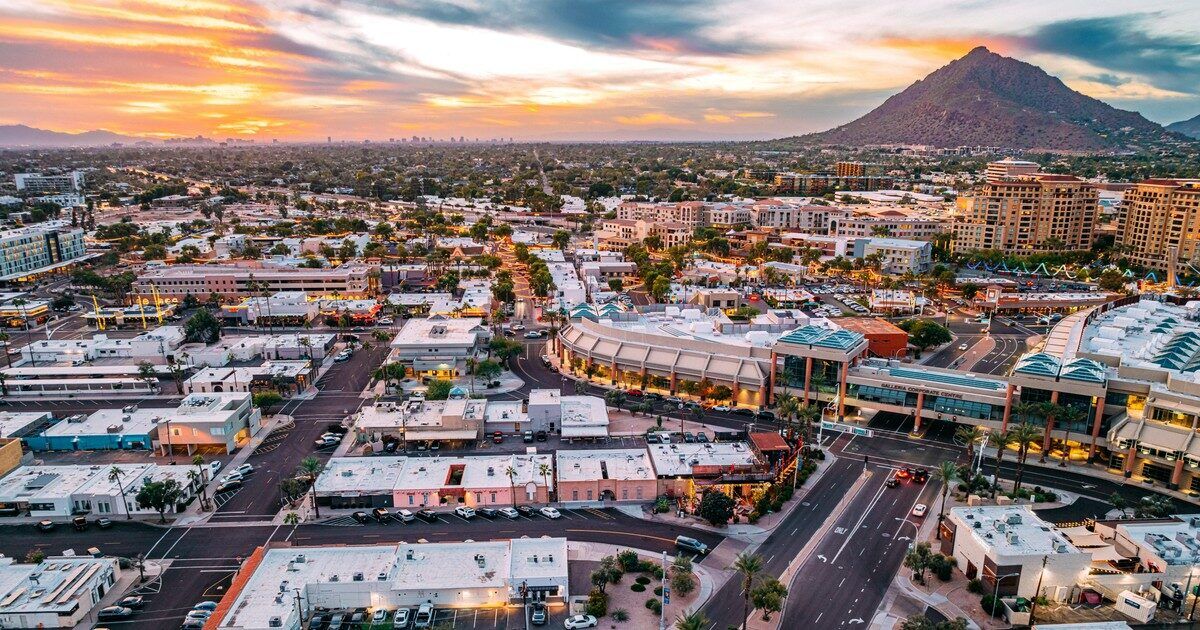
Beyond finances, Scottsdale boasts world-class healthcare, top-rated schools, and a thriving arts scene, making it a desirable yet underrated destination for remote workers and professionals.  Aerial view of Scottsdale’s scenic landscapes and modern developments.
2. Chandler, Arizona
Rounding out the top 3, Chandler is celebrated for its strong job market (driven by tech and manufacturing) and low rental costs. The city’s master-planned communities provide family-friendly environments with excellent public schools and low crime rates, while median rents remain significantly below national averages.
3. Gilbert, Arizona
Gilbert, often called the “City of Engagement,” offers affordable suburban living with minimal traffic congestion compared to Phoenix. Its diverse economy, anchored by defense contractors and healthcare providers, ensures steady employment, while rental prices stay competitive—often 15-20% below Arizona’s average.
4. McKinney, Texas
A fast-growing Dallas suburb, McKinney stands out for its booming job market (especially in finance and logistics) and low rental costs. The city’s family-oriented neighborhoods and top-rated school districts make it a hidden gem for renters prioritizing work-life balance.
5. Plano, Texas
Plano, another Dallas-Fort Worth metro hotspot, offers high-paying corporate jobs (thanks to Fortune 500 headquarters) while keeping rental prices below regional averages. Its walkable downtown, excellent healthcare access, and low violent crime rates contribute to its top-tier ranking.
6. Frisco, Texas
Frisco has transformed from a quiet suburb into a tech and business hub, attracting remote workers and startups. With median rents still reasonable (compared to Austin or San Francisco), the city provides outdoor recreation, strong schools, and a low cost of living—ideal for young professionals and families.
7. Mesa, Arizona
Mesa, the third-largest city in Arizona, offers affordable housing, a growing job market (aerospace and healthcare), and a low cost of living. Its diverse cultural scene and proximity to Phoenix’s amenities make it a practical yet vibrant choice** for renters.
8. Gilbert, Texas
While Gilbert, Arizona, also made the list, Gilbert, Texas (near Dallas) is a highly sought-after alternative. Known for its low property taxes, excellent schools, and strong economic growth, it provides rental stability without the high prices of Austin or Houston**.
9. Peoria, Arizona
Peoria is a budget-friendly desert city with rapid job growth in logistics and healthcare. Its low rental costs, family-friendly policies, and minimal traffic make it a standout for renters who want affordability without sacrificing amenities**.
10. Richardson, Texas
Richardson, a Dallas suburb, is home to numerous tech companies and research institutions, offering high-paying jobs while keeping rental prices competitive. Its safe neighborhoods, top schools, and low crime rates solidify its place in the top 10**.
The 10 Worst Cities for Renters: High Costs, Low Opportunities, and Declining Livability
On the opposite end of the spectrum, these cities struggle with unaffordable rents, weak job markets, and deteriorating quality of life, with neither category ranking above 123rd place in WalletHub’s analysis.
1. San Francisco, California
As expected, San Francisco tops the list of worst cities for renters, with median rents exceeding $3,500/month—more than 50% of household income for many residents. Despite its global job opportunities, the housing crisis, high taxes, and limited space make it untenable for most renters**.
2. New York City, New York
NYC’s sky-high rents (often $3,000+ for a studio) and competitive job market (where low-wage workers are outnumbered by high earners) create a severe affordability gap. While cultural and economic opportunities abound, the cost of living remains prohibitive for the average renter.
3. Los Angeles, California
LA’s rental market is equally brutal, with median rents surpassing $2,800/month in many neighborhoods. Traffic congestion, high crime in certain areas, and limited job growth outside entertainment/tech** further diminish its appeal for renters.
4. Honolulu, Hawaii
Hawaii’s high cost of living is unmatched, with renters spending over 40% of income on housing in many cases. Limited job opportunities outside tourism and government and expensive groceries/transportation make it one of the least renter-friendly cities.
5. San Jose, California
San Jose’s tech-driven economy brings high salaries, but rents are equally exorbitant—often $3,200+ for a basic apartment. Competitive housing markets and high property taxes make it difficult for renters to save or upgrade**.
6. Miami, Florida
While Miami’s warm climate and job market (finance, tourism) attract renters, rents have surged 20%+ in the past year, pushing many out of reach. Homelessness and traffic congestion** also detract from its livability.
7. Boston, Massachusetts
Boston’s high cost of living is driven by education (Harvard, MIT) and healthcare jobs, but renters pay premium prices—often $2,500+ for a one-bedroom. Limited affordable housing and high property taxes make it challenging for long-term renters**.
8. Seattle, Washington
Seattle’s tech boom has driven rents to unsustainable levels, with median prices exceeding $2,600/month. Homelessness, traffic, and limited job diversity beyond tech further reduce its appeal for renters.
9. Washington, D.C.
Despite high-paying government and nonprofit jobs, D.C.’s rental market is volatile, with median rents near $2,400/month. Limited affordable housing and high cost of living make it difficult for mid-income renters**.
10. Newark, New Jersey
Newark, while close to NYC job opportunities, suffers from high crime rates, poor school rankings, and rents that are 20-30% higher than surrounding areas. Economic stagnation and limited investment in infrastructure make it one of the worst for renters.
Key Takeaways: What Makes a City Renter-Friendly?
WalletHub’s analysis highlights three critical factors that define the best (and worst) cities for renters:
- Affordability
- Best cities (e.g., Scottsdale, Mesa) keep rent below 22% of income, ensuring financial stability.
-
Worst cities (e.g., SF, NYC) exceed 40-50%, forcing renters into debt or housing insecurity.
-
Job Market Strength
- Sun Belt cities (Texas, Arizona) offer diverse, growing economies (tech, healthcare, logistics).
-
Coastal cities (LA, SF, NYC) rely on high-paying but competitive sectors, leaving low-wage workers struggling.
-
Quality of Life
- Best cities provide safe neighborhoods, good schools, and outdoor access.
- Worst cities suffer from high crime, poor infrastructure, and limited amenities**.
Final Verdict: Where Should Renters Move?
For renters prioritizing affordability and livability, the Sun Belt (Arizona, Texas) and Midwest offer the best balance of low costs, job growth, and quality of life. Conversely, coastal and high-opportunity cities (NYC, SF, LA) remain unaffordable for most, unless high salaries offset the costs.
As remote work reshapes housing preferences, mid-sized Sun Belt cities (like Chandler, Gilbert, Plano) are emerging as the next frontier for renters—combining economic opportunity with sustainable living costs**.
Would you like a detailed breakdown of rental trends in these cities? Stay tuned for exclusive insights on emerging renter hotspots in the coming months.
