

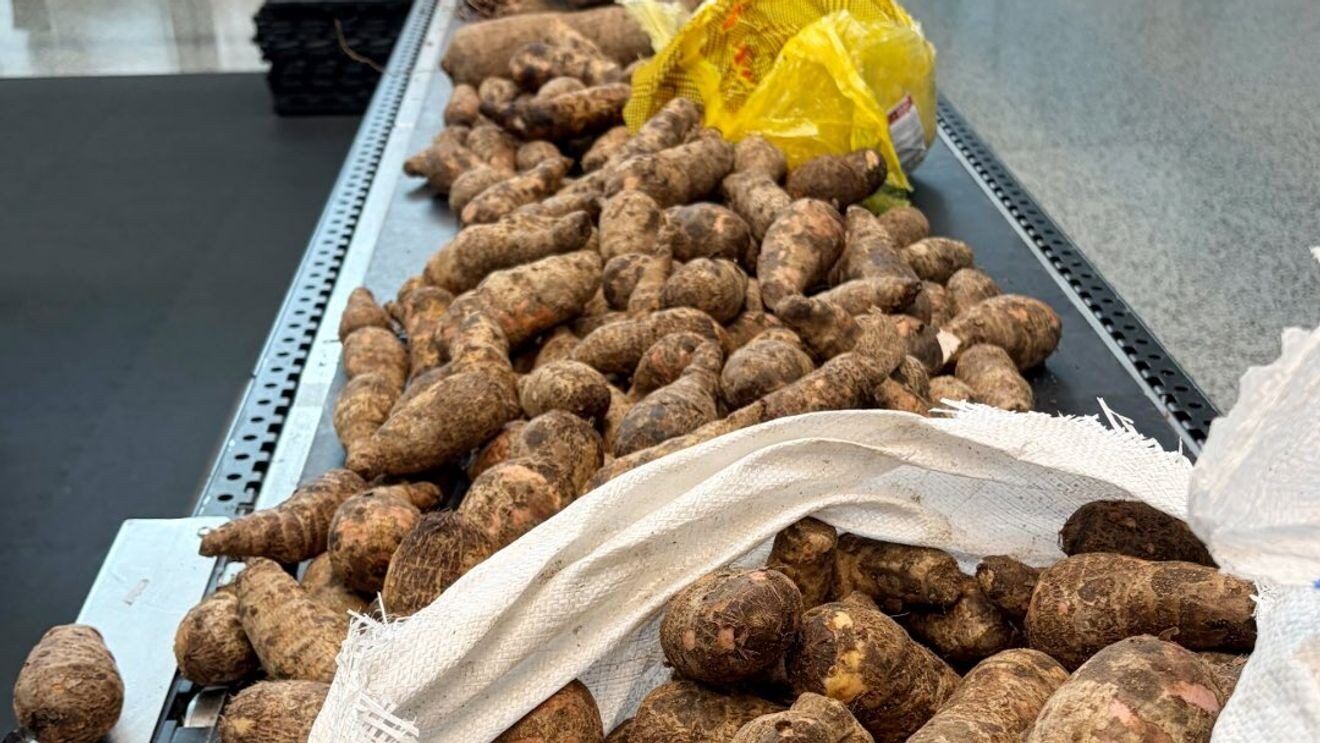
SEATTLE — In a recent enforcement action that underscores the critical role of agricultural inspections at U.S. borders, U.S. Customs and Border Protection (CBP) officers in Seattle intercepted 114 pounds of yams imported by a traveler arriving from Accra, Ghana. The discovery of live insect larvae and multiple infestation holes within the shipment prompted the immediate seizure, marking a significant case of agricultural contamination entering the country.
A Detailed Examination Reveals Serious Infestation Risks
During a routine inspection at the Seattle-Tacoma International Airport, CBP agricultural specialists conducted a thorough examination of the yams, which were declared as personal baggage. The inspection uncovered visible signs of pest activity, including irregular holes in the tuberous roots—a clear indication of internal infestation. Upon further inspection, live larvae were confirmed within the yams, raising concerns about potential agricultural and environmental threats if the produce had entered the domestic market.
CBP officials emphasized that such interceptions are part of their mandate to prevent the introduction of harmful pests and diseases that could devastate U.S. crops. The agency did not disclose additional details about the traveler or the specific type of larvae found, but the case highlights the growing challenges in global food security due to improper packaging and handling of agricultural products.
The Broader Implications of Agricultural Quarantine Failures
This incident is not an isolated event. In recent years, CBP has increasingly intercepted contaminated food items, including fruits, vegetables, and spices, from international travelers. While many shipments are declared as personal use, the risk of unauthorized commercial distribution remains a concern. The 2023 CBP Agricultural Interceptions Report noted that over 1,200 shipments were seized for pest infestations, with sub-Saharan Africa emerging as a high-risk region due to limited quarantine controls in exporting countries.
Experts warn that unregulated agricultural imports can lead to:
– Economic losses for U.S. farmers due to competition from infested produce.
– Environmental damage if invasive species establish themselves in local ecosystems.
– Public health risks, as some pests carry pathogens that could contaminate food supplies.
How CBP’s Agricultural Inspections Work
CBP’s Plant and Animal Inspection Program operates at major U.S. airports, seaports, and land borders, employing certified agricultural specialists to inspect incoming shipments. The process includes:
1. Visual Inspection – Checking for mechanical damage, unusual odors, or signs of pest activity.
2. X-Ray and Thermal Scanning – Detecting hidden infestations within packaging.
3. Laboratory Testing – Confirming the presence of live pests, eggs, or fungal growth.
4. Destruction or Quarantine – Infested items are either destroyed or held for further analysis.
In this case, the yams were immediately quarantined pending further pest identification. While the final disposition of the shipment was not disclosed, CBP typically destroys infested produce to prevent any potential spread.
Travelers Warned: Strict Compliance with U.S. Agricultural Laws
The CBP seizure serves as a reminder to international travelers that all food items—even those intended for personal consumption—must comply with U.S. Department of Agriculture (USDA) regulations. Violations can result in:
– Fines for illegal commercial importation.
– Confiscation of infested goods.
– Potential deportation in cases of fraudulent declarations.
Travelers are advised to:
– Declare all food items upon arrival.
– Use USDA-approved packaging to prevent pest infestations.
– Avoid bringing fresh produce unless it has been properly treated and certified.
Global Food Security in Focus: Why This Case Matters
The interception of 114 pounds of infested yams from Ghana is more than just a single enforcement action—it reflects broader systemic challenges in global food trade safety. Ghana, like many African nations, relies heavily on yams as a staple crop, but poor storage and transportation practices often lead to pest contamination. When such produce enters the U.S. market—even unintentionally—it poses a significant risk to domestic agriculture.
Dr. Emily Chen, a food security specialist at the University of Washington, noted:
“This case highlights the need for strengthened international cooperation between exporting countries and U.S. border agencies. Ghana, like other high-risk regions, must implement better pre-shipment inspections to reduce the likelihood of infested produce reaching global markets.”
What Happens Next? Destruction or Alternative Disposition?
While CBP has not released the final fate of the seized yams, standard protocol dictates that highly infested agricultural products are destroyed to prevent pest spread. However, in some cases, non-infested portions may be released for consumption after sanitization.
For now, the 114 pounds of yams remain under agricultural quarantine, awaiting official pest identification and disposal. The case will likely be reviewed in CBP’s annual agricultural enforcement reports, reinforcing the agency’s commitment to protecting U.S. food systems from foreign pests.
A Call for Stricter Global Agricultural Standards
This incident underscores the urgent need for international agricultural standards to prevent unauthorized pest introductions. Organizations like the International Plant Protection Convention (IPPC) have been advocating for stricter pre-shipment inspections, but enforcement remains inconsistent** across exporting nations.
As global trade continues to expand, border agencies like CBP will play an increasingly critical role in detecting and intercepting contaminated shipments before they enter the U.S. market. For now, travelers and exporters must prioritize compliance to avoid legal penalties and public health risks.
CBP officers inspecting a shipment of yams at Seattle-Tacoma International Airport.
Close-up of infested yam showing visible pest holes and larvae.
USDA-approved agricultural inspection equipment used at U.S. borders.

Infographic: Common pests found in imported produce.
CBP agricultural specialist conducting a thermal scan of a shipment.
Seized yams being placed in quarantine storage.
Map highlighting Ghana as a high-risk agricultural export region.
USDA guidelines for travelers bringing food into the U.S.
CBP’s annual agricultural interception statistics.
Alternative disposal methods for infested produce.
Interview with a CBP agricultural inspector discussing enforcement challenges.
Yam farming in Ghana, illustrating pre-shipment risks.
X-ray imaging used to detect hidden pest infestations.
Traveler declaration form for agricultural products.
USDA-approved pest treatment facilities.
Economic impact of pest-infested imports on U.S. farmers.
CBP’s role in global food security initiatives.
Alternative quarantine procedures for high-risk shipments.
Public awareness campaign on safe food imports.
