

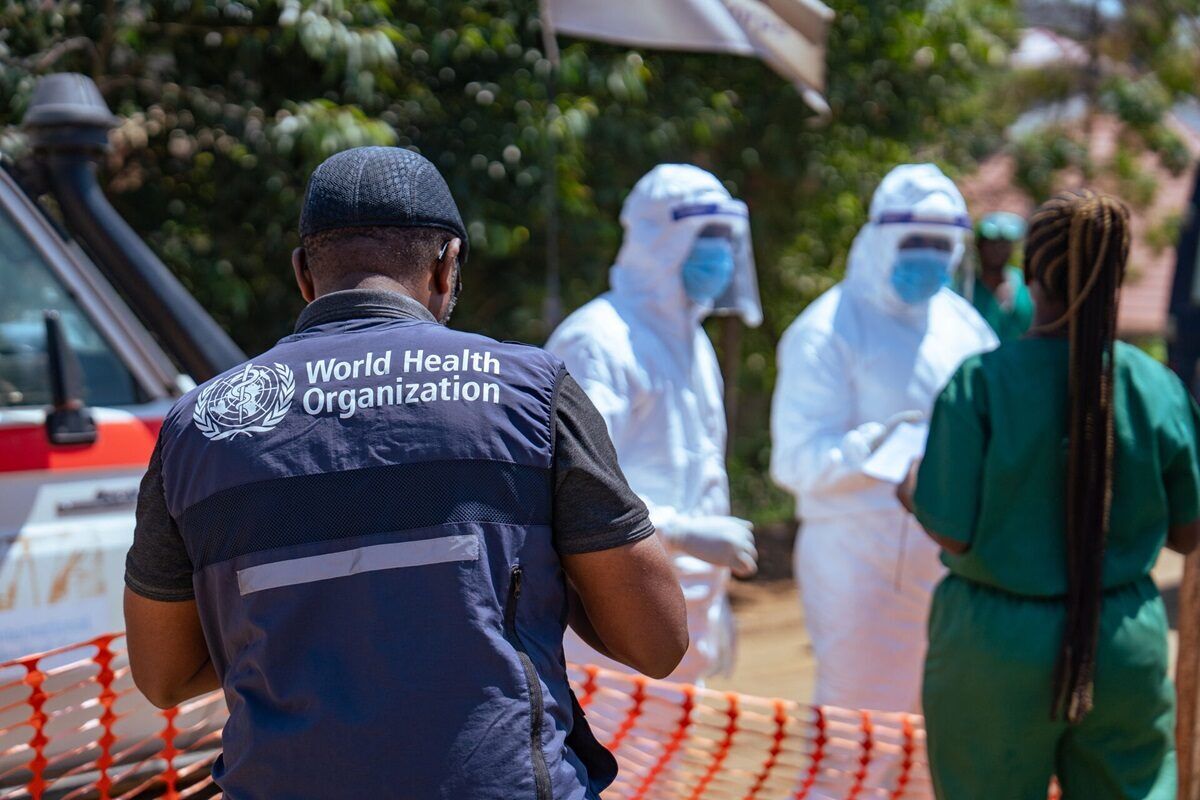
The Africa Centres for Disease Control and Prevention (Africa CDC) and the World Health Organization (WHO) have issued a critical call for an accelerated, community-driven response to curb the escalating Ebola outbreak in the Democratic Republic of Congo (DRC). The organizations emphasize the need for enhanced early detection, improved contact tracing, expanded healthcare access, and sustained support for frontline workers—all while addressing the unique challenges faced by affected communities.
This urgent appeal follows a high-level joint mission to Uganda and the DRC on August 4–5, 2026, where delegates—led by Dr. Tedros Adhanom Ghebreyesus (WHO Director-General), Dr. Jean Kaseya (Africa CDC Director-General), and Dr. Mohamed Janabi (WHO Regional Director for Africa)—assessed operational gaps, engaged with local stakeholders, and aligned response strategies with national priorities.
Key Insights from the Mission: Lessons from Uganda’s Success and DRC’s Challenges
The delegation’s three-country visit—covering Kampala (Uganda), Bunia (DRC), and Kinshasa (DRC)—provided critical perspectives on both outbreak containment strategies and persistent operational hurdles.
1. Uganda’s Model of Rapid Containment: A Blueprint for the DRC
In Kampala, the team reviewed Uganda’s successful termination of its Ebola outbreak on July 28, 2026, which recorded 20 confirmed cases and two deaths. The mission commended Uganda’s multi-sectoral approach, highlighting:
– Early detection and rapid response through strengthened surveillance.
– Effective contact tracing, with 100% follow-up completion among all listed contacts.
– Community engagement, where trusted local leaders disseminated accurate information, reducing stigma and encouraging early reporting.
– Cross-border coordination, ensuring neighboring regions remained vigilant despite Uganda’s declaration of outbreak cessation.
However, the organizations warned that neighboring countries—including the DRC—must maintain heightened preparedness, given the ongoing transmission risks and the potential for cross-border spillover.
2. Bunia, DRC: Ground-Level Challenges in the Epicenter of the Outbreak
The delegation’s visit to Bunia, Ituri Province—the epicenter of the DRC’s outbreak—revealed severely strained response mechanisms. Key findings included:
- Critical operational gaps:
- Delayed detection: Many cases were identified too late, allowing transmission chains to spread.
- Insufficient healthcare access: Treatment centers, such as the Rwangole Ebola Treatment Centre (ETC), were operating at 139% capacity in North Kivu, overwhelming staff and resources.
- Supply shortages: Essential medical supplies, personal protective equipment (PPE), and diagnostic tools remained inadequate in high-risk zones.
-
Resistance to response activities: Some communities distrusted health workers, delayed reporting, or refused safe burial practices due to misinformation and cultural beliefs.
-
Humanitarian and security constraints:
- Insecurity: Armed groups and volatile conditions hindered access to affected areas.
- Mass population movement: Displacement and migration complicated contact tracing and containment efforts.
- Overburdened health systems: Existing healthcare infrastructure was collapsing under pressure, diverting resources from routine services.
As of August 4, 2026, the DRC’s outbreak had worsened significantly:
– 3,973 confirmed cases across 51 health zones in five provinces.
– 1,801 deaths and 776 recoveries.
– 99 new cases and 52 deaths reported in the latest 24-hour period.
– Contact tracing efficiency lagged, with only 75% of contacts followed up—far below the 95% benchmark needed for effective transmission interruption.
3. Kinshasa: Aligning National Leadership with Community Needs
The mission concluded in Kinshasa, where delegates met with President Félix Tshisekedi and government officials to discuss strategic priorities, including:
– Strengthened national coordination between provincial and federal authorities.
– Enhanced community involvement, ensuring response measures are culturally appropriate and locally led.
– Improved protection for health workers, who operate under extreme risk due to violence, fatigue, and resource constraints.
– Sustained funding and resource mobilization to scale up diagnostics, treatments, and logistics.
A Community-Centric Approach: The Key to Containment
Both Africa CDC and WHO underscored that success hinges on communities themselves. Critical actions include:
– Trust-building through local leaders: Religious, women’s, and youth groups must be actively involved in disseminating accurate information and addressing fears.
– Symptom awareness and early reporting: Communities must recognize Ebola symptoms (fever, vomiting, bleeding) and seek care without delay.
– Safe and dignified burials: Proper burial practices are essential to prevent secondary infections, yet resistance persists due to cultural taboos.
– Decentralized response efforts: Health interventions must be delivered closer to affected populations, reducing reliance on centralized systems overwhelmed by displacement and insecurity.
Immediate Actions Required to Halt Transmission
To reverse the outbreak’s trajectory, Africa CDC and WHO are calling for:
1. Rapid scaling of detection and tracing:
– Expand mobile testing units to remote areas.
– Increase laboratory capacity to process samples within 24 hours.
– Achieve 95% contact tracing completion to break transmission chains.
- Immediate relief of treatment center pressures:
- Construct additional Ebola Treatment Centers (ETCs) in high-risk zones.
- Deploy mobile ETCs to areas with poor road access.
-
Prioritize mental health support for healthcare workers facing burnout.
-
Sustained funding and international solidarity:
- Increase financial commitments from global donors to cover operational costs, salaries, and supplies.
- Ensure safe access for responders, protecting health workers from violence and harassment.
-
Maintain cross-border surveillance to prevent regional spread.
-
Countering misinformation and stigma:
- Launch community radio campaigns and localized messaging to correct myths.
- Engage traditional and religious leaders to promote acceptance of Ebola response measures.
A Unified Front: Government, Partners, and Communities Must Act Now
In a joint statement, the mission leaders reiterated their unwavering support for the DRC government’s leadership while emphasizing the urgency of collective action:
“In eastern DRC, the Ebola outbreak is outpacing our response. We must scale up efforts immediately—not just with resources, but with unified commitment from governments, donors, and communities. The courage of DRC’s health workers and affected populations cannot be underestimated, but this crisis demands sustained international backing to ensure safe access, protect civilians, and finally interrupt transmission.“
— Dr. Tedros Adhanom Ghebreyesus, WHO Director-General“Containing this outbreak is not just a medical challenge—it is a social and humanitarian one. When communities are informed, empowered, and supported, they become our strongest allies in breaking chains of transmission. The response must move closer to the people, not the other way around.”
— Dr. Jean Kaseya, Africa CDC Director-General
Ongoing Commitments: Africa CDC and WHO’s Role
Both organizations reaffirmed their dedication to supporting the DRC through:
– Technical expertise: Deploying epidemiologists, logisticians, and communication specialists to high-risk zones.
– Regional preparedness: Strengthening surveillance and rapid-response teams in neighboring countries.
– Resource mobilization: Advocating for additional funding and humanitarian aid to sustain operations.
Despite the growing severity of the outbreak, Africa CDC and WHO reiterate their stance against unnecessary travel or trade restrictions. Instead, they advocate for:
– Enhanced border surveillance.
– Strengthened laboratory networks.
– Cross-border coordination to prevent cross-contamination.
The Path Forward: A Multifaceted, Community-Led Response
The DRC’s Ebola outbreak remains one of the most complex public health emergencies in recent years, exacerbated by conflict, displacement, and systemic health weaknesses. However, the lessons from Uganda demonstrate that with early action, community trust, and coordinated leadership, outbreaks can be controlled.
For the DRC, the next critical phase demands:
✔ Immediate resource allocation to overstretched treatment centers.
✔ Expanded trust-building through localized communication strategies.
✔ Political will to prioritize Ebola response alongside other humanitarian crises.
✔ Global solidarity to fund and sustain efforts until transmission is fully interrupted.
The window for containment is narrowing. Without urgent, large-scale action, the outbreak risks becoming endemic, threatening regional stability and public health for years to come. The time to act is now.
