For millions of Nigerians, flickering lights and sudden blackouts are more than inconveniences—they’re daily reminders of a broken promise. Yet, as the nation’s electricity tariffs creep upward, citizens are being asked to pay more for what they already receive less of: reliable power.
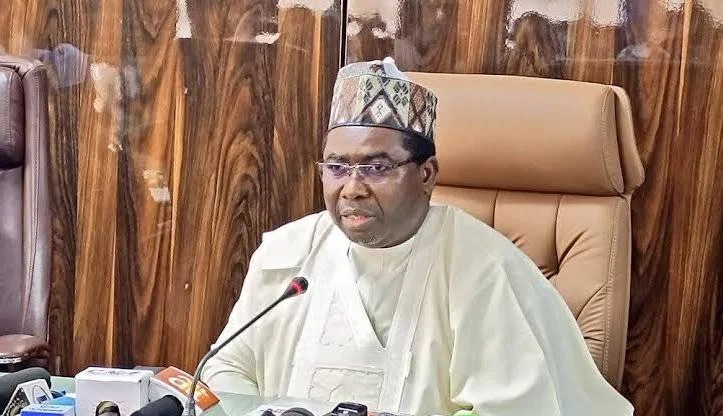
Human rights lawyer and Senior Advocate of Nigeria (SAN) Femi Falana has drawn a line in the sand. In a searing critique of the recent tariff adjustments, Falana argues that the hike lacks justification under the Electricity Act, particularly when service delivery remains abysmal. His stance cuts to the heart of a crisis that has left households and businesses alike in the dark, both literally and economically.
The timing of the tariff increase couldn’t be worse. With inflation still biting and the naira’s value fluctuating unpredictably, Nigerians are already stretched thin. Yet, the Nigerian Electricity Regulatory Commission (NERC) has pushed through a hike that Falana describes as a “double punishment” for citizens—paying more for a service that is, by all accounts, deteriorating.
“The Electricity Act is clear,” Falana told reporters in Lagos this week. “Tariffs must reflect service quality. If the lights go out as frequently as they do now, how can we justify charging more?” His question hangs heavy in the air, unanswered by the agencies responsible for keeping the grid alive.
When Promises Fade: The Reality Behind Nigeria’s Power Promises
Nigeria’s electricity sector has long been a paradox. The country boasts Africa’s largest economy and vast natural gas reserves, yet its power infrastructure lags behind smaller nations. Successive governments have pledged reforms, privatization, and billions in investments—only to see the same old problems persist: gas shortages, transmission bottlenecks, and a distribution network that seems perpetually on the brink of collapse.
Take Lagos, Nigeria’s commercial hub, where businesses rely on generators for up to 12 hours a day. The cost? An estimated ₦1.2 trillion annually in diesel and maintenance, according to industry analysts. Yet, despite these private expenditures, the national grid remains fragile, with collapses reported in states as varied as Kano, Rivers, and Ekiti in recent months.
Falana’s critique isn’t just about the numbers on a bill. It’s about accountability. “NERC and the Distribution Companies (DisCos) have failed to deliver on their end of the bargain,” he asserts. “They cannot expect Nigerians to foot the bill for their ineptitude.”
The Electricity Act, signed into law in 2023, was supposed to be a turning point. It aimed to decentralize power generation, encourage renewable energy, and hold DisCos to higher standards. Yet, critics argue that the law’s implementation has been uneven at best. While some states have taken steps to improve local power generation, the federal government’s grip on the sector remains tight—and the results, so far, have been underwhelming.
The Human Cost: How Unreliable Power Fuels Nigeria’s Economic Strain
Behind every tariff hike is a human story. In the northern city of Kano, small-scale manufacturers report losing up to 40% of their weekly production to power outages. In the south, hospitals in Port Harcourt struggle to keep life-saving equipment running during critical surgeries. And in rural communities, farmers watch helplessly as their perishable goods spoil due to lack of refrigeration.
A recent survey by the Lagos Chamber of Commerce and Industry found that 78% of businesses in the state cite erratic power as their top operational challenge. “We’re paying for two power sources now—one from the grid, and one from generators,” said a textile factory owner in Abule Egba. “It’s unsustainable, but what choice do we have?”
The economic ripple effects are staggering. The World Bank estimates that Nigeria loses ₦10.1 trillion ($25 billion) annually due to unreliable electricity—a figure that dwarfs the country’s annual budget for education and healthcare combined. For a nation where over 60% of the population lives on less than $2 a day, this isn’t just a policy failure; it’s a humanitarian crisis.
Falana’s intervention couldn’t come at a more critical juncture. With the next general elections looming, politicians are already positioning themselves as champions of the people. Yet, for many Nigerians, the real test of leadership won’t be in promises, but in fixing the grid.
Is the Tariff Hike Legal? Falana Points to the Electricity Act
At the heart of Falana’s argument is a legal one. The Electricity Act, he notes, stipulates that tariff adjustments must be tied to measurable improvements in service quality. Specifically, Section 27 of the Act empowers the regulator to review tariffs only if certain benchmarks are met—benchmarks that, by all accounts, remain unmet.
“NERC’s recent order lacks transparency,” Falana argues. “There has been no public consultation, no clear data on how the hike will translate to better service. This is not just unfair—it’s illegal.”
His stance has resonated with civil society groups, including the Socio-Economic Rights and Accountability Project (SERAP), which has called for an immediate reversal of the hike. “Nigerians are being punished for the failures of NERC and the DisCos,” said SERAP’s executive director. “This is a gross violation of their rights.”
The legal battle could be just beginning. Falana has hinted at possible litigation to challenge the tariff hike, arguing that it violates both the Electricity Act and Nigeria’s constitution, which guarantees the right to a dignified life. If successful, such a case could set a precedent for future tariff adjustments—and force the government to confront the rot in the power sector head-on.
What’s Next? Pathways Out of the Darkness
So, what’s the way forward? Falana and other critics offer a roadmap that starts with transparency and ends with tangible improvements:
- Immediate moratorium on tariff hikes: Until service quality meets the Electricity Act’s standards, any further increases should be suspended. This would give NERC and the DisCos a clear incentive to improve.
- Independent audits of the grid: Nigeria’s power infrastructure is a black box. An independent review of transmission and distribution networks could identify critical weaknesses—and hold the relevant agencies accountable.
- Accelerated decentralization: The Electricity Act’s push for state-level power generation is a step in the right direction. States like Lagos and Rivers, which have made progress in this area, should be given more autonomy to manage their grids.
- Investment in renewables: Nigeria’s solar potential is vast. Expanding off-grid solar solutions could bypass the unreliable central grid entirely, particularly in rural areas.
- Public-private partnerships with teeth: The current model of privatization has failed to deliver. New contracts should include strict performance clauses, with penalties for non-compliance—and rewards for exceeding targets.
These steps won’t fix Nigeria’s power crisis overnight. But they offer a starting point—one that prioritizes the people over profits, and accountability over excuses.

A Nation Held Hostage by Its Own Grid
As the debate over tariffs rages on, one truth remains undeniable: Nigeria’s power sector is a national embarrassment. The country that once powered Africa’s largest economy now struggles to keep its own lights on. And while politicians trade barbs and bureaucrats shuffle papers, ordinary Nigerians are left to foot the bill—for both the electricity they receive and the one they don’t.
Femi Falana’s intervention is a rare moment of clarity in a debate clouded by spin and half-measures. His message is simple: You cannot charge people more for a service that doesn’t exist. The Electricity Act says as much. The constitution says as much. And, increasingly, the Nigerian people are saying as much.
For now, the grid remains fragile, the tariffs keep climbing, and the darkness persists. But if Falana and others have their way, the tide may finally be turning. The question is whether Nigeria’s leaders will listen—or whether they’ll let the lights stay out a little longer.
Copyright notice: Images and source material are credited to their respective owners/source (original source where available). If you are the copyright owner and want an image or content removed, please contact us at topix.news/contact-us; we will review and remove it promptly.

Topix News Desk is a digital editorial team focused on delivering clear, timely, and useful news coverage for readers worldwide. Our reporting highlights African news with global context, including politics, business, economy, technology, health, sports, entertainment, travel, and culture. We aim to publish accessible, well-structured, and informative articles that help readers understand the stories shaping Africa and the world.