

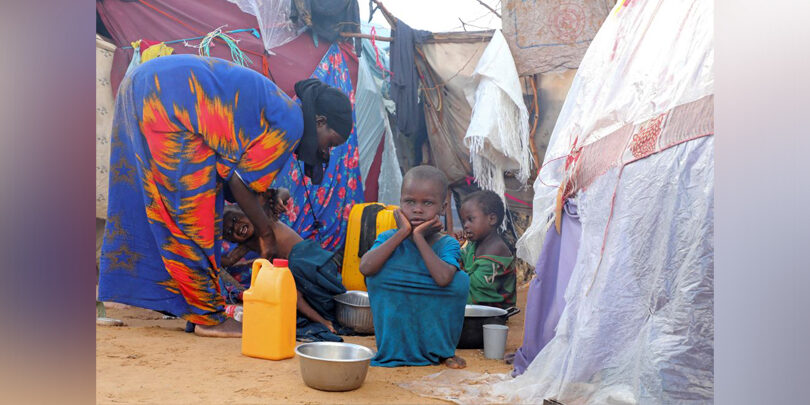
A groundbreaking study from the University of Notre Dame, published in the prestigious Proceedings of the National Academy of Sciences in June 2024, has established a direct and alarming link between human-induced climate change and the rising rates of childhood stunting across Africa. The research, spanning 16 years of data (2004–2020) from 34 African nations, reveals that every 1°C increase in global temperatures—driven by anthropogenic emissions—correlates with a 3.45% rise in childhood stunting, a condition characterized by impaired physical and cognitive development due to chronic malnutrition.
The findings, led by environmental and social scientists, underscore a humanitarian crisis unfolding in one of the world’s most climate-vulnerable regions. According to the study’s co-author, Dr. Arun Agrawal, director of Notre Dame’s Just Transformations to Sustainability Initiative, the implications are staggering: nearly 7 million African children under five are affected annually by stunting exacerbated by climate change.
The Science Behind the Crisis: How Climate Change Fuels Stunting
Childhood stunting—a global health indicator tracked by the United Nations—reflects long-term malnutrition, typically manifesting as reduced height-for-age in children. While factors like poor diet, recurrent infections, inadequate sanitation, maternal health, and genetic predisposition traditionally contribute to stunting, the Notre Dame study introduces climate change as a dominant, accelerating driver of the problem.
The research identifies two primary mechanisms through which rising temperatures and extreme weather patterns worsen stunting:
- Direct Biological Stressors
- Prenatal and Early-Life Exposure: Elevated temperatures during pregnancy can disrupt fetal development, leading to reduced placental blood flow, oxygen deprivation, and impaired nutrient transfer. Dr. Agrawal notes that even mild hyperthermia in expectant mothers has been linked to lower birth weights and stunted growth trajectories.
-
Thermoregulatory Strain: Infants and young children, who have less efficient heat-dissipation mechanisms, are particularly vulnerable to heat stress. Prolonged exposure to high temperatures can deplete energy reserves, diverting nutrients away from growth and development toward survival.
-
Indirect Socioeconomic and Agricultural Collapse
- Agricultural Decline: Climate change intensifies droughts, erratic rainfall, and heatwaves, devastating crop yields in sub-Saharan Africa. The region, where over 60% of the population relies on subsistence farming, faces food insecurity crises. The study highlights that drought-affected regions experience up to 50% higher stunting rates compared to stable areas.
- Water Scarcity and Sanitation Breakdown: Rising temperatures accelerate evaporation rates, straining water supplies critical for hygiene and agriculture. Poor sanitation—directly tied to stunting—worsens as open defecation increases and waterborne diseases (e.g., cholera, diarrhea) surge.
- Economic Displacement: Climate-driven migration and displacement disrupt access to healthcare, nutrition programs, and educational resources, further entrenching cycles of malnutrition.
The Human Toll: A Crisis of Inequality
The study’s data reveals a profound disparity: the most vulnerable populations—rural communities, indigenous groups, and low-income households—bear the brunt of climate change’s impact on child health. These groups contribute minimally to global emissions yet suffer maximally from its consequences, a phenomenon the Catholic Church and global ethicists have long condemned as ecological injustice.
Dr. Agrawal emphasizes that the findings align with Pope Francis’ encyclical Laudato Si’, which frames climate change as a moral failure to protect the most marginalized. The pontiff’s teachings, echoed by religious leaders worldwide, advocate for systemic change—including just transitions in energy, agricultural reform, and global climate finance—to mitigate suffering.
“The Catholic Church, under both Pope Francis and Pope Benedict, has consistently highlighted that climate change is not just an environmental issue but a social justice crisis,” Agrawal states. “Our study quantifies what many have long feared: that without urgent action, millions more children will pay the price for a problem they did not create.”
Policy and Practical Implications: What Must Be Done?
The Notre Dame research serves as a call to action for policymakers, international organizations, and local communities. Key recommendations emerging from the study include:
- Climate Resilient Agriculture: Investing in drought-resistant crops, irrigation technologies, and agroforestry to stabilize food production in vulnerable regions.
- Universal Healthcare Access: Expanding nutrition programs, maternal health services, and child growth monitoring in high-risk areas.
- Adaptive Sanitation Systems: Implementing low-water sanitation solutions and community-led hygiene education to combat disease spread.
- Global Climate Justice: Redirecting climate finance toward adaptation, not just mitigation, with priority given to Africa’s most affected nations.
- Urban Planning Reforms: Designing heat-resistant infrastructure (e.g., green spaces, cool roofs) in rapidly growing African cities to protect children from urban heat islands.
A Warning for the Future
The Notre Dame study does not merely document a correlation—it projects a worsening trajectory if current emissions trends persist. By 2050, climate models suggest that sub-Saharan Africa could experience temperature increases of 2–3°C, potentially doubling current stunting rates in some regions.
For families already grappling with food insecurity, conflict, and weak healthcare systems, the additional burden of climate-induced malnutrition could permanently stunt a generation’s potential. The economic and developmental costs—lost productivity, higher disease burdens, and intergenerational poverty—are incalculable.
As Dr. Agrawal concludes: “This is not a distant problem. It is happening now. The question is whether we will act in time—or let history judge us for our inaction.”
The study’s findings reinforce the urgency of integrating climate resilience into global health strategies, ensuring that no child in Africa—or anywhere—suffers the silent, irreversible damage of stunting due to a warming planet.
