

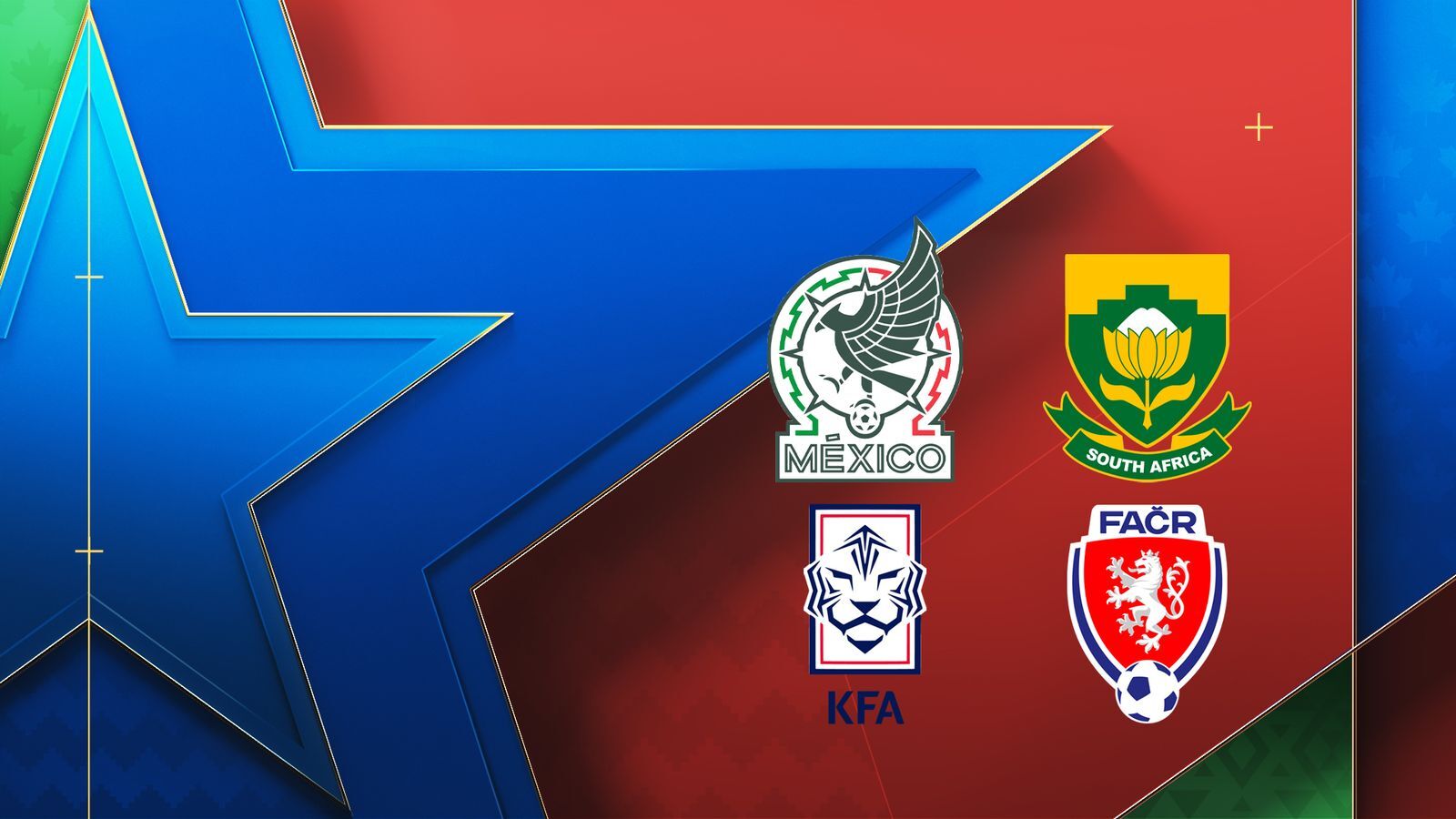
The FIFA World Cup 2026 is set to deliver an electrifying start with Group A, featuring four nations—Mexico, South Africa, South Korea, and the Czech Republic—competing across three venues in Mexico and the United States. This group is particularly intriguing due to its historical rivalries, tactical depth, and the presence of two co-hosts, Mexico and the U.S. (though the U.S. is not in Group A, Mexico’s home advantage will be a major factor). Below is an in-depth breakdown of the fixtures, squad analyses, and strategic insights for each team in Group A.
Group A Fixtures: Schedule and Venues
Round 1: Opening Matches
- Thursday, June 11 – Mexico vs. South Africa
- Time: 8:00 PM (Local Time, Mexico City)
- Venue: Estadio Azteca, Mexico City
-
Significance: This match marks the second time these two nations have faced each other in a World Cup opener, following their 2010 encounter in South Africa. Mexico, as the defending champion of CONCACAF, will look to assert dominance early, while South Africa seeks to make an immediate impact in their first World Cup since 2010.
-
Friday, June 12 – South Korea vs. Czech Republic
- Time: 12:00 AM (Local Time, Mexico)
- Venue: Estadio Akron, Guadalajara (Estadio Chivas)
- Significance: A high-stakes clash between a resurgent South Korea and a Czech Republic team aiming to prove their European pedigree. This match will test the tactical flexibility of both managers, with Korea’s possession-based style clashing against the Czech Republic’s disciplined counter-attacking approach.
Round 2: Mid-Tournament Showdowns
- Friday, June 19 – Mexico vs. South Korea
- Time: 2:00 AM (Local Time, Mexico)
- Venue: Estadio Akron, Guadalajara (Estadio Chivas)
-
Significance: A critical match for Mexico, who must avoid a draw if they are to secure a top-two finish. South Korea, meanwhile, will seek revenge for their 2010 defeat to Mexico in the Round of 16.
-
Thursday, June 18 – Czech Republic vs. South Africa
- Time: 6:00 PM (Local Time, Atlanta)
- Venue: Mercedes-Benz Stadium, Atlanta, USA
- Significance: The first U.S.-based Group A match, this fixture will feature South Africa’s defensive resilience against the Czech Republic’s attacking flair. A draw here could set up a dramatic final round for both teams.
Round 3: Decisive Clashes
- Thursday, June 25 – Czech Republic vs. Mexico
- Time: 2:00 AM (Local Time, Mexico)
- Venue: Estadio Azteca, Mexico City
-
Significance: The final Group A match will determine the top two qualifiers. Mexico, already favored, will need to manage fatigue, while the Czech Republic must capitalize on any Mexico missteps.
-
Thursday, June 25 – South Africa vs. South Korea
- Time: 2:00 AM (Local Time, Mexico)
- Venue: Estadio BBVA, Monterrey
- Significance: A low-stakes but high-intensity match, as both teams will have already secured their fate. However, a strong performance here could set the tone for their knockout-stage ambitions.
Team-by-Team Squad Analysis
🇲🇽 Mexico: The Home Advantage Favorites
Mexico enters the tournament as the clear favorites in Group A, backed by home-field advantage, experience, and a balanced squad.
Key Players:
- Goalkeepers:
- Guillermo Ochoa (AEL Limassol) – The veteran leader, known for his shot-stopping and leadership.
- Raúl Rangel (Chivas) – A reliable backup with experience in major tournaments.
-
Carlos Acevedo (Santos Laguna) – A young talent with growing confidence.
-
Defenders:
- Jorge Sánchez (PAOK) – A World Cup veteran and defensive rock.
- Mateo Chavez (AZ Alkmaar) – A young, dynamic full-back with pace and crossing ability.
-
Edson Álvarez (Fenerbahçe) – A ball-playing center-back with composure under pressure.
-
Midfielders:
- Alvaro Fidalgo (Real Betis) – The creative engine of the team, capable of dictating play.
- Brian Gutiérrez (Chivas) – A box-to-box midfielder with explosive energy.
-
Orbelín Pineda (AEK Athens) – A defensive midfielder who excels in pressing and tackling.
-
Forwards:
- Raúl Jiménez (Fulham) – The star striker, known for his finishing and clinical ability.
- Santiago Giménez (AC Milan) – A versatile forward who can play as a winger or striker.
- Armando González (Chivas) – A physical presence in attack, strong in duels.
Tactical Approach:
Mexico will likely deploy a 4-2-3-1 or 4-3-3 formation, focusing on quick transitions, pressing high up the pitch, and exploiting the home crowd’s energy. Their biggest challenge will be managing fatigue over three grueling matches.
🇿🇦 South Africa: The Underdog with Heart
South Africa’s 2010 World Cup legacy looms large, but their 2026 squad is younger and more dynamic.
Key Players:
- Goalkeepers:
- Sipho Chaine (Orlando Pirates) – A calm and composed shot-stopper.
-
Ronwen Williams (Mamelodi Sundowns) – A young talent with growing confidence.
-
Defenders:
- Khuliso Mudau (Mamelodi Sundowns) – A ball-playing center-back with good passing range.
- Bradley Cross (Kaizer Chiefs) – A left-footed full-back who can contribute crosses and goals.
-
Ime Okon (Hannover) – A young, energetic right-back with pace.
-
Midfielders:
- Teboho Mokoena (Mamelodi Sundowns) – The team’s leader, a box-to-box midfielder with leadership qualities.
-
Jayden Adams (Mamelodi Sundowns) – A creative playmaker who thrives in tight spaces.
-
Forwards:
- Lyle Foster (Burnley) – A physical striker with aerial dominance.
- Thapelo Maseko (AEL Limassol) – A young, promising forward with good movement.
- Oswin Appollis (Orlando Pirates) – A fast and direct winger who can cause problems on the counter.
Tactical Approach:
South Africa will likely use a 4-3-3 or 4-1-4-1 formation, focusing on counter-attacking football and exploiting spaces behind the opposition defense. Their biggest strength is physicality and set-piece delivery, while their weakness may be midfield control against faster teams.
🇰🇷 South Korea: The Resurgent Asian Powerhouse
South Korea has improved dramatically since their 2010 World Cup exit and now boasts a young, talented squad.
Key Players:
- Goalkeepers:
- Seung-Gyu Kim (FC Tokyo) – A reliable shot-stopper with good reflexes.
-
Bum-Keun Song (Jeonbuk) – A young goalkeeper with growing confidence.
-
Defenders:
- Min-Jae Kim (Bayern Munich) – A World Cup veteran and ball-playing center-back.
- Jens Castrop (Borussia Mönchengladbach) – A left-footed full-back who can contribute crosses.
-
Ki-Hyuk Lee (Gangwon) – A young, energetic right-back with pace.
-
Midfielders:
- Jun-Ho Bae (Stoke City) – The creative maestro, known for his dribbling and vision.
- Seung-Ho Paik (Birmingham City) – A box-to-box midfielder with energy and tackling ability.
-
Jae-Sung Lee (Mainz) – A defensive midfielder who excels in pressing.
-
Forwards:
- Heung-Min Son (LAFC) – The star striker, a World Cup veteran with finishing and playmaking abilities.
- Hyeon-Gyu Oh (Besiktas) – A fast and direct winger who can cause problems on the counter.
- Gue-Sung Cho (Midtjylland) – A young, promising forward with good movement.
Tactical Approach:
South Korea will likely deploy a 4-3-3 or 4-2-3-1 formation, focusing on possession-based football, quick transitions, and exploiting wide areas. Their biggest strength is youth and creativity, while their weakness may be defensive fragility against stronger teams.
🇨🇿 Czech Republic: The European Wild Card
The Czech Republic, though not a traditional powerhouse, has a talented squad with experience and tactical discipline.
Key Players:
- Goalkeepers:
- Lukas Horníček (Braga) – A World Cup veteran with great reflexes.
-
Matej Kovář (PSV Eindhoven) – A young goalkeeper with growing confidence.
-
Defenders:
- Ladislav Šeško (Wolverhampton) – A ball-playing center-back with good passing.
- Robin Hráček (Hoffenheim) – A left-footed full-back who can contribute crosses.
-
David Zima (Slavia Prague) – A young, energetic right-back with pace.
-
Midfielders:
- Lukas Provod (Slavia Prague) – The creative playmaker, known for his dribbling and vision.
- Tomas Souček (West Ham) – A box-to-box midfielder with energy and tackling ability.
-
Pavel Šulc (Olympique Lyon) – A defensive midfielder who excels in pressing.
-
Forwards:
- Patrik Schick (Bayer Leverkusen) – The star striker, a World Cup veteran with finishing and movement.
- Jan Kuchta (Sparta Prague) – A fast and direct winger who can cause problems on the counter.
- Mojmír Chytil (Slavia Prague) – A young, promising forward with good movement.
Tactical Approach:
The Czech Republic will likely use a 4-3-3 or 4-2-3-1 formation, focusing on disciplined defense, quick counter-attacks, and set-piece dominance. Their biggest strength is tactical organization, while their weakness may be creative midfield output against faster teams.
Key Storylines to Watch in Group A
- Mexico’s Home Advantage: Can they maintain consistency over three matches, or will fatigue play a role?
- South Africa’s Comeback Bid: Will they replicate their 2010 heroics or struggle against stronger teams?
- South Korea’s Youth vs. Experience: Can their young stars step up, or will veteran leadership be crucial?
- Czech Republic’s Tactical Mastery: Can they outsmart physically stronger opponents with their disciplined approach?
- The Rivalry Factor: Will historical tensions (e.g., Mexico vs. South Korea) add extra intensity to matches?
Final Thoughts: Who Will Top Group A?
- Mexico are the clear favorites, but their fatigue management will be critical.
- South Korea have the best attacking options but may struggle defensively.
- South Africa could pull off an upset with their physicality and set pieces.
- Czech Republic will need tactical brilliance to secure a top-two finish.
One thing is certain: Group A will deliver thrilling football, with every match carrying significant implications for the teams’ World Cup journeys.
Stay tuned for live updates, tactical breakdowns, and in-depth analyses as the tournament unfolds!
