

More than three decades after South Africa transitioned to democracy, the country remains one of the most economically unequal nations on Earth. Despite hopes that the democratic shift would dismantle systemic wealth disparities and transfer ownership from a white minority to a Black majority, progress has been painfully slow. At the heart of this economic divide lies the issue of land ownership—a legacy of apartheid-era policies that continue to shape South Africa’s social and economic landscape today.
The Legacy of Apartheid: A Land Ownership Divide
During apartheid, racial segregation was institutionalized through laws that restricted Black South Africans to just 13% of the country’s land, despite comprising 80% of the population. These policies ensured that wealth and agricultural productivity remained concentrated in the hands of a white minority, while Black communities were confined to marginalized, often arid regions. Even after apartheid ended in 1994, the structural inequalities embedded in land distribution persisted.
In 1995, the South African government introduced a market-based land reform program, aiming to redistribute 30% of white-owned agricultural land to Black farmers. The initiative was designed to be voluntary, allowing white landowners to sell their properties at or above market value. However, only between 12% and 20% of the target land has been transferred to date, leaving the majority of agricultural land still in white hands.
A Political Scientist’s Deep Dive: Why Land Reform Has Struggled
For the past seven years, Dr. Alex Dyzenhaus, a political scientist specializing in land reform, has examined the complexities of South Africa’s agricultural landscape. His research, which integrates political, social, and economic analyses, reveals why land reform has fallen short of its ambitious goals.
Dyzenhaus’s study explores both sides of the land transfer process: the motivations of white farmers who choose to sell their land and the demands of Black communities seeking equitable access to agricultural resources. Through in-depth interviews with white commercial farmers and emerging Black land reform beneficiaries, he uncovered nuanced insights into how historical legacies, economic incentives, and social dynamics influence land redistribution.
The Dual Role of Land Reform: Opportunity or Reinforcement of Divides?
One of the most striking findings from Dyzenhaus’s research is that land reform does not always bridge racial and economic gaps—it can sometimes deepen them. In some cases, white farmers have used land redistribution as a strategic tool to manage social tensions rather than as a genuine effort toward equity.
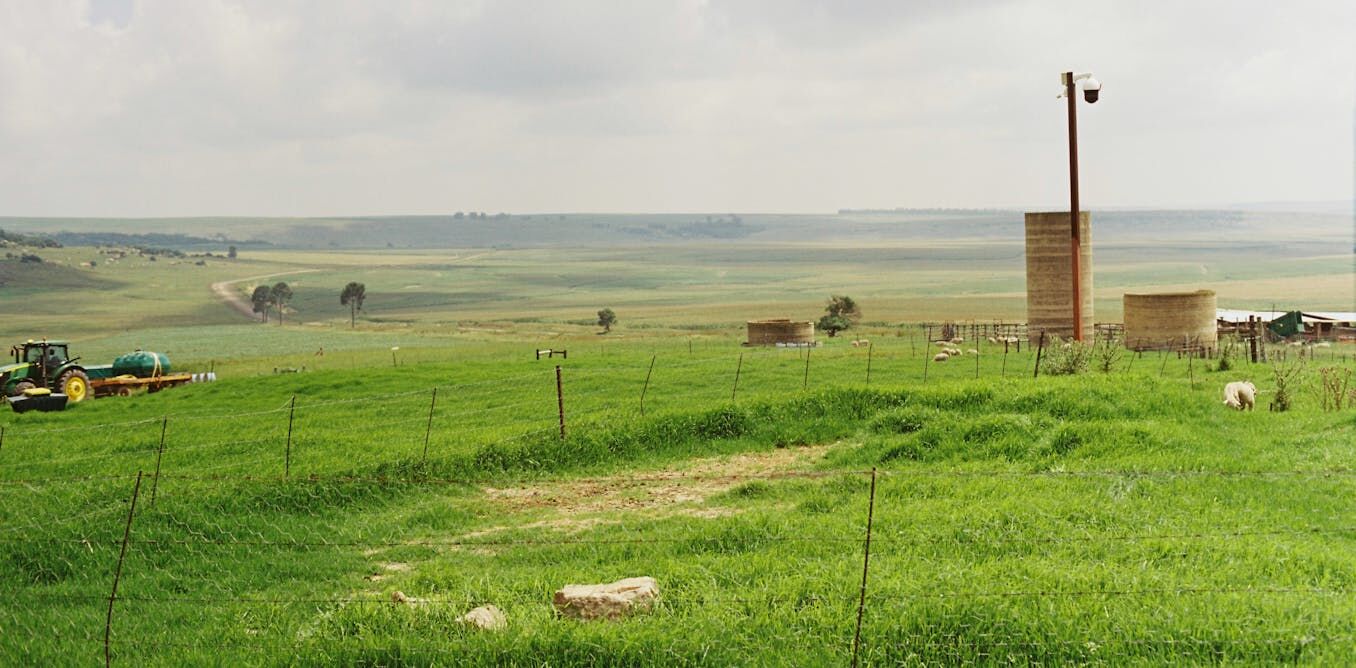
For instance, in the Free State province, where apartheid-era spatial segregation was extreme, white farmers near buffer zones—areas separating Black towns from white rural lands—often sold their properties to the state. Their reasoning? Fear of livestock theft and social unrest. By selling land, they could relocate to safer, more isolated rural areas, shifting the burden of rural crime onto the newly acquired Black land reform beneficiaries.
[IMAGE_1]
White farmers in the Free State often sold land to avoid proximity to Black communities, transferring social risks rather than addressing systemic inequality.
Dyzenhaus’s interviews revealed that Black land reform farmers frequently became victims of stock theft, a crime that disproportionately affects rural Black communities. National statistics confirm that Black South Africans are overwhelmingly the victims of farm-related violence and crime, a reality that land reform has not yet adequately addressed.
KwaZulu-Natal: Labour Tenancy and the Illusion of Inclusion
In KwaZulu-Natal, a province with a different historical dynamic, white farmers historically employed labour tenancy—a semi-feudal system where Black workers received small plots of land in exchange for labor on white-owned farms. This created a patchwork of small-scale Black livestock farms interspersed among large commercial white-owned operations.
Some white farmers in this region sold portions of their land through the reform program to separate labour tenants’ cattle from their commercial herds. Before redistribution, labour tenants’ livestock often roamed freely across farms, damaging fences and increasing the risk of disease transmission. By selling land, white farmers could confine labour tenants to designated areas, reducing operational disruptions.
However, this approach did little to empower Black farmers economically. The small plots allocated to labour tenants remained too limited for commercial viability, perpetuating the divide between white commercial agriculture and Black subsistence farming.
The US Perspective: Misrepresenting Land Reform as Persecution
The international community, particularly the United States under former President Donald Trump, has misrepresented South Africa’s land reform efforts as a campaign of violence against white farmers. Trump’s administration withdrew aid from South Africa and opened an asylum process for white farmers, falsely portraying land reform as a targeted persecution.
Dyzenhaus’s research debunks this narrative, demonstrating that white farmers often view land reform as a pragmatic solution rather than an attack. In many cases, selling land was a financially sound decision—allowing farmers to exit unprofitable or high-risk areas while maintaining economic stability.
The Need for a More Active State Role in Land Reform
While the willing seller-willing buyer model has kept some farms productive, it has failed to address the root causes of inequality. The state’s reliance on market forces alone has left many Black farmers with small, unviable plots and limited access to resources needed for commercial success.
In the Free State, land reform did little to reduce racial residential segregation or narrow the land ownership gap. To achieve meaningful change, the government must take a more assertive role, either by acquiring farms directly or by creating stronger incentives for landowners to sell.
In KwaZulu-Natal, where more land has been redistributed, the challenge lies in supporting emerging farmers. Many Black land reform beneficiaries remain economically marginalized, lacking access to larger plots, credit, or agricultural training. Without targeted state intervention, land redistribution risks becoming a symbolic gesture rather than a tool for economic empowerment.
The Path Forward: Equitable Agricultural Transformation
Land reform in South Africa is not a failed experiment—it is an incomplete one. The country’s agricultural sector must evolve to integrate new Black farmers while ensuring they have the resources, land, and support to succeed.
The government and private sector must collaborate to expand land access, provide financial incentives for large-scale redistribution, and invest in emerging Black farmers through training, infrastructure, and market access. Only then can South Africa move toward a more equitable agricultural future, where land ownership reflects the country’s demographic reality rather than its colonial past.
[IMAGE_2]
Black land reform farmers in KwaZulu-Natal often receive small, non-commercial plots, limiting their economic potential.
[IMAGE_3]
Future land reform must balance voluntary sales with state-led acquisition to ensure equitable distribution and sustainable farming opportunities.
Conclusion: Land Reform as a Tool for Justice, Not Just Transfer
South Africa’s land reform journey is far from over. While progress has been slow, the alternative—abandoning reform entirely—would perpetuate the very inequalities that apartheid sought to entrench. Instead, the country must rethink its approach, ensuring that land redistribution is not just a transaction but a transformative process that uplifts Black farmers and reshapes the agricultural economy for the better.
The path forward requires political will, economic investment, and a commitment to equity—not just in land, but in the opportunities it unlocks. Only then can South Africa begin to heal the wounds of its past and build a future where land ownership truly reflects the nation’s diversity.
