

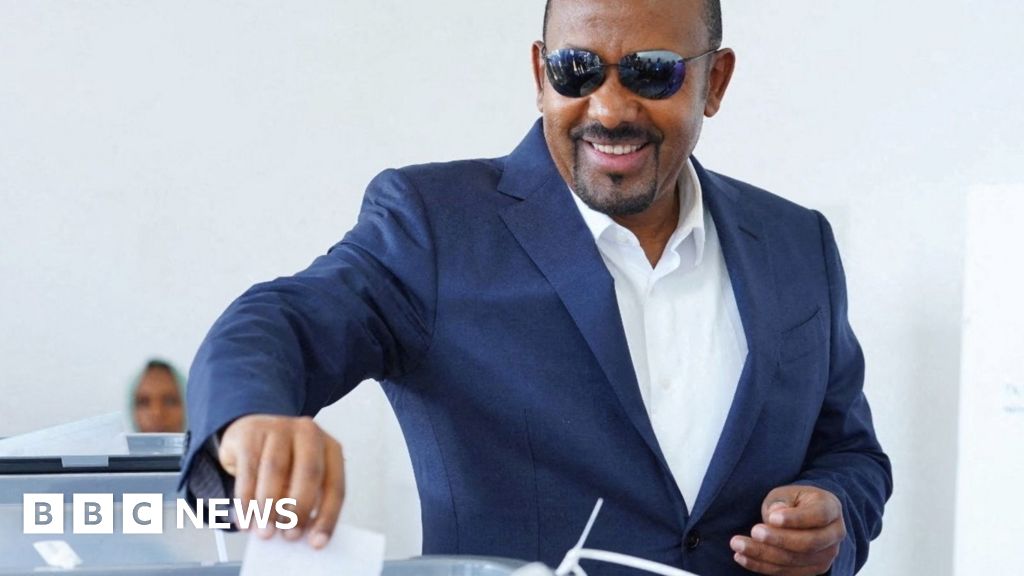
Ethiopia’s general election, held amid escalating regional instability and persistent allegations of electoral repression, has solidified Prime Minister Abiy Ahmed’s grip on power, with his Prosperity Party securing an overwhelming parliamentary majority. The party won 438 of the 501 contested seats, ensuring Abiy’s continuation as leader for another term, with his inauguration scheduled for early October. While his supporters celebrate the economic progress under his leadership, critics warn that the country’s deep-seated divisions and security crises—particularly in the war-torn northern regions—risk spiraling into renewed violence.
A Leadership Defined by Contradictions
Abiy Ahmed, who rose to power in 2018 amid widespread anti-government protests, initially earned praise for his efforts to reconcile Ethiopia’s long-standing ethnic and political fractures. His 2019 Nobel Peace Prize was a testament to his diplomatic breakthrough with Eritrea, ending decades of hostility between the two nations. However, his tenure has been marked by sharp contradictions, including the Tigray War (2020–2022), a conflict that left hundreds of thousands dead and displaced millions.
The Prosperity Party’s landslide victory—which critics argue was marred by opposition exclusion, violence, and logistical failures—has reignited fears that Abiy’s government is doubling down on authoritarian tendencies rather than addressing the root causes of Ethiopia’s instability.
Election Under Siege: Security Failures and Opposition Boycotts
The electoral process was deeply flawed, with 143 polling stations in Ethiopia’s two most populous regions—Oromia and Amhara—remaining closed due to safety concerns tied to armed insurgencies. The Fano militias in Amhara and the banned Oromo Liberation Army (OLA) in Oromia, both advocating for greater regional autonomy, rejected the election outright, calling it illegitimate.
The Tigray region, still grappling with the aftermath of a two-year civil war, was completely excluded from voting. With six million inhabitants and 38 constituencies, Tigray’s absence from the poll underscores the deepening political and military estrangement between Addis Ababa and the region’s ruling Tigray People’s Liberation Front (TPLF).
The 2022 peace deal that ostensibly ended the Tigray conflict has since collapsed under mutual accusations of violations. The government has been accused of blocking humanitarian aid, a charge it denies, while the TPLF has restored pre-war administrative structures, including forced conscription of young men—a move that has alarmed both local residents and international observers.
A young man in Adwa, interviewed by BBC Tigrinya, described how armed men in civilian clothing raided homes, detaining youths under the pretense of “defensive training.” Local authorities, however, dismiss these reports, insisting the recruits are merely “preparing for self-defense.”
Cameron Hudson, a former U.S. State Department Africa analyst, argues that both sides are escalating tensions deliberately. “Abiy has moved away from the agreement and made threatening moves toward the Tigrayans,” Hudson told BBC. “The Tigrayans, in turn, are preparing for a potential resumption of hostilities.”
Regional Alliances and the Risk of Wider War
Ethiopia’s instability is not confined to its borders. The Eritrea-Tigray alliance, once unthinkable, now poses a major geopolitical threat. Since the 2022 peace deal, relations between Asmara and Addis Ababa have deteriorated sharply, with Eritrea accusing Ethiopia of imperial ambitions—particularly over its lost Red Sea coastline access.
Abiy has repeatedly publicly expressed Ethiopia’s need for maritime ports, a demand Eritrea views as a direct challenge to its sovereignty. The 1,350 km (840-mile) coastline Eritrea possesses is a strategic asset, and its military alignment with Tigray—historically Ethiopia’s enemy—has deepened regional paranoia.
Adding to the volatility is Ethiopia’s alleged involvement in Sudan’s civil war. While Addis Ababa denies backing the Rapid Support Forces (RSF), a well-documented pattern of support has been reported, including military training and arms supplies. The RSF, now locked in a deadly conflict with Sudan’s army, has long-standing ties with Eritrea and the TPLF, creating a highly explosive regional dynamic.
Magnus Taylor, a Horn of Africa analyst at the International Crisis Group, warns that low-level tensions could escalate into a broader conflict. “With Ethiopia perceiving the TPLF as siding with its enemies—Eritrea, Sudan’s military, and possibly others—there’s a real risk of a regional war centered on Tigray,” Taylor stated.
International Condemnation and the Path Forward
The European Union has urged an immediate de-escalation in northern Ethiopia, while the U.S., a key mediator in the 2022 peace deal, has imposed targeted visa restrictions on “hardline TPLF members” accused of undermining stability. Though unnamed, the sanctions target individuals responsible for violating the peace accord.
Shewit Wudassie, an opposition politician in Tigray, laments the lack of political will for dialogue. “Both sides are waiting for the ‘perfect moment’ to assert dominance, and this could only lead to more bloodshed,” she said.
Cameron Hudson believes the next few months will determine Ethiopia’s trajectory. “There’s a legitimate fear that Abiy will use his consolidated power to permanently suppress dissent—especially in Tigray—rather than address the underlying conflicts,” he warned.
As Ethiopia stands at a crossroads, the Prosperity Party’s dominance and the deepening regional hostilities paint a bleak outlook. Without meaningful negotiations, humanitarian access, and a commitment to peace, the country risks relapsing into chaos, with regional spillover effects that could destabilize Sudan, Eritrea, and beyond.


