

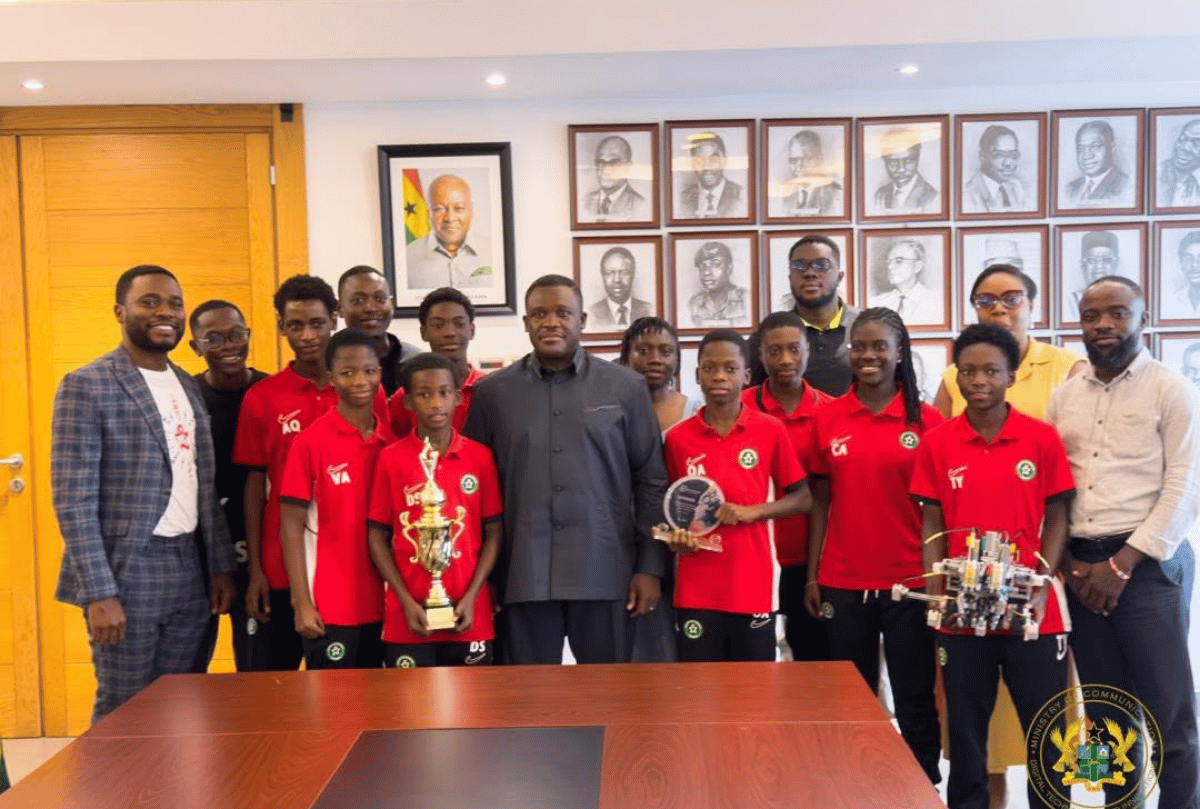
Ghana’s commitment to fostering a dual-pathway approach for young athletes—balancing athletic excellence with cutting-edge technology and digital skills—has taken a significant stride forward. The Ministry of Communication, Digital Technology and Innovations (MCDTI) recently hosted students and coaches from the Right to Dream Academy (RTDA), a globally recognized institution known for nurturing football talent. However, beyond the football pitch, the academy has emerged as a hub for innovation, with students excelling in robotics, artificial intelligence (AI), and coding, demonstrating the growing synergy between sports and technology in Ghana’s education landscape.
A Holistic Approach to Youth Development
The visit underscored the academy’s multidisciplinary educational model, where athletic training is complemented by rigorous Science, Technology, Engineering, and Mathematics (STEM) programs. While RTDA remains synonymous with football, its students have achieved remarkable success in global technology competitions, proving that young athletes can thrive in both sports and innovation.
In a recent milestone, RTDA’s student team secured first place at Ghana’s national AI for Good competition, showcasing their ability to apply AI solutions to real-world challenges. Additionally, they earned second place in the senior category at Robofest 2026 World Championship, a prestigious international robotics event. These achievements highlight the academy’s strategic integration of STEM education, preparing students for careers beyond athletics.
Minister Commends the Academy’s Visionary Model
Minister Samuel Nartey George, speaking at the engagement, praised RTDA’s unique approach to merging sports with digital literacy. He emphasized that while athletic prowess remains a cornerstone of the academy’s mission, technology and coding skills provide young athletes with versatile career opportunities, ensuring long-term sustainability beyond their playing years.
“Digital skills are no longer optional—they are essential for economic empowerment,” the minister stated. “By equipping students with technology and science expertise, we are not just developing world-class athletes; we are cultivating a new generation of innovators who can contribute meaningfully to Ghana’s digital economy.”
Corporate and Government Support Expands Digital Access
The MCDTI’s engagement with RTDA also highlighted the critical role of corporate partnerships in enhancing the academy’s technological capabilities. The MTN Ghana Foundation and Telecel Ghana Foundation were recognized for their financial and logistical support, enabling students to participate in international competitions, including an upcoming event in Geneva.
To further strengthen RTDA’s STEM infrastructure, the ministry announced a donation of 30 laptops to upgrade the academy’s computer laboratory. This initiative aligns with Ghana’s broader digital transformation agenda, aiming to bridge the skills gap in the tech sector.
Additionally, students will be enrolled in the government’s One Million Coders Programme, a flagship initiative designed to democratize coding education and expand digital literacy across the country. The program, part of Ghana’s National Digital Economy Strategy, seeks to train one million Ghanaians in coding and digital skills by 2025, ensuring a future-ready workforce capable of thriving in the global digital economy.
A Blueprint for Youth Empowerment in Africa
The collaboration between RTDA and the MCDTI serves as a model for integrating sports with technology education, a strategy increasingly adopted by African nations to reduce youth unemployment and stimulate innovation. By fostering interdisciplinary learning, Ghana is not only producing elite athletes but also tech-savvy professionals who can drive economic growth and industrial advancement.
As Ghana accelerates its digitalization efforts, initiatives like RTDA’s STEM-sports hybrid model are poised to redefine youth development, ensuring that young Ghanaians are competitive in both global sports and technology arenas. This approach aligns with the African Union’s Agenda 2063, which prioritizes science, technology, and innovation as key pillars of continental progress.
Looking Ahead: A Tech-Enabled Athletic Future
The success of RTDA’s students in AI and robotics competitions signals a shift in how African youth are perceived—no longer confined to traditional career paths, but recognized as innovators and problem-solvers. With continued government and corporate backing, Ghana’s young athletes are well-positioned to lead in both sports and technology, setting a regional benchmark for holistic youth development.
As the country moves toward a knowledge-based economy, the synergy between sports and STEM will be instrumental in building a resilient, skilled workforce capable of competing in the 21st-century job market. The Right to Dream Academy’s journey is just the beginning—a testament to Ghana’s visionary approach in nurturing athletes who are also engineers, coders, and innovators.
