

Introduction: The Imperative for Digital Education in Africa’s Development Trajectory
Africa’s socioeconomic trajectory is inextricably linked to its ability to democratize access to high-quality education and digital skills, yet systemic challenges persist. Despite significant investments in education reform over the past three decades, critical gaps remain in access to higher education, technological infrastructure, and alignment between educational outcomes and labor market demands. Five overarching constraints—rapid population growth, youth unemployment, the digital divide, armed conflicts, and institutional capacity limitations—have hindered traditional higher education systems from effectively supporting sustainable development.
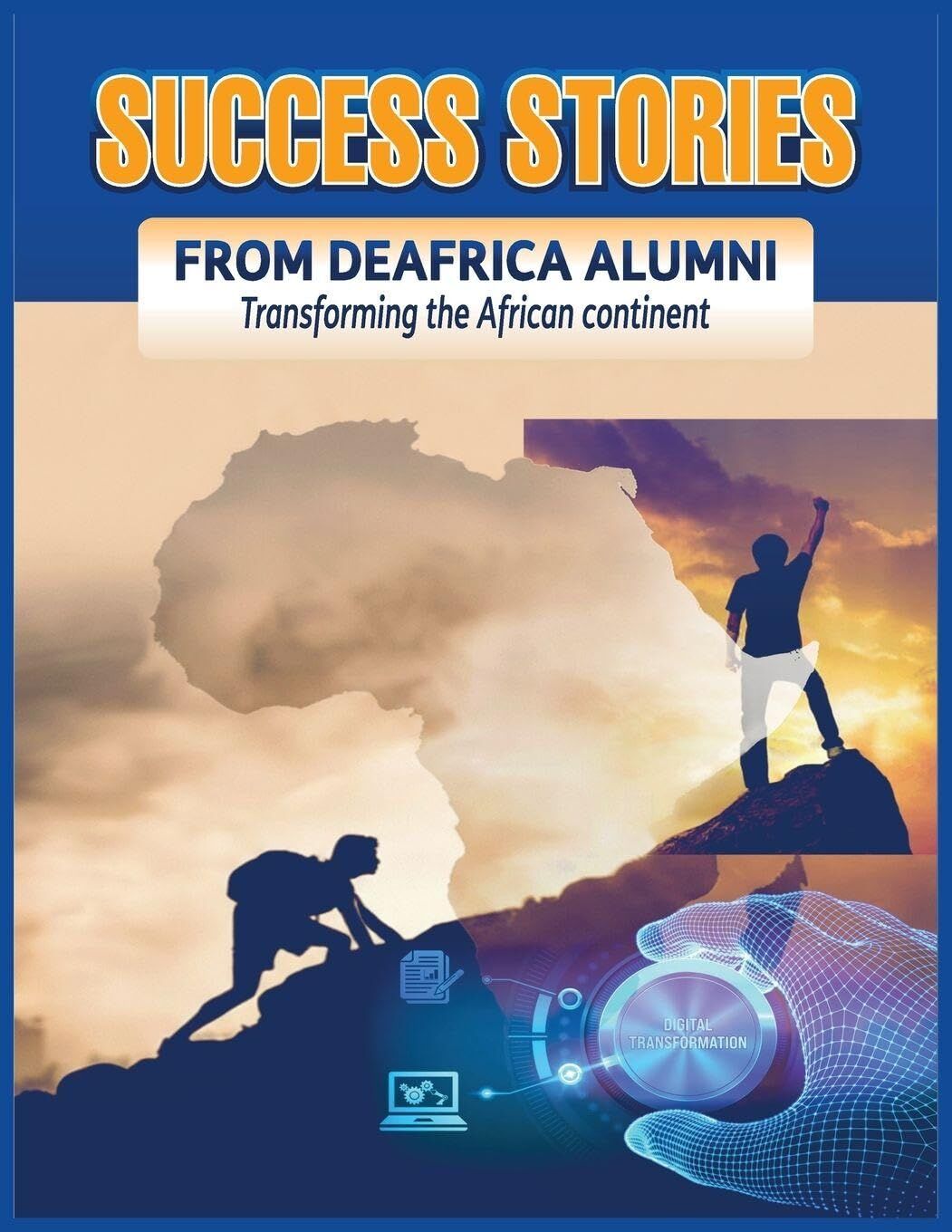
In this context, Distance Education for Africa (DeAfrica), an innovative African-led initiative, emerges as a game-changer. Through technology-enabled empowerment, DeAfrica is not merely expanding educational access but redefining the role of education as a catalyst for socioeconomic transformation. At the heart of this movement is Mr. Sidiki Traoré’s Success Stories From DeAfrica Alumni Transforming the African Continent, a pioneering monograph that transcends traditional educational discourse by documenting real-world outcomes rather than merely diagnosing systemic failures.
This analysis explores how DeAfrica’s hybrid operational model—combining digital learning, renewable energy, local mentorship, and entrepreneurship—is bridging Africa’s education divide, fostering inclusive human capital development, and shifting the continent’s narrative from foreign aid dependency to self-reliance.
The DeAfrica Model: A Paradigm Shift in African Higher Education
1. Reimagining Higher Education Through Digital Transformation
Traditional higher education in Africa faces structural limitations: inadequate physical infrastructure, financial constraints, teacher shortages, and geographic inaccessibility. These barriers disproportionately exclude rural populations, women, and displaced individuals, leaving millions without educational opportunities.
DeAfrica’s innovative approach challenges the one-size-fits-all model by decentralizing education delivery through:
– Cloud-based and mobile learning platforms, eliminating the need for physical campuses.
– Solar-powered learning centers, ensuring energy access in off-grid regions.
– Downloadable and offline-capable content, addressing unreliable internet connectivity.
– Localized mentorship programs, providing culturally relevant support and reducing dropout rates.
Unlike Massive Open Online Courses (MOOCs), which often suffer from high abandonment rates, DeAfrica’s hybrid model integrates human-centered design principles, ensuring that technology serves learners’ real-world needs rather than imposing rigid academic structures.
Key Strengths of the Model:
✔ Scalability – Avoids the land, construction, and operational costs of traditional universities.
✔ Flexibility – Allows working adults, women, and refugees to balance education with other responsibilities.
✔ Localized Impact – Aligns curricula with regional labor market demands, reducing graduate unemployment.
Critiques & Limitations:
⚠ Lack of Comparative Data – The book does not provide quantitative benchmarks (e.g., dropout rates, employment outcomes) against traditional or other digital education models.
⚠ Limited Discussion on Digital Literacy – While the model addresses access, it does not deeply explore learner readiness, cultural adaptation, or disability inclusion—critical factors in digital education success.
⚠ Scalability Challenges – The financial sustainability of solar-powered centers and local mentorship programs remains unexamined across diverse African contexts.
2. Entrepreneurship as a Driver of Socioeconomic Change
DeAfrica’s curriculum extends beyond academic credentials to practical, job-creating skills, positioning education as a tool for economic empowerment. The book introduces an outcomes-based assessment framework, tracking alumni transitions into:
– Business owners launching startups in fintech, logistics, and agriculture.
– Working professionals improving organizational performance through project management and leadership.
– Public officials implementing innovative governance models.
– Community leaders driving social development projects.
Empirical Evidence & Case Studies:
The monograph cites over 60,000 learners across Africa, with alumni contributing to:
– Job creation (e.g., a DeAfrica graduate founding a mobile money platform in Kenya).
– Institutional strengthening (e.g., a Nigerian educator using DeAfrica’s digital tools to train rural teachers).
– Public sector reforms (e.g., a Ghanaian official leveraging data analytics to improve healthcare delivery).
Theoretical Alignment:
This approach aligns with Human Capital Theory (Schultz, 1961; Becker, 1964), which argues that education as an investment yields long-term economic returns. However, the book lacks rigorous causal analysis, leaving questions about whether education alone can overcome structural barriers like limited financing, unstable governance, and macroeconomic volatility.
Key Insights:
– Education ≠ Employment – While DeAfrica’s model improves employability, it does not guarantee business survival due to regulatory hurdles and market competition.
– Entrepreneurship ≠ Instant Success – The book overemphasizes success stories, neglecting failed ventures or graduates facing employment challenges.
3. Inclusive Education: Empowering Marginalized Groups
One of DeAfrica’s most transformative contributions is its commitment to inclusivity, addressing gender, displacement, and geographic barriers that historically excluded learners from higher education.
Women in Education:
– Obstacles: Economic constraints, family responsibilities, and social norms limit women’s access.
– DeAfrica’s Solution: Flexible, online learning allows women to balance caregiving and education.
– Outcomes: Alumni include female entrepreneurs in agribusiness, tech, and social enterprises, demonstrating multiplier effects on family income and community leadership.
Refugees & Displaced Populations:
– Traditional Approach: Refugees are often viewed solely as beneficiaries of aid.
– DeAfrica’s Shift: Treats refugees as economic actors with transferable digital skills (e.g., project management, cloud computing).
– Alignment with Capability Theory (Sen, 1999): Expands freedom and agency beyond economic resources, enabling self-reliance.
Critiques & Gaps:
⚠ Limited Longitudinal Data – The book does not provide follow-up studies on retention, completion, and employment rates for marginalized groups.
⚠ Underrepresentation of Challenges – Most case studies focus on successful graduates; dropouts, technological barriers, and financial struggles are minimized.
⚠ Cultural & Linguistic Adaptation – While DeAfrica partners with international universities, it does not fully address localization (e.g., Africanized curricula, multilingual support).
4. From Foreign Aid to Self-Reliance: The Human Capital Imperative
A recurring theme in development discourse is the dependency on foreign aid, which often fails to create sustainable growth. DeAfrica’s model challenges this narrative by advocating for investment in human capital—digital skills, innovation, and entrepreneurship—as the primary driver of endogenous development.
Key Arguments:
– Education as Job Creation: Unlike traditional aid, which transfers resources, DeAfrica’s alumni generate income through businesses, consulting, and innovation.
– Multiplier Effects: Alumni contribute to public administration, nonprofit sectors, and private enterprises, reinforcing economic diversification.
– Policy Implications: The book calls for shifting aid priorities from short-term relief to long-term capacity building.
Critiques & Expansions Needed:
⚠ Overly Optimistic Outlook – The model assumes stable governance and market conditions, which are not universally present in Africa.
⚠ Lack of Comparative Analysis – While DeAfrica’s success is documented, it does not contrast with failed programs or alternative models.
⚠ Structural Constraints Ignored – Debt burdens, trade imbalances, and climate vulnerability remain unaddressed, yet they directly impact the sustainability of educational outcomes.
Theoretical & Policy Contributions: Aligning with Global Development Frameworks
DeAfrica’s model resonates with multiple international development paradigms:
| Theoretical Framework | DeAfrica’s Alignment | Gaps & Future Research Directions |
|———————————-|——————————————————————————————|——————————————————————|
| Human Capital Theory | Education as an investment in productivity rather than consumption. | Needs longitudinal studies on ROI (Return on Investment). |
| Capability Approach (Sen) | Expands freedom and agency for marginalized groups (women, refugees). | Requires quantitative impact assessments on social mobility. |
| Network Society (Castells) | Leverages ICT for decentralized knowledge sharing. | Should explore digital inequality and platform governance. |
| Blended Learning (Bates) | Combines online and local mentorship for flexible, high-quality education. | Needs learner support mechanisms (e.g., peer networks, tutoring). |
| Entrepreneurial Ecosystems | Trains job creators, not just job seekers. | Must address financing gaps and regulatory barriers. |
Policy Recommendations: Scaling DeAfrica’s Impact Across Africa
For policymakers, educators, and development practitioners, DeAfrica’s model offers actionable strategies to transform African education:
- Redefining Higher Education Delivery
- Shift from campus-centric to digital-first models, integrating renewable energy and mobile learning.
-
Partner with private sector and NGOs to reduce costs and expand reach.
-
Curriculum Reform for Employability
- Replace theoretical curricula with skills-based training in digital literacy, entrepreneurship, and problem-solving.
-
Align with labor market demands to reduce graduate unemployment.
-
Inclusive Education Strategies
- Prioritize women, refugees, and rural learners through flexible, culturally adapted programs.
-
Invest in digital literacy programs to bridge the skills gap.
-
Public-Private Partnerships (PPPs)
- Collaborate with global universities to enhance credibility while localizing content.
-
Leverage corporate sponsorships for sustainable funding models.
-
Policy Frameworks for Scalability
- Develop national digital education policies to standardize quality and accessibility.
- Establish impact measurement systems to track learner outcomes and socioeconomic effects.
Conclusion: A Blueprint for Africa’s Digital Future
Sidiki Traoré’s Success Stories From DeAfrica Alumni Transforming the African Continent is not just a case study—it is a manifesto for education as a tool of liberation. By democratizing access, fostering entrepreneurship, and prioritizing inclusivity, DeAfrica offers a blueprint for Africa’s digital transformation.
While the book excels in storytelling and practical insights, it lacks depth in empirical rigor, leaving room for future research to:
– Conduct longitudinal studies on learner retention, employment, and business survival rates.
– Compare DeAfrica’s model with other digital education initiatives in Africa and globally.
– Address implementation challenges (e.g., financing, governance, and technological barriers).
Yet, its core message remains undeniable: Education is not just about degrees—it is about creating opportunities, breaking cycles of poverty, and building a self-reliant Africa. As Traoré asserts:
“Africa’s greatest resource is not its minerals or land—it is its people. With the right education, they can rewrite the continent’s future.”
For policymakers, educators, and development partners, DeAfrica’s journey proves that innovation, resilience, and human-centered design can turn challenges into opportunities. The path forward lies in scaling this model, refining its execution, and ensuring that no African—regardless of gender, location, or background—is left behind in the digital revolution.
Final Thought:
DeAfrica is more than an educational initiative—it is a movement. Its alumni are not just graduates; they are change-makers, innovators, and the architects of Africa’s next economic renaissance. The question now is: How quickly can this model be replicated, refined, and scaled across the continent? The answer may well define Africa’s 21st-century trajectory.
