

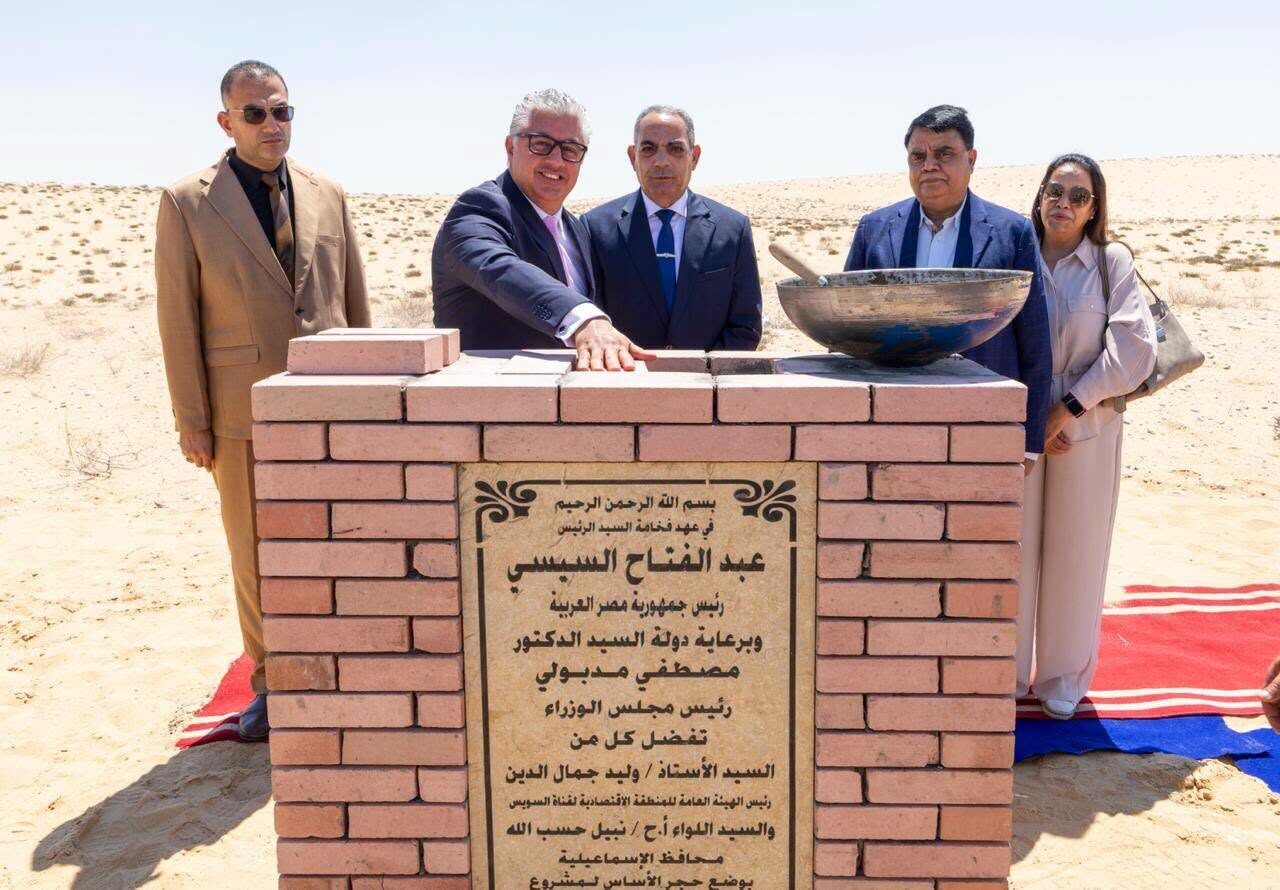
Egypt’s Suez Canal Economic Zone (SCZONE) has marked a significant milestone in its industrial expansion with the groundbreaking ceremony for Nile Ferro Alloys, a $16 million state-of-the-art facility established by India’s Jai Dadi Group within the East Ismailia Industrial Zone (Technology Valley) in Sinai. The project, spanning 80,000 square meters, represents a landmark collaboration between Egyptian and Indian industries, positioning the region as a global hub for ferroalloys and intermediate iron products.
A Strategic Investment in Egypt’s Industrial Future
The Nile Ferro Alloys plant is poised to become a cornerstone of Egypt’s manufacturing sector, specializing in the production of silico-manganese—a critical alloy used in steelmaking—and the processing of ferroalloys from scrap metal. Its output will cater to high-demand industries, including infrastructure development, heavy engineering, and railway component manufacturing, thereby strengthening Egypt’s capabilities in domestic construction and export-oriented production.
The facility is expected to create approximately 300 direct jobs, fostering local employment while contributing to skill development in the region. Beyond job creation, the project aligns with Egypt’s broader economic diversification strategy, particularly its push to reduce reliance on raw material imports and enhance self-sufficiency in key industrial sectors.
High-Profile Launch and Visionary Leadership
The foundation-laying ceremony was graced by prominent Egyptian and international figures, including:
- Walid Gamal El Din, Chairperson of SCZONE, who emphasized the zone’s role as a pillar of Egypt’s economic transformation.
- Nabil Habashi, Governor of Ismailia, who underscored the project’s alignment with Sinai’s developmental priorities.
- Suresh K. Reddy, India’s Ambassador to Egypt, who highlighted the strategic partnership between the two nations in industrial and technological collaboration.
- Subash Kumar, Chairperson of Jai Dadi Group, who reaffirmed the company’s commitment to sustainable industrial growth in Egypt.
- Mohamed Ibrahim, Deputy Chairperson of SCZONE for the Northern Area, who discussed the logistical and infrastructural advantages of the East Ismailia location.
Gamal El Din’s address at the event reinforced SCZONE’s track record as a magnet for foreign direct investment (FDI), having attracted over $16 billion in investments from 30 countries since its inception. Notably, $7 billion of these investments were secured in the 2025/26 fiscal year alone, reflecting Egypt’s rising appeal as an investment destination.
Technology Valley: The Engine of Egypt’s Industrial Revolution
The East Ismailia Industrial Zone, part of Technology Valley, has emerged as a specialized industrial hub under SCZONE’s Sinai Development Plan. Gamal El Din revealed that the zone has already welcomed four major industrial projects, totaling $59 million in investments and 1,000 direct jobs, further solidifying its role in national economic resilience.
The Nile Ferro Alloys plant is part of a broader initiative to establish Egypt as a regional leader in ferroalloys and construction materials, sectors critical for infrastructure projects, housing development, and export-driven industries. Gamal El Din stated:
“These investments are not merely about meeting domestic demand—they are about positioning Egypt as a strategic player in global supply chains, while supporting our national projects and export expansion.”
Looking ahead, SCZONE plans to inaugurate additional industrial and logistics projects in the Sokhna and Qantara zones by the second half of 2026, further accelerating Sinai’s economic integration into Egypt’s growth corridors.
SCZONE’s Holistic Approach to Industrial Development
Beyond attracting high-value industrial investments, SCZONE is committed to building self-sustaining industrial communities that prioritize workforce development, vocational training, and quality of life. The zone’s integrated infrastructure includes:
- State-of-the-art logistics and transportation networks to ensure seamless supply chain operations.
- Vocational training centers to upskill local workers for high-tech and specialized manufacturing roles.
- Healthcare and educational facilities to support the well-being and productivity of the industrial workforce.
- Sustainable energy solutions to reduce operational costs and carbon footprint.
Gamal El Din concluded by emphasizing that SCZONE’s success is underpinned by Egypt’s world-class infrastructure, which provides stable utilities, efficient governance, and a business-friendly environment—key factors that continue to attract global investors**.
A Blueprint for Regional and Global Collaboration
The Nile Ferro Alloys project exemplifies the synergy between Egypt’s strategic vision and India’s industrial expertise. By leveraging Jai Dadi Group’s technological prowess and SCZONE’s logistical advantages, the facility is set to enhance Egypt’s manufacturing competitiveness while contributing to regional economic integration.
As Egypt continues to diversify its economy beyond traditional sectors, such public-private partnerships will be crucial in driving sustainable growth. The East Ismailia Industrial Zone stands as a testament to this vision, proving that with strategic investments and collaborative efforts, Egypt can transform its industrial landscape and secure its place in the global market.

Walid Gamal El Din, Chairperson of SCZONE, lays the foundation stone for the Nile Ferro Alloys plant during the groundbreaking ceremony.

Aerial view of the East Ismailia Industrial Zone (Technology Valley), showcasing the expanding infrastructure and industrial projects under SCZONE’s development plan.
