


JOHANNESBURG — A landmark legal battle has commenced in South Africa’s Western Cape High Court, targeting the country’s newly enacted Expropriation Act, a measure that has ignited diplomatic friction with the Trump administration in Washington. The law, signed into effect by President Cyril Ramaphosa in 2022, represents a bold attempt to rectify historical injustices stemming from decades of white minority rule, which formally ended with South Africa’s first democratic elections in 1994. However, its provisions—particularly the potential for government-led land seizures without full compensation—have drawn sharp criticism from the U.S., raising concerns over economic stability and property rights.
A Law Rooted in Historical Grievances
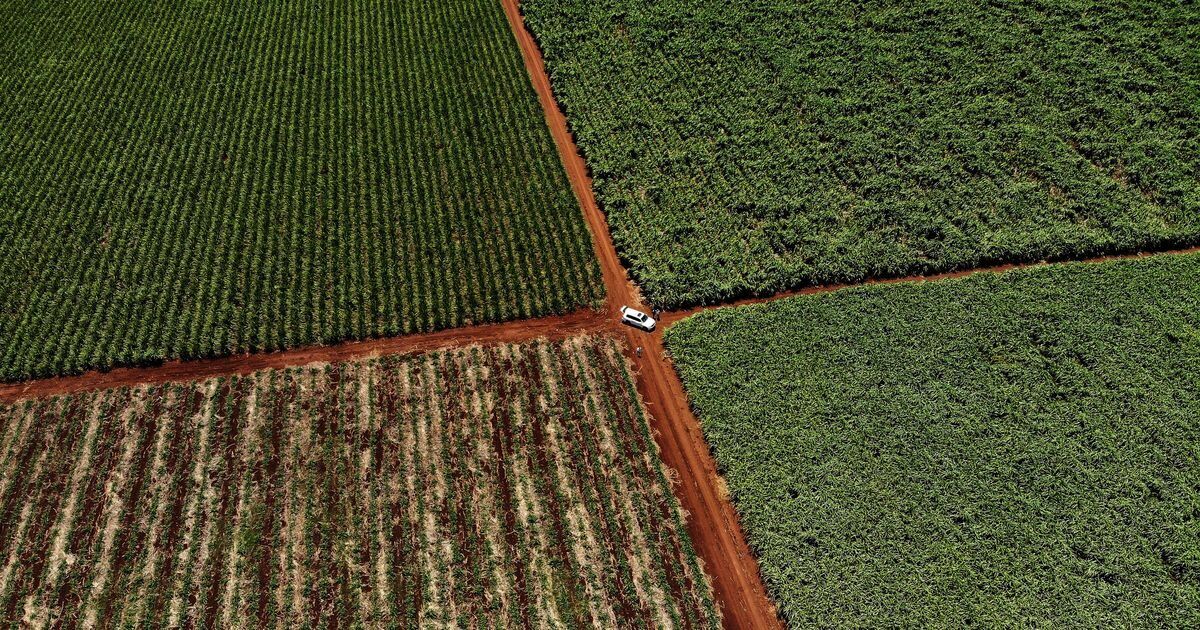
The Expropriation Act was introduced as part of South Africa’s broader land reform agenda, aimed at addressing the legacy of apartheid-era land dispossession, where an estimated 87% of arable land remained in the hands of white farmers following the end of segregation. Critics argue that the law risks arbitrary confiscations, while supporters contend it is necessary to redress historical inequities and stimulate agricultural productivity on underutilized land.
President Ramaphosa has repeatedly emphasized that the law is designed to prioritize public interest, ensuring that seized land is repurposed for agricultural development, housing, or other socially beneficial uses. However, the Trump administration has publicly condemned the measure, accusing South Africa of targeting white farmers and using the law as a pretext for economic retaliation. In response, the U.S. has suspended financial aid and imposed tariffs on South African goods, citing concerns over property rights violations and investor confidence.
Legal Challenges and Constitutional Concerns
The Democratic Alliance (DA), South Africa’s largest opposition party now part of the unity government coalition, has joined forces with civil society groups and property rights advocates to challenge the law’s constitutionality. On Monday, lawyers representing the plaintiffs—including the Institute for Race Relations and the Afrikaner advocacy group AfriForum—argued before the Western Cape High Court that the Expropriation Act violates South Africa’s 1996 Constitution, which guarantees protections for private property and prohibits expropriation without just compensation.
The plaintiffs’ case hinges on two key arguments:
1. Violation of Property Rights – The law’s provisions for expropriation without compensation in cases of “public interest” are deemed unconstitutional, as they fail to provide a clear, objective framework for determining fair market value.
2. Arbitrary Enforcement Risks – Without stringent safeguards, the law could lead to selective land seizures, disproportionately affecting white-owned farms, thereby undermining economic stability and foreign investment.
AfriForum, which represents descendants of Dutch and European settlers who arrived in South Africa over 300 years ago, has warned that the law could trigger a mass exodus of farmers, further destabilizing the agricultural sector. The group has also publicly criticized the Trump administration’s offer of asylum to Afrikaner farmers, framing it as an interference in South Africa’s domestic affairs.
Diplomatic Fallout and Uncertain Legal Outlook
The legal proceedings, which are scheduled to conclude by the end of the week, mark the first major judicial test of the Expropriation Act. However, the timeline for a final ruling remains uncertain, with judges potentially taking weeks or even months to deliver a verdict. If the court rules in favor of the plaintiffs, the law could be partially or fully struck down, forcing the South African government to revise its land reform strategy. Conversely, a ruling in support of the government would solidify the law’s legitimacy, though it may escalate tensions with the U.S. and international investors.
The Trump administration’s stance on the matter remains unwavering, with officials arguing that the law undermines global trade agreements and discourages foreign direct investment. Meanwhile, South African officials have rejected accusations of bias, insisting that the law is necessary for social justice and that compensation mechanisms will be fair and transparent.
Broader Implications for South Africa’s Economic Future
Beyond the immediate legal and diplomatic stakes, the Expropriation Act has far-reaching economic implications. Critics warn that uncertainty over land ownership could deter agricultural expansion, while proponents argue that strategic land redistribution could boost food security and reduce rural poverty. The outcome of this court battle will not only shape South Africa’s land reform trajectory but also influence its standing in global markets and strengthen or weaken ties with the U.S.
As the case unfolds, observers will closely monitor whether the Western Cape High Court’s decision will redefine property rights in South Africa or reinforce the government’s commitment to historical redress. One thing is clear: the legal and political ramifications of this case extend far beyond national borders, with international investors, human rights groups, and diplomatic entities all watching intently.
