
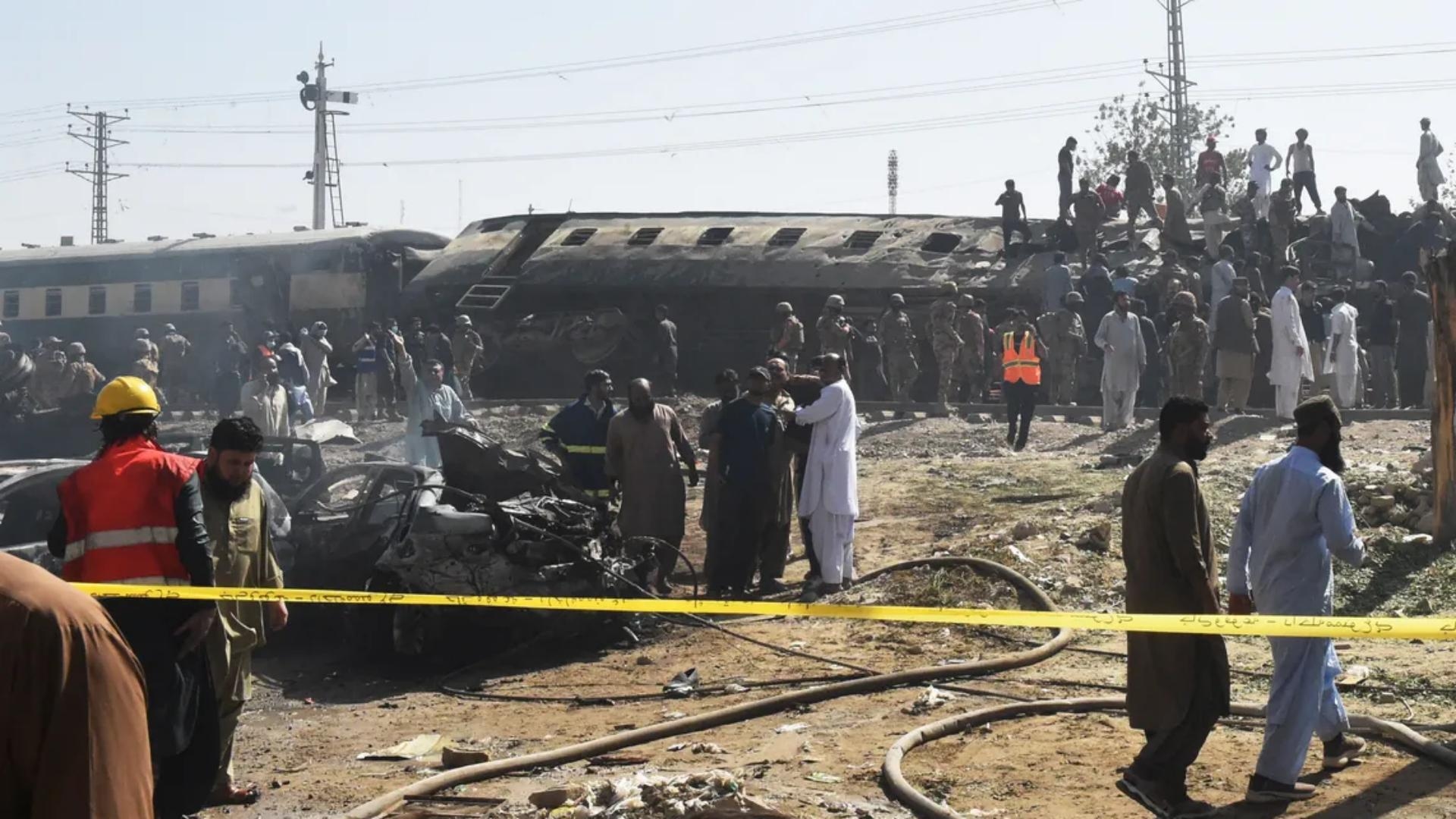
Blast Shatters Quetta’s Calm: A City Under Siege
The quiet streets of Quetta, the capital of Pakistan’s Balochistan province, were shattered late Wednesday when a targeted explosion ripped through a military train, leaving at least 24 dead and over 50 injured. The blast, which occurred near the provincial government complex, sent shockwaves through the city, prompting an immediate lockdown of key areas and a city-wide mobilization of security forces. Eyewitnesses described a scene of chaos—smoke billowing into the evening sky, screams piercing the air, and emergency responders racing against time to extract survivors from the wreckage.
Local hospitals, already stretched thin by limited resources, struggled to cope with the influx of casualties. Doctors worked frantically under flickering fluorescent lights, their hands steady despite the exhaustion etched into their faces. The attack, which targeted personnel en route to a military facility, underscored the persistent vulnerability of Pakistan’s security apparatus, even in regions where military presence is heavily fortified.

Balochistan’s Fragile Stability: A Powder Keg of Unrest
Quetta, a city of over two million, has long been a flashpoint in Pakistan’s ongoing conflict with separatist groups and extremist factions. The Balochistan Liberation Army (BLA) and other militant organizations have repeatedly targeted military and civilian infrastructure, citing grievances over resource exploitation and political marginalization. This latest attack, however, bore the hallmarks of a coordinated strike rather than a random act of violence. Authorities have not yet claimed responsibility, but the precision of the explosion suggests meticulous planning—one that may have involved insider knowledge or sophisticated bomb-making techniques.
The attack comes at a precarious moment for Pakistan, which is navigating a delicate balance between internal security challenges and external pressures from neighboring Afghanistan and India. The government has vowed to bring the perpetrators to justice, but past incidents have shown that such promises often yield little in the way of tangible results. The military, already stretched thin by counterinsurgency operations, now faces an even greater burden of protecting its own personnel from within.
Regional Ripples: How the Attack Echoes Across Borders
The repercussions of Wednesday’s blast are not confined to Pakistan’s borders. In North Africa, where governments are grappling with their own security threats, the attack serves as a stark reminder of the fragility of regional stability. Countries like Egypt, Morocco, and Algeria, which have faced their share of militant violence, are watching closely as Pakistan’s crisis unfolds. The rise of transnational extremist networks, often operating across porous borders, has made such attacks a shared concern for policymakers in both South Asia and North Africa.
Analysts suggest that the attack could embolden militant groups in other parts of the world, particularly those with similar grievances against state authorities. The use of improvised explosive devices (IEDs) on military targets is a tactic that has been replicated in conflicts from the Sahel to the Levant. For North African nations, which have invested heavily in counterterrorism efforts, the attack in Quetta is a sobering case study in the adaptability of militant organizations.
Meanwhile, diplomatic channels are abuzz with discussions on how to strengthen regional cooperation against terrorism. While Pakistan has historically relied on its own security forces to handle such threats, the growing sophistication of attacks may necessitate a more collaborative approach—one that includes intelligence-sharing and joint military exercises with neighboring countries.
Human Toll and the Path Forward: A Community in Mourning
Beyond the geopolitical implications, the attack has left an indelible mark on Quetta’s residents. Families of the victims are grappling with unimaginable loss, while survivors recount harrowing moments of chaos and terror. Funerals have been held in mosques across the city, with mourners gathering in large numbers to pay their respects. The attack has also reignited debates about the effectiveness of Pakistan’s counterterrorism policies, with critics questioning whether the military’s heavy-handed approach is exacerbating rather than resolving the crisis.
For now, the city remains on edge. Security checkpoints dot the streets, and military patrols are a constant presence. Yet, in the face of such adversity, the people of Quetta are demonstrating resilience. Local volunteers have stepped up to assist emergency services, while community leaders are calling for unity in the face of division. The question, however, remains: How long can a city endure such cycles of violence before the cracks in its foundation become irreparable?
As investigations into the attack continue, one thing is clear: the blast in Balochistan is not just a tragedy for Pakistan—it is a warning for the entire region. The fight against terrorism demands more than military might; it requires a holistic approach that addresses the root causes of extremism and fosters long-term stability. For North Africa and beyond, the lessons from Quetta are a stark reminder that the road to peace is fraught with challenges, but the stakes could not be higher.

Topix News Desk is a digital editorial team focused on delivering clear, timely, and useful news coverage for readers worldwide. Our reporting highlights African news with global context, including politics, business, economy, technology, health, sports, entertainment, travel, and culture. We aim to publish accessible, well-structured, and informative articles that help readers understand the stories shaping Africa and the world.