
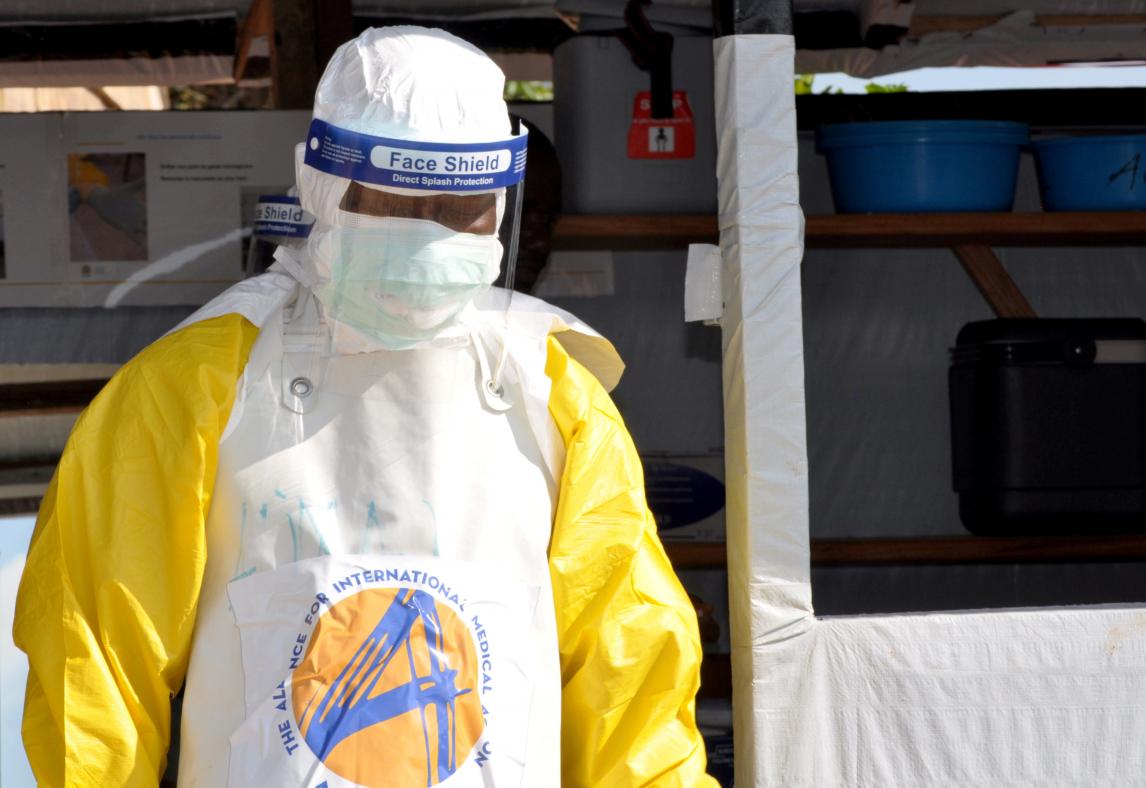
As international health authorities heighten their scrutiny of emerging infectious disease threats, Egypt has taken proactive steps to safeguard its borders. The Ministry of Health and Population announced on Tuesday that it has elevated alert levels at all major airports, aligning its protocols with the World Health Organization’s guidelines for high-risk regions. This move comes as the Democratic Republic of the Congo grapples with a persistent Ebola outbreak, which has prompted global health agencies to issue travel advisories for affected areas.
Egypt’s Response: A Balanced Approach to Public Health
In a televised appearance on Sada El-Balad TV, ministry spokesperson Hossam Abdel-Ghaffar sought to reassure the public that Egypt remains unaffected by the Ebola virus. The country has not recorded a single case of the disease, a fact Abdel-Ghaffar emphasized while outlining the new airport screening measures. These include thermal scanning for passengers arriving from high-risk countries, mandatory health declaration forms, and rapid response teams on standby to handle potential cases.

The decision to increase airport alert levels reflects a broader strategy to prevent the introduction of the virus into Egypt. While the risk of Ebola spreading to the country is considered low, health officials are not taking any chances. The Ministry of Health has also dispatched teams to train airport staff in recognizing symptoms and handling suspected cases, ensuring that protocols are both efficient and humane. Passengers arriving from the Congo, Uganda, Rwanda, and Burundi—regions currently reporting Ebola cases—are subject to the most stringent checks.
Global Ebola Outbreak: A Persistent Threat
The Ebola virus, which has claimed thousands of lives in Central Africa over the past decade, remains a formidable challenge for global health systems. The current outbreak in the Democratic Republic of the Congo, which began in 2022, has already resulted in hundreds of confirmed cases and fatalities. The World Health Organization has classified the situation as a Public Health Emergency of International Concern, a designation reserved for events that pose a significant risk to global health security.
Ebola spreads through direct contact with bodily fluids, making it particularly dangerous in densely populated urban areas. The virus’s high fatality rate—often exceeding 50% in some outbreaks—has led to widespread fear and misinformation. In response, health agencies have ramped up surveillance, vaccination campaigns, and public awareness efforts in high-risk regions. Egypt’s heightened airport protocols are part of this global effort to contain the virus at its source before it can spread internationally.
While the virus has not yet crossed into Egypt, the country’s proximity to affected regions—particularly Libya to the west and Sudan to the south—has raised concerns about potential spillover. Egyptian health authorities are collaborating with neighboring countries to share data and coordinate responses, a move that underscores the interconnected nature of infectious disease control.

Public Reaction and Preparedness in Egypt
The announcement of elevated airport alert levels has sparked a mix of reactions among Egyptians. Some citizens express confidence in the government’s preparedness, citing the country’s experience in managing past health crises, including the H1N1 pandemic and multiple cholera outbreaks. Others, however, remain skeptical, questioning whether the new measures are sufficient to prevent an outbreak. Social media platforms have become a battleground for debates, with users sharing both official updates and unverified claims about the virus’s spread.
To address public concerns, the Ministry of Health has launched a series of awareness campaigns, targeting both urban and rural communities. These campaigns emphasize the importance of hygiene practices, such as frequent handwashing and avoiding contact with wild animals, which are known carriers of the virus. Local health clinics have also been instructed to remain vigilant, with doctors and nurses trained to identify and report potential Ebola cases immediately.
The government’s messaging has been carefully calibrated to avoid panic while ensuring that citizens take the threat seriously. Abdel-Ghaffar, in his television appearance, reiterated that Egypt’s healthcare system is equipped to handle any potential cases, pointing to the country’s robust isolation wards and rapid response teams. The Ministry has also assured travelers that flight schedules will not be disrupted, though passengers are encouraged to check for updates before departure.
Lessons from Past Outbreaks: How Egypt Stays Ahead
Egypt’s approach to the current Ebola threat is shaped by its experiences with other infectious diseases. In 2017, the country successfully contained a cholera outbreak that originated in Yemen, implementing strict border controls and mass vaccination drives. Similarly, during the 2009 H1N1 pandemic, Egypt was one of the first countries in the region to deploy antiviral medications and public health campaigns, limiting the virus’s impact.
Health experts attribute Egypt’s resilience to its centralized health infrastructure, which allows for quick decision-making and resource allocation. The country’s public health laboratories are equipped with advanced diagnostic tools, enabling rapid testing for Ebola and other high-risk pathogens. Additionally, Egypt’s strong collaboration with international organizations, such as the WHO and the Centers for Disease Control and Prevention, ensures that it remains at the forefront of global health security efforts.
Looking ahead, Egyptian authorities are preparing for the possibility of a prolonged Ebola outbreak in Central Africa. The Ministry of Health has stockpiled personal protective equipment, antiviral drugs, and diagnostic kits, while also conducting regular drills to test its emergency response capabilities. These preparations are not just about Ebola; they reflect a broader commitment to safeguarding public health against all emerging infectious threats.
For now, Egypt’s focus remains on vigilance and prevention. While the risk of an Ebola outbreak in the country is low, the government’s swift action sends a clear message: no threat will go unchecked. As global health authorities continue to monitor the situation, Egypt stands ready to adapt its strategies, ensuring that its citizens—and its borders—remain protected.
In a world where infectious diseases can cross continents in a matter of hours, Egypt’s proactive stance serves as a model for other nations. By balancing transparency with decisive action, the country is not only addressing the immediate threat of Ebola but also reinforcing its reputation as a leader in public health resilience.


Topix News Desk is a digital editorial team focused on delivering clear, timely, and useful news coverage for readers worldwide. Our reporting highlights African news with global context, including politics, business, economy, technology, health, sports, entertainment, travel, and culture. We aim to publish accessible, well-structured, and informative articles that help readers understand the stories shaping Africa and the world.