

On May 25, 2026—a date that also marked Africa Day—Pope Leo XIV released his inaugural encyclical, Magnifica Humanitas, a landmark document that not only addressed the ethical implications of artificial intelligence (AI) but also delivered a formal apology for the Catholic Church’s historical complicity in the transatlantic slave trade. The encyclical, a bold reimagining of Catholic Social Teaching for the digital age, drew striking parallels between the Industrial Revolution’s exploitation of labor and today’s AI-driven systems of control, offering a timely warning to Africa and the global South about emerging forms of modern slavery.
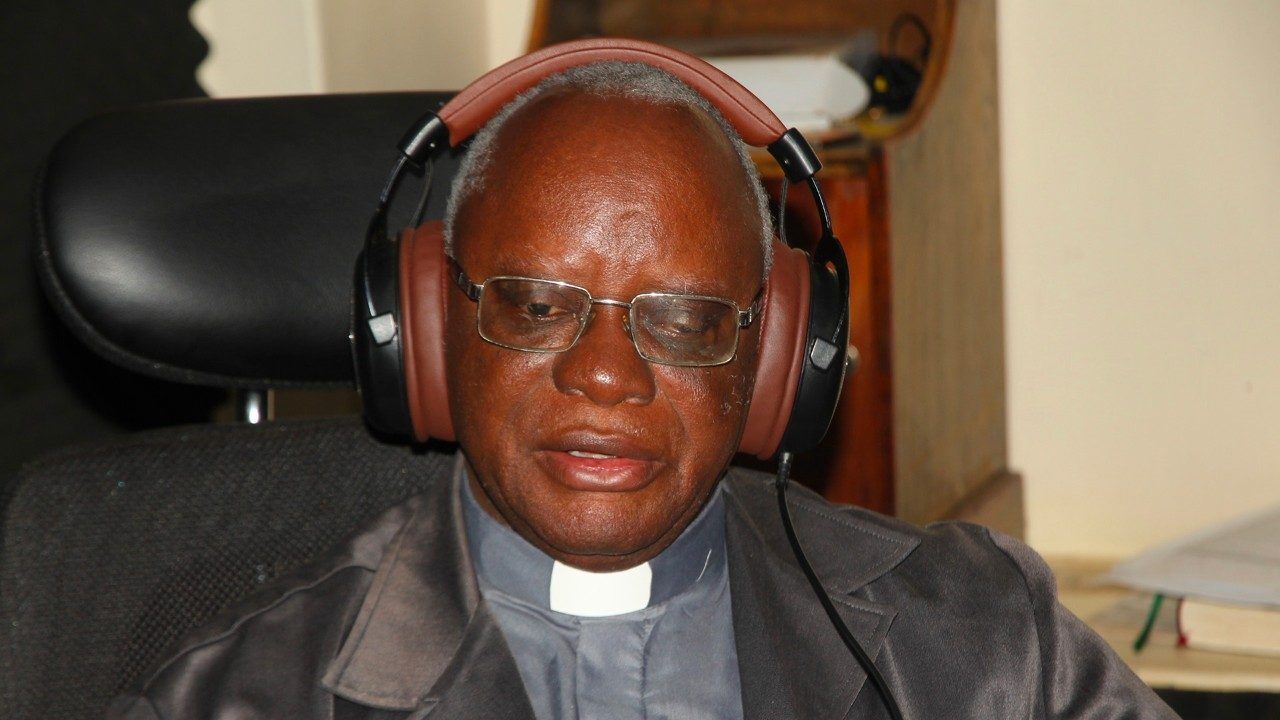
At the heart of the document is a profound acknowledgment of the Church’s past failures, a theme that resonated deeply with Bishop Joseph Kilaini, Auxiliary Bishop Emeritus of Bukoba in Tanzania, who remains actively involved in Catholic Radio Mbiu. Speaking to Vatican News, Bishop Kilaini—who also teaches Church History and engages in public discourse through local media—highlighted the personal and theological significance of Pope Leo XIV’s encyclical.
A Legacy of Courage: Pope Leo XIII’s Precedent
Bishop Kilaini’s admiration for Pope Leo XIII (1878–1903) is no coincidence. In an era when the Industrial Revolution was reshaping societies, Leo XIII issued Rerum Novarum (1891), a foundational text on labor rights and social justice that challenged the unchecked capitalism of his time. When Pope Leo XIV—inspired by this legacy—chose his papal name, Bishop Kilaini expressed excitement and hope, believing the new pontiff would continue the tradition of bold moral leadership.
“Magnifica Humanitas is not just a reflection on AI; it is a modern confession of the Church’s past sins,” Kilaini stated. “For an African historian and pastor, reading this encyclical was emotionally liberating. For too long, we have been taught about the Church’s role in slavery without adequate repentance. The Holy Father’s words—‘I ask for pardon’—are a gift of healing for millions who carry the weight of that history.”*
[IMAGE_1]
Bishop Joseph Kilaini, Auxiliary Bishop Emeritus of Bukoba, reflects on the significance of Pope Leo XIV’s encyclical in addressing historical injustices and modern exploitation.
The Church’s Delayed Condemnation of Slavery
The encyclical’s most seismic moment arrives in Paragraph 176, where Pope Leo XIV explicitly apologizes for the Church’s historical support of slavery. While acknowledging that moral judgments must be made within their historical context, the pontiff makes clear that the delay in condemning slavery was a grave moral failure:
“It is impossible not to feel deep sorrow when contemplating the immense suffering and humiliation endured by so many in stark contrast to their immeasurable dignity as persons infinitely loved by the Lord. For this, in the name of the Church, I sincerely ask for pardon.”
This apology comes two months after the United Nations General Assembly passed a resolution declaring the transatlantic slave trade the gravest crime against humanity. The timing was not coincidental, but the Church’s move was unprecedented in its directness.
Bishop Kilaini emphasized that this apology aligns with the teaching of Pope Leo XIII, who, in his 1899 encyclical Depuis le Jour, urged Church historians to confront the Church’s past sins without evasion. “The Holy Father is following in the footsteps of his predecessors,” Kilaini explained. “When faced with new technologies—whether film, radio, television, or now AI—popes have always warned about their dual nature: the potential for good and destruction.”
From Industrial Exploitation to AI’s New Forms of Bondage
The encyclical’s second major focus is the ethical dangers of AI, framing it as a modern frontier of human exploitation. Drawing from the Catholic tradition of social encyclicals, Pope Leo XIV warns that unregulated AI systems risk reducing human beings to mere data points, stripping them of dignity, autonomy, and freedom.
“In the age of AI, the human person must remain the measure of all things—not an algorithm,” Kilaini stressed. “This encyclical is a warning to Africa, where digital colonialism and surveillance capitalism threaten to create new forms of slavery. The same powers that once justified chattel slavery now exploit data colonialism, where individuals’ lives are commodified without consent.”
The document references earlier papal warnings:
– Pope Pius XII (1957) addressed the ethical risks of film and media in Miranda Prorsus.
– Pope St. John Paul II (2002) critiqued the Internet’s potential for manipulation in Ecclesia in Europa.
– Pope Francis has repeatedly spoken about AI’s ethical dangers, urging human-centered technology.
“Pope Leo XIV is saying what we have long suspected: AI is not neutral. It can be wielded as a tool of domination, just as the Industrial Revolution was used to exploit labor,” Kilaini added.
[IMAGE_2]
Pope Leo XIV delivers his inaugural encyclical, Magnifica Humanitas, addressing both historical injustices and the ethical challenges of artificial intelligence.
Africa’s Double Challenge: Healing the Past and Guarding the Future
For Africa, Magnifica Humanitas holds particular urgency. The continent has historically borne the brunt of both old and new forms of exploitation:
1. The Legacy of Slavery – The transatlantic slave trade erased millions of lives, and its psychological and economic scars persist today.
2. Modern Digital Exploitation – From predatory lending algorithms to biometric surveillance, Africa is increasingly monitored and monetized without meaningful consent.
“This encyclical is a double-edged gift,” Kilaini reflected. “It repairs the past by acknowledging the Church’s sins, but it also protects the future by warning against AI’s potential to enslave us anew. Africa must reject both old and new chains.”
The pontiff’s call to protect human dignity in the digital age resonates deeply in a continent where tech giants and authoritarian regimes often prioritize control over freedom. By framing AI as a moral battleground, Magnifica Humanitas challenges Africans to demand ethical governance in an increasingly data-driven world.
A Call to Action: Repentance, Resistance, and Renewal
Bishop Kilaini’s message is clear: The Church’s apology is not just historical—it is a call to action.
“For Catholics in Africa, this encyclical should inspire three responses:
1. Repentance – Acknowledging the past and working for justice.
2. Resistance – Rejecting digital colonialism and algorithmic oppression.
3. Renewal – Building human-centered technology that serves, not exploits.”
As Africa celebrates its liberation from colonial rule, Magnifica Humanitas serves as a reminder that true freedom requires both historical justice and ethical vigilance in the digital frontier.
Final Note: This encyclical is more than a theological document—it is a manifest for human dignity in an era where both chains and algorithms threaten to bind us. For Africa, it is a blueprint for survival and sovereignty in the 21st century.
