

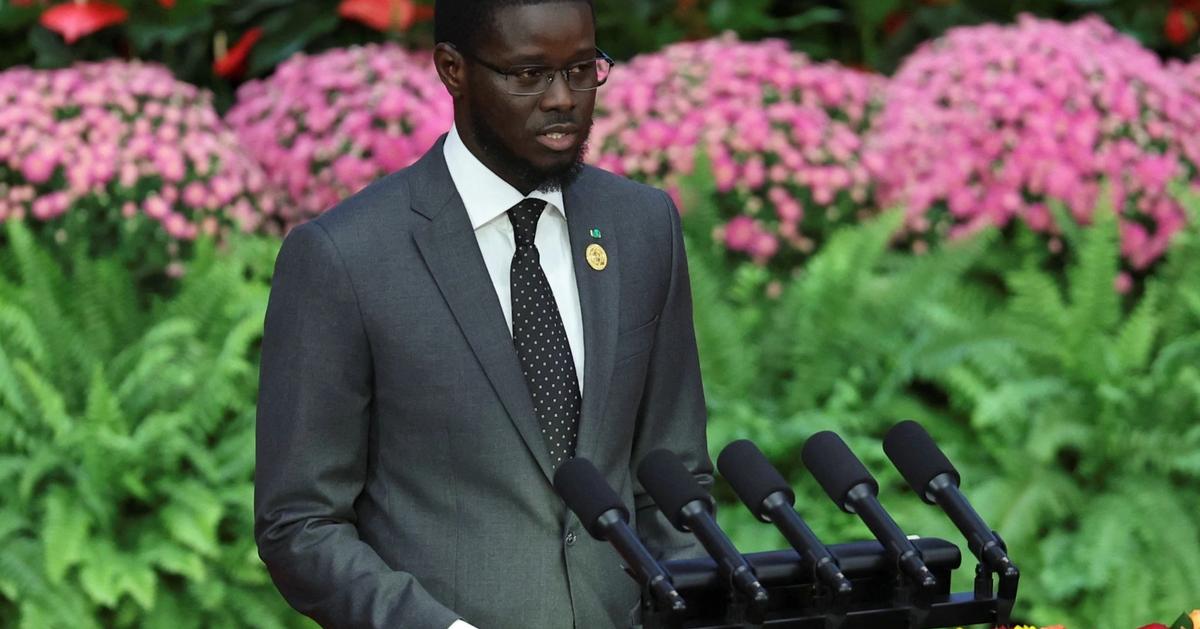
Senegal is undergoing a dramatic political realignment as President Bassirou Diomaye Faye officially establishes a new political party, Kiiraay, a move that solidifies his rift with former Prime Minister Ousmane Sonko and sets the stage for a potential 2029 reelection campaign. The formation of Kiiraay comes amid escalating tensions within the government, a looming financial crisis, and a fractured opposition landscape, raising critical questions about Senegal’s political stability and economic future.
A Fractured Alliance and the Rise of Kiiraay
The decision to launch Kiiraay marks a decisive break from Sonko, who had been Faye’s key ally during the 2024 presidential election. The two leaders initially united under the banner of Yewwi Askan Wi (YAW), a coalition that promised reform and economic recovery. However, their partnership unraveled over starkly differing visions for Senegal’s governance, particularly regarding the country’s $13 billion debt crisis—a financial burden that now exceeds 130% of GDP, triggering an International Monetary Fund (IMF) program suspension.
In May 2024, Faye abruptly dismissed Sonko from his role as Prime Minister, a move that left Sonko in a position of significant influence as Speaker of the National Assembly, a post that grants him substantial control over legislative proceedings. Sonko’s Pastef (Patriotes du Sénégal pour le Travail, l’Éthique et la Fraternité) party dominates the assembly, creating a de facto opposition within the government and complicating Faye’s ability to govern effectively.
The establishment of Kiiraay is not merely a political maneuver but a strategic consolidation of power. Senior party officials have confirmed that Faye will lead the new formation in upcoming local and legislative elections, positioning it as a direct alternative to Pastef and other opposition factions. The timing of this move is deliberate, coming as Senegal prepares for a 2029 national election cycle, where Faye’s ability to mobilize support will be critical.
The Debt Crisis and IMF Standoff: A Looming Economic Storm
The financial instability plaguing Senegal is the most pressing challenge facing Faye’s administration. Reports indicate that the previous government failed to disclose billions in undisclosed loans, a revelation that has deepened public distrust in economic management. The IMF’s decision to pause its $1.4 billion bailout program in 2023 was a direct consequence of these irregularities, leaving Senegal without critical foreign funding at a time when fiscal discipline is paramount.
Economists warn that without immediate reforms, Senegal risks defaulting on its debt obligations, which could trigger a currency devaluation, capital flight, and a sharp decline in investor confidence. The government has since attempted to renegotiate terms with creditors, including China, France, and regional partners, but progress has been slow. The IMF’s conditions—transparency in debt disclosure, fiscal austerity, and structural reforms—remain non-negotiable, creating a political and economic stalemate.
Faye’s administration has pledged to audit all outstanding loans and implement a debt restructuring plan, but critics argue that his party lacks the legislative majority to push through necessary reforms. Sonko’s control over the National Assembly further complicates efforts, as Pastef has blocked key economic bills, including those related to tax reforms and public sector wage adjustments.
Sonko’s Influence and the Shadow of Political Instability
Sonko’s role as Speaker of the Assembly has given him unprecedented influence over legislative priorities, allowing Pastef to veto or delay critical legislation. This power dynamic has led to frequent government-opposition clashes, with Sonko accusing Faye of authoritarian tendencies and Faye retaliating by accusing Sonko’s movement of fomenting unrest.
The political tension has spilled into the streets, with protests and demonstrations becoming a regular feature of Senegal’s urban centers. In Dakar, Ziguinchor, and Saint-Louis, supporters of both Faye and Sonko have clashed, leading to police crackdowns and arrests. The government has deployed military and paramilitary forces to maintain order, raising concerns about human rights violations and civil liberties erosion.
Analysts warn that if the current deadlock persists, Senegal could face a prolonged period of political paralysis, further destabilizing an already fragile economy. The 2029 elections will be a litmus test for Faye’s ability to consolidate his base while navigating the economic crisis and opposition resistance.
Kiiraay’s Vision: A New Political Era?
While details of Kiiraay’s policy platform remain under wraps, early indications suggest the party will focus on economic recovery, anti-corruption measures, and youth empowerment. Faye has repeatedly emphasized the need for transparency in governance, a direct response to the debt scandal that rocked his administration.
However, the party’s long-term viability remains uncertain. Senegal’s political landscape is dominated by long-standing dynasties and regional power brokers, and Faye’s relative inexperience in party-building could be a liability. Additionally, ethnic and regional divisions—particularly between the Wolof-dominated government and the stronghold of Sonko’s Serer supporters—could further fragment the political landscape.
Regional and International Reactions
Senegal’s crisis has drawn attention from regional bodies and global partners. The African Union (AU) has called for dialogue between Faye and Sonko, urging both leaders to prioritize national stability over personal ambitions. Meanwhile, France and the U.S. have expressed concern over the democratic backsliding in Senegal, though both nations remain cautious about interfering in internal affairs.
China, Senegal’s largest creditor, has offered debt relief in exchange for economic concessions, but analysts question whether these deals will be sustainable without broader reforms. The Economic Community of West African States (ECOWAS) has also monitored the situation closely, warning that prolonged instability could undermine regional economic integration.
The Path Forward: Challenges and Opportunities
For Senegal to avoid economic collapse and political fragmentation, Faye and Sonko must find a path to reconciliation. Possible solutions include:
– A grand coalition government to stabilize the economy and pass critical reforms.
– Early legislative elections to break Pastef’s dominance in the National Assembly.
– A debt restructuring deal with the IMF and creditors, backed by international guarantees.
However, the personal animosity between Faye and Sonko makes compromise difficult. If no resolution is found, Senegal could face a prolonged period of instability, with protests, economic decline, and potential military intervention as possible outcomes.
Conclusion: A Nation at a Crossroads
Senegal stands at a critical juncture. The formation of Kiiraay is a bold but risky move by Faye, one that could either strengthen his political base or accelerate the country’s descent into chaos. The debt crisis, IMF pressure, and political divisions create a perfect storm, testing the resilience of Senegal’s democratic institutions.
As the nation prepares for 2029 elections, the world will be watching whether Faye can unify a fractured country or if Sonko’s influence will derail his ambitions. One thing is certain: Senegal’s future hinges on whether its leaders can prioritize the nation’s survival over personal power struggles.


