

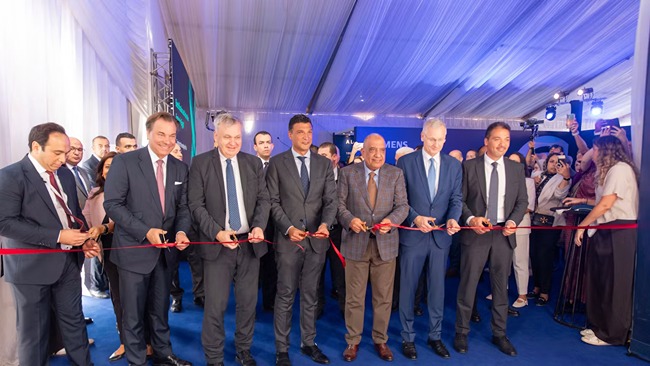
Siemens, a global leader in electrification, automation, and digitalization, has inaugurated a cutting-edge energy technology manufacturing facility in Egypt, marking a pivotal milestone in the company’s expansion across the African continent. The newly established plant, located in 6th of October City, represents a significant investment in Egypt’s growing industrial landscape and aligns with the nation’s ambitious vision to become a regional hub for advanced manufacturing and sustainable energy solutions.
A Strategic Investment in Egypt’s Industrial Growth
The factory, which spans over 100,000 square meters, is designed to produce a wide array of energy infrastructure components, including low-voltage and medium-voltage switchgear, transformers, and renewable energy systems. Siemens’ decision to establish this facility underscores its commitment to supporting Egypt’s National Transformation Plan 2030, which prioritizes industrial diversification, energy efficiency, and technological innovation.
Egypt’s strategic geographic position, coupled with its pro-business policies, skilled workforce, and robust infrastructure, made it an ideal location for Siemens to expand its manufacturing capabilities. The company’s investment is expected to create thousands of direct and indirect jobs, fostering economic growth while positioning Egypt as a key player in Africa’s industrial revolution.
Driving Sustainability and Energy Transition in Africa
With Africa facing pressing energy challenges—including rising demand, grid instability, and the need for renewable energy integration—Siemens’ new factory is poised to play a crucial role in accelerating the continent’s energy transition. The facility will specialize in producing smart grid technologies, energy storage solutions, and digitalized energy management systems, enabling more efficient and resilient power networks.
The plant will also contribute to Egypt’s renewable energy ambitions, particularly in solar and wind power sectors, where Siemens has been a key partner in deploying advanced infrastructure. By manufacturing locally, Siemens reduces supply chain dependencies, lowers carbon footprints, and ensures faster deployment of energy solutions across Africa and the Middle East.
Advanced Manufacturing and Digital Integration
The factory incorporates state-of-the-art automation and Industry 4.0 technologies, allowing Siemens to optimize production efficiency, reduce waste, and enhance product quality. Key features of the facility include:
- Highly Automated Assembly Lines: Utilizing robotics and AI-driven quality control systems to ensure precision in manufacturing switchgear and transformers.
- Digital Twin Technology: Enabling real-time monitoring of production processes, predictive maintenance, and remote diagnostics for seamless operations.
- Energy-Efficient Design: The plant itself is designed to operate sustainably, with solar-powered sections and energy recovery systems minimizing its environmental impact.
- Skilled Workforce Development: Siemens is investing in vocational training programs to upskill local engineers and technicians, ensuring a future-ready workforce capable of maintaining and innovating within the facility.
Boosting Local Economic Impact and Partnerships
Beyond manufacturing, Siemens’ presence in Egypt is expected to strengthen regional supply chains and encourage collaboration with local businesses. The company has already engaged with Egyptian universities, research institutions, and industrial partners to foster innovation and knowledge transfer.
The factory’s establishment also aligns with Egypt’s Economic Development Plan, which aims to attract foreign direct investment (FDI) while reducing reliance on imported industrial goods. By producing energy technologies locally, Siemens not only supports Egypt’s self-sufficiency goals but also contributes to the broader African market, where demand for reliable and modern energy infrastructure is rapidly growing.
Future Outlook: Expanding Siemens’ Footprint in Africa
This latest development follows Siemens’ previous investments in Africa, including manufacturing plants in South Africa and Nigeria, as well as partnerships in renewable energy projects across the continent. The Egypt facility is part of a broader strategy to decentralize production, reducing logistical challenges and accelerating the delivery of critical energy solutions.
Industry analysts predict that Siemens’ move will inspire other multinational corporations to follow suit, further accelerating Egypt’s transformation into an industrial and technological powerhouse in Africa. With the factory now operational, Siemens is poised to deliver high-quality, locally manufactured energy solutions, reinforcing its reputation as a trusted partner in Africa’s sustainable development journey.
Conclusion: A Blueprint for Africa’s Industrial Future
Siemens’ energy technology manufacturing hub in Egypt represents more than just a production facility—it is a testament to the continent’s growing industrial potential and a blueprint for sustainable development. By combining cutting-edge technology, local workforce development, and strategic economic partnerships, Siemens is not only meeting Egypt’s energy needs but also setting a new standard for manufacturing excellence in Africa.
As the facility ramps up production, it will play a vital role in stabilizing energy grids, promoting renewable adoption, and driving economic growth across the region. With this landmark investment, Siemens reinforces its commitment to powering Africa’s future—one factory at a time.
