

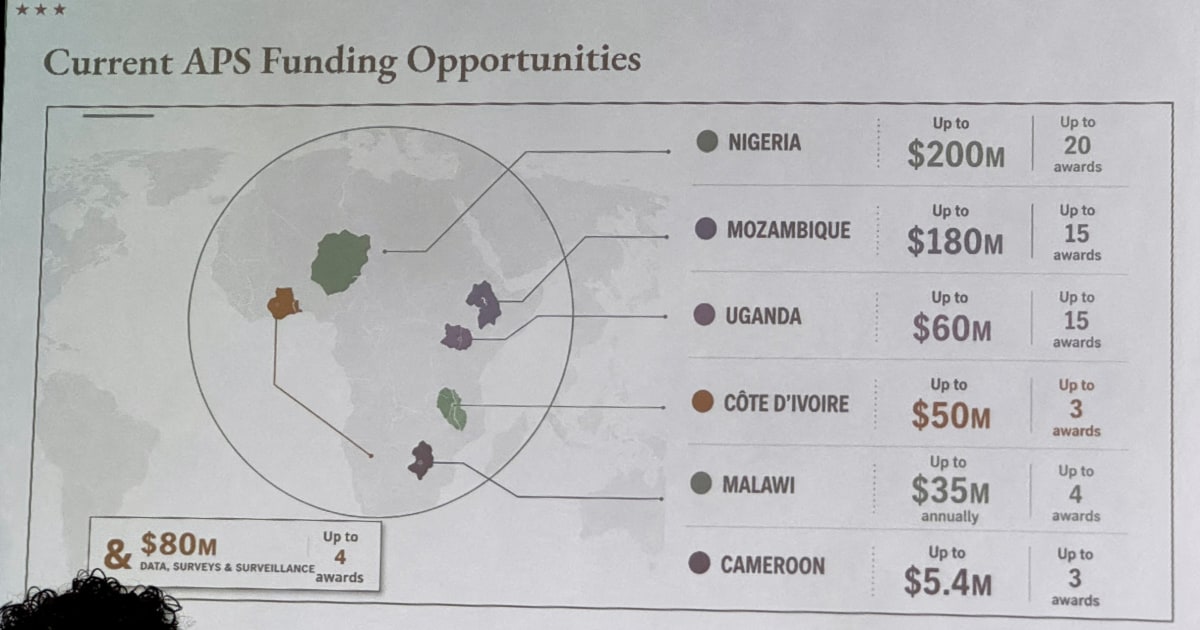
At the AIDS 2026 conference in Rio de Janeiro, Brazil, a presentation by the U.S. State Department delivered a glaring example of geopolitical blundering—an AI-generated map of Africa that misrepresented every single country, sparking widespread ridicule and diplomatic embarrassment. The error, caught on camera during a session on U.S. health agreements, has since dominated discussions among global health experts, African diplomats, and observers of American foreign policy.
The Map That Broke the Internet (Temporarily)
A Reuters investigation uncovered that the flawed map was displayed mid-presentation by Jeff Graham, the U.S. Global AIDS Coordinator, during a discussion on PEPFAR (President’s Emergency Plan for AIDS Relief)—one of the world’s largest global health initiatives. The map, later confirmed to have been generated with AI tools, depicted Nigeria as a landlocked nation in the Sahara Desert, Mozambique positioned in the Horn of Africa, and Ivory Coast placed on the opposite side of the continent from its actual location.
The screenshots of the map—first shared by Emily Bass, an AIDS expert, on Substack—quickly circulated across LinkedIn, Twitter, and diplomatic circles, amassing over 40,000 views in a matter of hours. Matt Petit, a senior fellow at the Atlantic Council specializing in AI and geopolitics, criticized the error in a public post, stating:
“Whoever created and approved this slide demonstrated a fundamental ignorance of Africa’s geography—and worse, a disregard for basic fact-checking before presenting to global partners.”
AI’s Role in the Diplomatic Faux Pas
The map’s AI watermark—detected by Reuters—raised questions about automation in government communications. OpenAI, the developer of the AI model used, confirmed it was investigating the claim, though no official confirmation has been made regarding the tool’s exact source. The State Department later admitted the map was produced by a team member who rushed to update the slide deck before the presentation, leading to the catastrophic mislabeling.
The incident underscores a growing trend of AI-assisted errors in high-stakes diplomacy, where automation can outpace human oversight, particularly in time-sensitive global forums.
A Diplomatic Blunder with Broader Implications
The AIDS 2026 conference was a high-profile gathering of global health leaders, African governments, and international aid organizations, making the error particularly damaging. The State Department’s official response acknowledged the mistake, stating:
“We take full responsibility for the confusion and misrepresentation it caused for attendees, including our African partners.”
The admission came after African diplomats and health officials expressed disappointment and frustration, with some questioning the U.S. commitment to accurate representation in global health partnerships.
PEPFAR’s Legacy Amid Funding Cuts and Controversy
The presentation occurred amid ongoing tensions over U.S. funding for global health programs. While PEPFAR’s core operations—such as distributing lifesaving antiretroviral drugs—remain largely intact, the Trump administration’s 2023 decision to pause funding for a policy review disrupted aid distribution in multiple African nations. Though funding has since resumed for essential services, the U.S. is scaling back other initiatives, including prevention programs and surveillance efforts, with plans to phase out certain operations in South Africa.
The misplaced map incident has reignited debates about American engagement in Africa, particularly regarding whether diplomatic and aid efforts are being undermined by preventable errors.
Beyond the Map: The Larger Context of U.S.-Africa Relations
The error is not merely a geographical blunder but a symbolic misstep in an era where perception of competence in global diplomacy is crucial. African nations, already navigating economic challenges, climate crises, and health disparities, may view such mistakes as indicative of broader systemic issues in U.S. foreign policy execution.
Jeff Graham, the presenting official, did not respond to requests for comment, leaving the State Department as the sole voice on the matter. However, the department dismissed the map as an isolated incident, emphasizing that substantive discussions on AIDS eradication continued despite the error.
Lessons in Diplomacy, AI, and Accountability
The incident serves as a case study in the risks of unchecked AI adoption in government communications. While automation can streamline workflows, it also introduces new vulnerabilities—particularly in international diplomacy, where precision and respect for partners are non-negotiable.
For the State Department, the map debacle highlights the need for rigorous review processes before public presentations, especially in high-stakes global forums. For African nations and health organizations, it reinforces the importance of holding major donors accountable for both policy and presentation accuracy.
As the AIDS 2026 conference concluded, the misplaced map remains a stark reminder—sometimes, the smallest errors can have the biggest consequences.
