

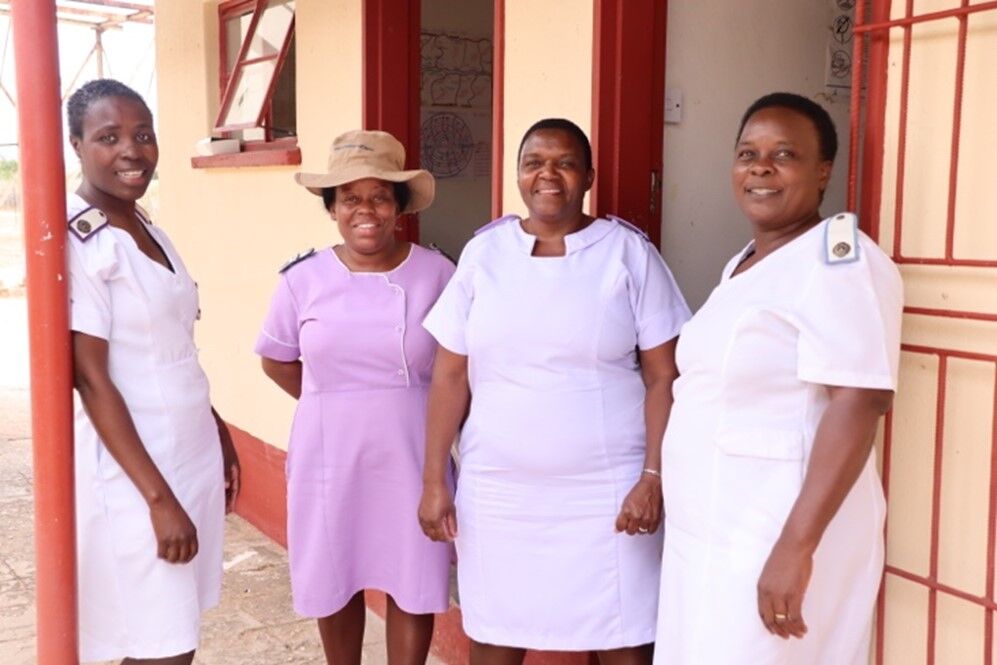
Zimbabwe’s journey toward Universal Health Coverage (UHC) has taken a pivotal turn with a groundbreaking Health Workforce Strategy (2023–2030) and a $1.63-billion investment compact, designed to address decades of systemic challenges in the country’s health sector. At the forefront of this transformation stands Audrey Musorowembudzi, a primary health care nurse at Hurungwe Rural Hospital, whose recent training in integrated women’s cancer care exemplifies the ripple effect of targeted workforce development.
The Critical Role of Health Workers in Zimbabwe’s Healthcare System
Health workers are the linchpin of any functional healthcare system. Without a sufficiently trained, motivated, and retained workforce, the promise of equitable access to essential services—particularly in rural and underserved communities—remains unfulfilled. Zimbabwe’s 2022 Comprehensive Health Labour Market Assessment revealed stark realities: despite over 52,000 health professionals serving across the nation, an estimated 69,000 additional workers were needed to meet national health targets by 2030.
The assessment further exposed critical gaps, including:
– Training bottlenecks limiting the production of skilled personnel.
– High emigration rates, with many professionals seeking opportunities abroad.
– Uneven distribution of healthcare workers, leaving rural and peripheral regions understaffed.
These challenges were compounded by Zimbabwe’s lowest-performing Human Resources for Health (HRH) score in the UHC Index, underscoring the urgency of systemic reform.
A Collaborative Blueprint: From Assessment to Action
Recognizing the scale of the problem, the Government of Zimbabwe, in partnership with the World Health Organization (WHO) Regional Office for Africa, launched a multi-stakeholder initiative to redefine health workforce planning. The process began in 2021 with a Comprehensive Health Labour Market Analysis, engaging:
– Government ministries (Health and Child Care, Education, Finance).
– Training institutions (medical schools, nursing colleges).
– Professional bodies (medical councils, nursing associations).
– Development partners (WHO, UN agencies, bilateral donors).
This collaborative effort produced actionable data, forming the foundation for two landmark documents:
1. The Health Workforce Strategy (2023–2030) – A 10-year roadmap addressing education, training, deployment, retention, governance, and financing.
2. The Health Workforce Investment Compact – A $1.63-billion funding plan (2024–2026), with 75% of resources committed by the Zimbabwean government.
Dr. Douglas Mombeshora, Minister of Health and Child Care, emphasized the strategic significance of these initiatives:
“The development of the Health Workforce Strategy and Investment Compact marks a turning point. It is not merely a policy document but a collective commitment to transform our healthcare delivery system for the betterment of every Zimbabwean.”
Key Pillars of the Health Workforce Strategy
The strategy adopts a holistic approach, targeting multiple dimensions of workforce development:
1. Scaling Up Training and Education
Zimbabwe aims to double the annual output of trained health workers, increasing production from 3,334 in 2022 to 7,000 by 2030. This includes:
– Expanding medical and nursing school capacities.
– Introducing accelerated training programs for mid-level providers (e.g., clinical officers, dental technicians).
– Strengthening vocational training in high-demand specialties (e.g., laboratory science, pharmacy).
2. Retention and Migration Management
To curb brain drain, the strategy includes:
– Competitive remuneration packages, including performance-based bonuses.
– Career progression pathways for junior staff.
– Psychosocial support programs to address burnout and job dissatisfaction.
– Strict enforcement of emigration controls, requiring professionals to serve a minimum residency period before leaving the country.
3. Equitable Deployment and Rural Incentives
Historically, rural health facilities have suffered from severe understaffing. The strategy introduces:
– Targeted recruitment drives in underserved districts.
– Housing and stipend incentives for workers in remote areas.
– Mobilization of community health workers (CHWs) to bridge gaps in primary care.
4. Governance and Financing Reforms
- Establishment of a National Health Workforce Authority to oversee recruitment, deployment, and performance monitoring.
- Revised budget allocations, ensuring predictable funding for salaries, training, and infrastructure.
- Public-private partnerships to leverage additional resources for workforce development.
Early Wins and Tangible Progress
The Health Workforce Investment Compact has already yielded measurable results:
– 14,060 new health worker posts approved by the Treasury, with 5,285 filled in 2025 (including previously underfunded roles).
– Priority recruitment of 450 unemployed intern doctors, alongside nurses, midwives, pharmacists, lab technicians, and dentists.
– Planned expansion of 8,775 additional positions in 2026, focusing on critical specialties (e.g., oncology, maternal health).
These efforts are aligning Zimbabwe with WHO’s recommended workforce thresholds, ensuring that essential health services—such as maternal care, infectious disease control, and cancer screening—are sustainably delivered.
The Human Impact: Stories from the Frontlines
For Audrey Musorowembudzi, the strategic investments extend beyond policy documents—they translate into lives saved. After completing her integrated women’s cancer care training, she returned to Hurungwe Rural Hospital with a renewed sense of purpose:
“The knowledge I’ve gained will not stay with me alone. I will train my colleagues, ensuring that no woman in our community is left undiagnosed or untreated. This is how we create a community-wide impact—one patient at a time.”
Her experience reflects a broader truth: every trained health worker amplifies access to care. Whether it’s a community health worker screening for hypertension in a rural village or a specialist oncologist treating cervical cancer, the domino effect of a strengthened workforce is undeniable.
Global Lessons and the Path Forward
Zimbabwe’s approach offers valuable insights for other low- and middle-income countries (LMICs) grappling with similar challenges:
1. Data-Driven Decision Making – The Comprehensive Health Labour Market Assessment ensured that interventions were evidence-based, not reactive.
2. Multi-Stakeholder Collaboration – By engaging government, academia, and donors, the strategy avoided siloed approaches.
3. Long-Term Commitment – The 10-year strategy and 3-year investment compact provide stability and predictability in funding.
4. Community-Centric Deployment – Prioritizing rural and underserved areas ensures equitable access, a cornerstone of UHC.
However, challenges remain:
– Sustaining political will over decades.
– Balancing short-term recruitment with long-term capacity building.
– Monitoring and evaluating the impact of investments to adapt strategies as needed.
Conclusion: A Step Closer to Universal Health Coverage
Zimbabwe’s Health Workforce Strategy is more than a policy framework—it is a call to action for a healthier, more resilient nation. By investing in people, the government is not only filling critical gaps but also empowering health workers like Audrey Musorowembudzi to become agents of change in their communities.
As the strategy unfolds, the visible and invisible ripple effects—from reduced maternal mortality to early cancer detection—will gradually reshape Zimbabwe’s healthcare landscape. The journey toward Universal Health Coverage is long, but with strategic investments, collaborative governance, and unwavering commitment, Zimbabwe is writing a new chapter in global health equity.
