
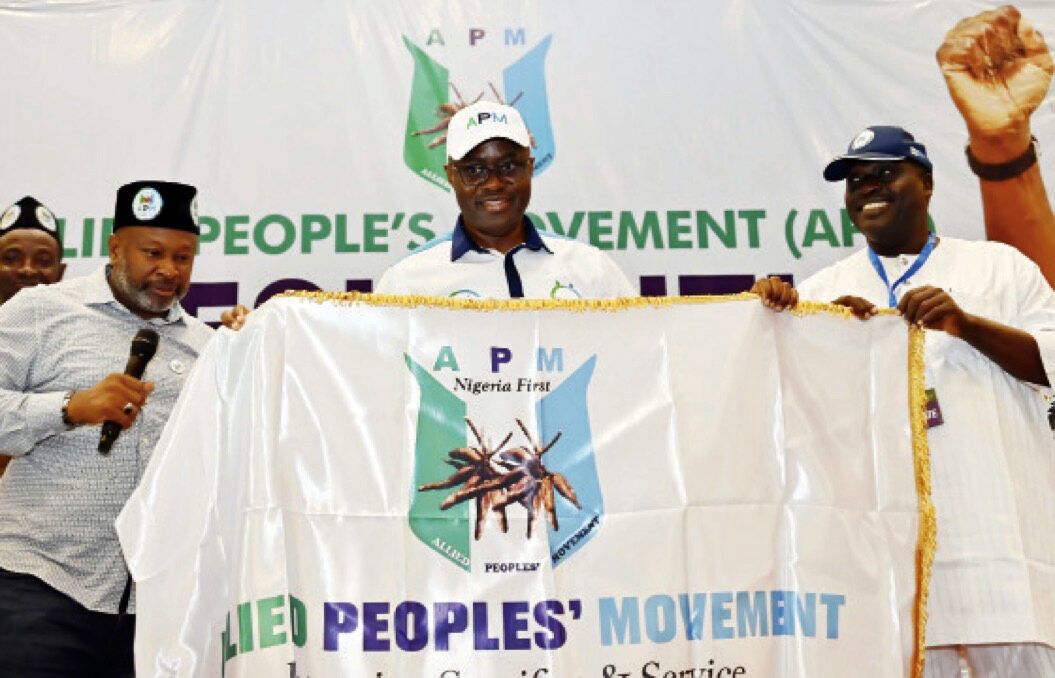
The race for Nigeria’s presidency in 2027 just got a seismic shake-up. Governor Seyi Makinde of Oyo State, a name synonymous with progressive governance and economic revival, has officially thrown his hat into the ring—this time, under the banner of the Allied Peoples’ Movement (APM). The announcement, made in a statement that sent ripples across the political landscape, marks a defining pivot in Nigeria’s journey toward resetting its national trajectory.

But what does “reset” truly mean in Makinde’s vision? It’s not just a buzzword. It’s a call to dismantle the systemic inertia that has long stifled Nigeria’s potential. Makinde’s entry into the presidential race isn’t merely a political maneuver; it’s a declaration that the status quo is no longer acceptable. For millions of Nigerians grappling with economic hardship, insecurity, and institutional decay, his candidacy arrives at a critical juncture—one where the demand for change has never been louder.
From Oyo to the Nation: Makinde’s Rise and the APM’s Gamble
Seyi Makinde’s political career has been a study in contrasts. As a two-term governor of Oyo State, he transformed a region once plagued by decay into a hub of agricultural innovation and industrial growth. His administration’s focus on youth empowerment, infrastructure, and healthcare earned him both praise and criticism—praise for tangible results, criticism for his unapologetic stance against corruption. Now, he’s taking that fight to the national stage.
The Allied Peoples’ Movement, though relatively young, has positioned itself as a disruptor in Nigeria’s political oligarchy. By aligning with Makinde, the APM is betting on a candidate who has proven his ability to deliver in a high-pressure environment. But can a regional leader with a track record of success translate that into a national mandate? The answer may hinge on whether voters see Makinde as the antidote to Nigeria’s chronic instability—or just another politician promising salvation.
The 2027 Equation: What Makinde Brings to the Table
Makinde’s presidential bid isn’t just another entry in a crowded field. It’s a strategic gamble that could reshape Nigeria’s political calculus. His campaign is expected to emphasize three core pillars: economic diversification, security reform, and institutional transparency. These aren’t new ideas, but Makinde’s approach—rooted in his Oyo State experience—offers a tangible blueprint.
- Economic Diversification: Makinde has long championed agriculture as a cornerstone of Nigeria’s economic recovery. His administration’s agri-business initiatives, which turned Oyo into a net exporter of food, could serve as a model for a national strategy. But scaling this nationwide won’t be easy—especially when oil revenues remain the government’s lifeline.
- Security Reform: Nigeria’s security crisis demands more than rhetoric. Makinde’s Oyo State maintained relative peace despite its proximity to troubled regions. His ability to balance community policing with federal collaboration could be a game-changer if replicated at scale.
- Institutional Transparency: Corruption has been the silent killer of Nigeria’s progress. Makinde’s no-nonsense approach to governance—including his refusal to tolerate graft in his administration—positions him as a rare breed in Nigerian politics. But will voters trust a single leader to clean up a system designed to resist change?

The Opposition’s Calculus: How Rivals Are Reacting
Politics is a contact sport, and Makinde’s entry has already drawn sharp reactions from Nigeria’s established power brokers. The All Progressives Congress (APC) and the People’s Democratic Party (PDP) are watching closely, their strategies likely to pivot around three key questions: Can Makinde consolidate the youth vote? Will his economic policies resonate in the North? And most critically, can he unify a fractured electorate?
The APC, which currently holds the presidency, faces a dilemma. President Bola Tinubu’s administration has struggled with economic instability and insecurity, creating an opening for challengers. But Makinde’s rise complicates the APC’s narrative—especially if his campaign gains traction among disillusioned APC supporters. Meanwhile, the PDP, Nigeria’s traditional opposition, is scrambling to counter with its own narrative of redemption, though its credibility has been eroded by years of internal strife.
Smaller parties, including the APM, are seizing the moment. The Allied Peoples’ Movement’s decision to back Makinde is a high-stakes bet that a regional leader can break the two-party dominance that has defined Nigerian politics since 1999. If successful, it could herald a new era of multi-party competition—or expose the fragility of Nigeria’s electoral system.
The Youth Factor: Nigeria’s Silent Revolution
No discussion of Nigeria’s 2027 race is complete without addressing the youth bulge. With over 60% of Nigeria’s population under 30, Makinde’s candidacy arrives at a time when young Nigerians are demanding more than empty promises. His track record in Oyo State—where he prioritized job creation and skills training—could resonate deeply with this demographic.
But youth engagement isn’t just about promises. It’s about authenticity. Makinde’s digital-savvy campaign, which leverages social media to bypass traditional media gatekeepers, is a nod to this reality. Yet, the challenge remains: Can he translate online buzz into real-world mobilization? The 2027 election will test whether Nigeria’s youth are ready to move beyond protests and into the ballot box.

Beyond Nigeria: How Africa Is Watching
Makinde’s presidential bid isn’t just a Nigerian story—it’s an African one. Across the continent, leaders and citizens are watching to see if a non-establishment candidate can break through in a system dominated by entrenched elites. His success or failure could influence political movements from Kenya to Ghana, where young leaders are also challenging the status quo.
For Africa’s diaspora, Makinde’s campaign is a reminder of the continent’s untapped potential. His emphasis on local solutions—agriculture, technology, and governance—aligns with broader pan-African aspirations. But it also underscores a harsh truth: Nigeria’s challenges are Africa’s challenges. If Makinde fails to deliver, the ripple effects will be felt far beyond Abuja.
The Road Ahead: Challenges and Opportunities
Makinde’s path to the presidency is fraught with obstacles. The APC and PDP won’t cede ground easily, and the electoral commission faces scrutiny over its independence. Meanwhile, Nigeria’s economic crisis—fueled by inflation, naira devaluation, and fuel subsidies—demands immediate solutions. Makinde’s ability to articulate a clear, implementable plan will be his greatest asset.
Yet, the opportunities are equally compelling. A Makinde presidency could signal a shift toward meritocracy in governance, where competence trumps connections. It could also accelerate Nigeria’s integration into the African Continental Free Trade Area (AfCFTA), positioning the country as a regional economic powerhouse. But none of this will matter if the 2027 election is marred by violence or rigging—a persistent threat in Nigeria’s electoral history.
For now, Makinde’s campaign is a work in progress. His rallies are gaining momentum, his message is resonating in unexpected quarters, and his opponents are scrambling to respond. But the real test lies in the months ahead: Can he sustain this energy? Can he unite a divided nation? And most importantly, can he deliver on the promise of a reset?
One thing is certain: Nigeria’s political landscape has been irrevocably altered. The question is whether this alteration will lead to progress—or merely another cycle of unfulfilled promises.
Copyright notice: Images and source material are credited to their respective owners/source (original source where available). If you are the copyright owner and want an image or content removed, please contact us at topix.news/contact-us; we will review and remove it promptly.

Topix News Desk is a digital editorial team focused on delivering clear, timely, and useful news coverage for readers worldwide. Our reporting highlights African news with global context, including politics, business, economy, technology, health, sports, entertainment, travel, and culture. We aim to publish accessible, well-structured, and informative articles that help readers understand the stories shaping Africa and the world.