
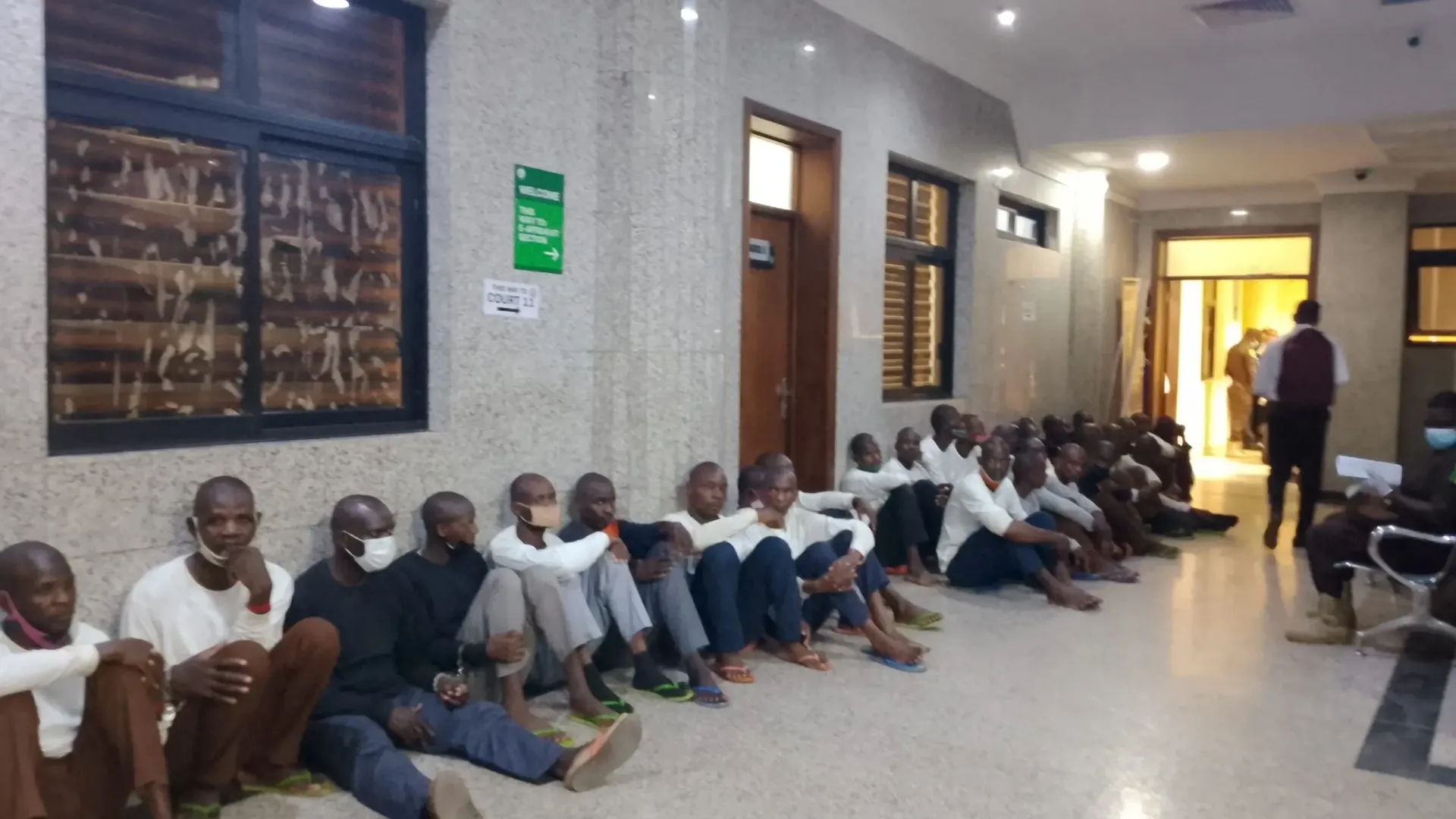
The air in Abuja’s Federal High Court complex crackled with tension last week as Nigeria’s justice system prepared to confront one of its most daunting challenges yet. Against the backdrop of a nation grappling with decades of insurgency and cross-border extremism, over 400 individuals stood accused of terrorism-related offenses in a series of simultaneous arraignments across multiple courtrooms. The sheer scale of the proceedings—unprecedented in West African judicial history—reflects not just the magnitude of the threat facing Africa’s most populous nation, but the government’s determination to reclaim the narrative from armed groups that have long dictated the terms of engagement.
For families of victims and security analysts alike, the arraignment represents a critical inflection point. It is the first time such a large cohort of suspects, many of whom have evaded capture for years, will face formal charges in a single legal sweep. The charges, spanning allegations of financing, recruitment, and direct participation in attacks, underscore the sophisticated networks these groups have cultivated—networks that stretch across porous borders and exploit weak governance in neighboring states.

What makes this case particularly significant is its timing. As Nigeria prepares for a pivotal election cycle, the government’s aggressive stance against terrorism sends a clear message to both domestic and international audiences. It signals that security remains a non-negotiable priority, even as political campaigns intensify. Yet the arraignment also raises uncomfortable questions: How did these suspects evade detection for so long? What systemic failures allowed such extensive networks to flourish? And, perhaps most critically, can Nigeria’s overstretched judicial system handle the logistical nightmare of processing hundreds of cases without compromising due process?
The Legal Labyrinth: A Test for Nigeria’s Justice System
The Federal High Court complex in Abuja, typically a bastion of bureaucratic routine, transformed into a high-stakes theater of justice last Monday. Judges, prosecutors, and defense attorneys navigated a carefully choreographed process designed to accommodate the sheer volume of defendants. Each courtroom operated like a mini-factory, where clerks, translators, and security personnel worked in synchronized chaos to ensure arraignments proceeded without delay. The logistics alone are staggering: coordinating legal representation for over 400 individuals, many of whom hail from remote regions with limited access to counsel, requires a level of administrative precision that few institutions in Africa can claim to possess.
The arraignment process itself was a study in contrasts. On one hand, the swiftness of the proceedings—with suspects brought before judges within hours of their arrest—demonstrates a break from the glacial pace that has long plagued Nigeria’s legal system. On the other, the haste has sparked concerns about the adequacy of evidence and the potential for wrongful convictions. Legal experts point out that terrorism prosecutions demand meticulous documentation, from intercepted communications to forensic evidence. Without airtight cases, the government risks handing extremist groups a propaganda victory, framing the trials as politically motivated persecution rather than legitimate pursuit of justice.
One defense attorney, speaking on condition of anonymity, described the scene as “a legal marathon disguised as a sprint.” “The courtrooms are packed, but the real battle will unfold in the coming months,” the attorney noted. “These cases will drag on, and the backlog will test the resilience of a system that is already buckling under its own weight.”
Beyond Nigeria’s Borders: The Regional Ripple Effect
While the arraignments unfolded in Abuja, the implications reverberated far beyond Nigeria’s borders. The suspects, many of whom are accused of ties to regional extremist factions like Boko Haram and Islamic State’s West Africa Province (ISWAP), represent just a fraction of the broader security crisis engulfing the Sahel. Countries like Chad, Niger, and Cameroon have watched Nigeria’s actions closely, hoping that a successful prosecution could set a precedent for their own struggles against insurgency. Yet the interconnected nature of these groups means that a crackdown in one nation often forces militants to relocate, shifting the burden to neighboring states ill-equipped to handle the influx.
In Bamako, Mali, security analysts noted that Nigeria’s mass arraignment could either embolden regional cooperation or deepen mistrust. “If these prosecutions lead to convictions based on solid evidence, it will reinforce the argument that multilateral efforts are the only way forward,” said Amadou Traoré, a researcher at the Institute for Security Studies in Dakar. “But if the process is perceived as politically driven, it could further erode confidence in collective security initiatives.”
The arraignment also casts a spotlight on the role of foreign governments in Nigeria’s counterterrorism efforts. Reports indicate that intelligence shared by Western partners played a role in identifying key suspects, raising questions about the long-term sustainability of such collaborations. As geopolitical tensions rise, African nations must balance the need for external support with the imperative of maintaining sovereignty—a delicate tightrope walk that has tripped up many governments in the past.
The Human Cost: Stories from the Frontlines
Behind the legal jargon and political posturing lie the human stories of a conflict that has claimed tens of thousands of lives. Among the accused is a 22-year-old man from Borno State, who was arrested last year after allegedly joining ISWAP as a foot soldier. His family, now displaced in Maiduguri, insists he was coerced into joining the group after his village was raided by militants. “He was just a boy when they took him,” said his mother, who asked not to be named for fear of retaliation. “Now they want to call him a terrorist. What about the terrorists who destroyed our home?”
Then there’s the case of a middle-aged trader from Kano, accused of funneling money to insurgent groups through a network of informal financial channels. Prosecutors allege he used his business as a front to launder funds, but his supporters argue he was merely a victim of extortion. “These people come to your shop and demand protection money,” said a local merchant. “If you refuse, they burn your stall. What choice do you have?” The blurred lines between victim and perpetrator highlight the complexity of terrorism prosecutions in regions where extremist groups have embedded themselves in local economies.
For the families of those killed in attacks linked to these suspects, the arraignment offers a sliver of closure—but also a reminder of the long road ahead. In a village near Maiduguri, where a suicide bombing in 2024 left 30 dead, a mother clutched a faded photograph of her son. “We want justice,” she said. “But justice doesn’t bring him back.”
What’s Next? The Road to Accountability
The arraignment is only the first step in what promises to be a protracted legal battle. Prosecutors have indicated that the cases will be divided into batches, with priority given to those accused of the most egregious crimes. Yet the sheer volume of defendants means that some cases may drag on for years, testing the patience of victims and the credibility of the justice system. Legal experts warn that delays could lead to acquittals on technicalities, further eroding public trust in the process.
For the government, the challenge is twofold: ensuring that the prosecutions are both swift and fair, while also addressing the root causes of extremism. Analysts point to a litany of systemic issues—from corruption within security agencies to the lack of economic opportunities in conflict zones—that have allowed insurgent groups to thrive. “You can arrest and prosecute all you want,” said a security consultant based in Lagos. “But until you tackle the grievances that drive recruitment, you’re just playing whack-a-mole.”
The arraignment also sets the stage for broader debates about Nigeria’s approach to counterterrorism. Should the focus remain on military operations, or is it time to invest more in deradicalization programs and community policing? The answer may well determine whether this historic legal proceeding marks the beginning of the end for extremist groups—or merely another chapter in a decades-long struggle.
The Global Implications: A Warning for Africa
Nigeria’s mass arraignment is not just a domestic affair; it is a case study for the rest of Africa. As extremist groups continue to exploit weak governance, porous borders, and economic despair, the continent’s response will shape its future stability. Countries like Burkina Faso and Mali, already grappling with military coups and jihadist insurgencies, are watching closely. Will Nigeria’s approach inspire similar crackdowns, or will it highlight the limitations of legal solutions in the face of entrenched militancy?
One thing is clear: the arraignment has already shifted the conversation. Gone are the days when terrorism in Africa was dismissed as a distant threat or a localized problem. The sheer scale of the prosecutions in Abuja serves as a stark reminder that extremism is a continent-wide crisis—one that demands coordinated, innovative solutions. Whether Nigeria’s justice system can rise to the occasion remains to be seen. But one thing is certain: the world is watching.
As the sun set over Abuja’s court complex last week, the echoes of the day’s proceedings lingered in the air. For the first time in years, there was a sense of momentum—not just in the fight against terrorism, but in the broader struggle to reclaim Africa’s narrative from the shadows of conflict. The road ahead is long and fraught with challenges, but the arraignment has given many a reason to hope. In the end, however, hope will only translate into progress if the justice served is both swift and just—and if the lessons learned extend far beyond Nigeria’s borders.
Copyright notice: Images and source material are credited to their respective owners/source (original source where available). If you are the copyright owner and want an image or content removed, please contact us at topix.news/contact-us; we will review and remove it promptly.

Topix News Desk is a digital editorial team focused on delivering clear, timely, and useful news coverage for readers worldwide. Our reporting highlights African news with global context, including politics, business, economy, technology, health, sports, entertainment, travel, and culture. We aim to publish accessible, well-structured, and informative articles that help readers understand the stories shaping Africa and the world.