
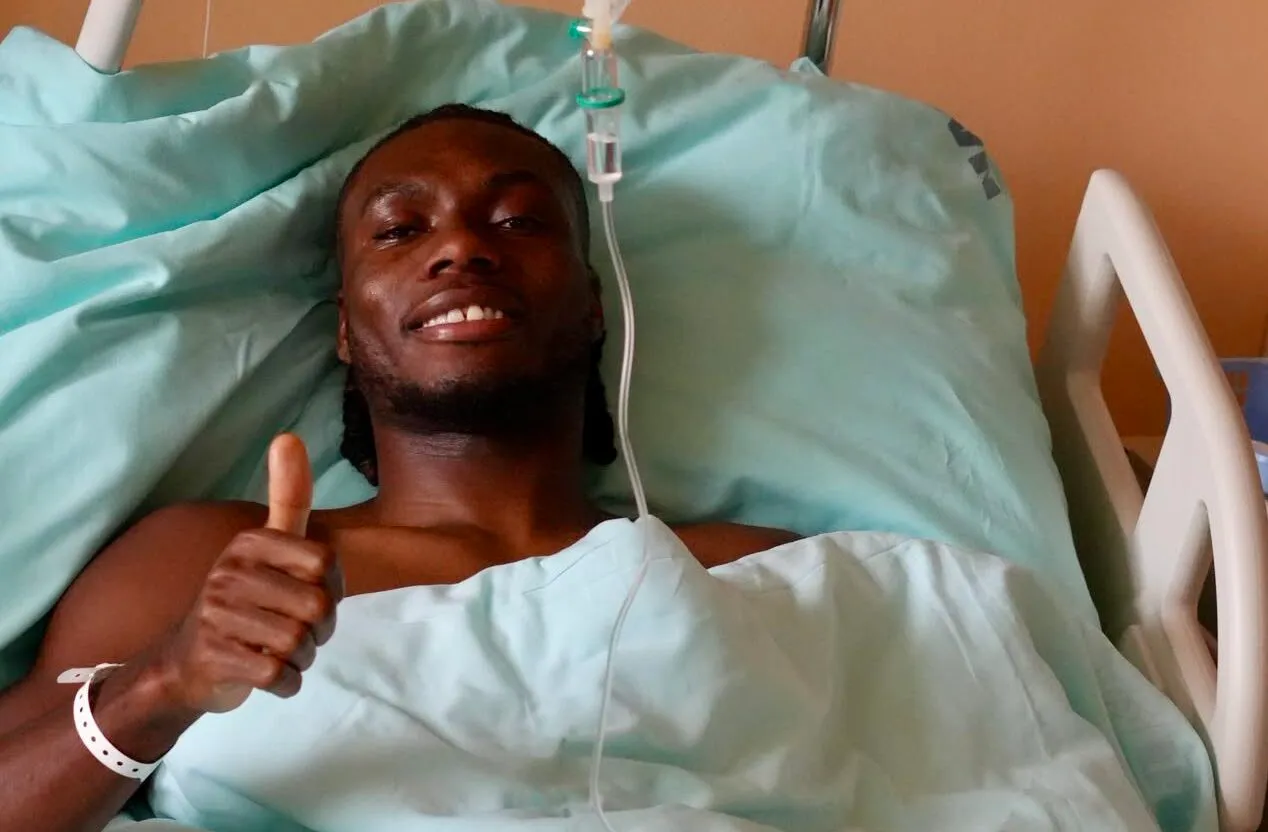
The Super Eagles’ defensive backbone just suffered a body blow. Nigeria’s 2026 World Cup qualification campaign faces fresh uncertainty after Igoh Ogbu, the towering centre-back from Lillestrøm, underwent surgery on a ruptured Achilles tendon. Club officials confirmed the 26-year-old will be sidelined for at least three months, leaving a gaping void in a squad already navigating turbulent form.

The injury occurred during a training session last week, sending shockwaves through the Nigerian football community. Ogbu, who had established himself as a key figure in the Super Eagles’ backline, now faces a grueling rehabilitation process. Medical sources within the club revealed the procedure was successful, but the road to recovery demands patience and precision.
Why Ogbu’s absence stings for Nigeria’s World Cup push
Nigeria’s defence has been a work in progress under the current coaching staff. Ogbu’s ability to read the game, coupled with his physical presence, made him a linchpin in the team’s defensive structure. His absence couldn’t come at a worse time, with the 2026 qualifiers looming large. The Eagles are set to face a tough fixture list, including clashes with South Africa and Senegal, two sides known for their attacking prowess.
The timing of the injury raises questions about Nigeria’s depth in defence. While the squad boasts experienced campaigners like William Troost-Ekong and Ola Aina, the loss of Ogbu—who had been in fine form—creates a tactical puzzle. Coach José Peseiro will now be forced to reshuffle his backline, potentially handing opportunities to younger players like Chidozie Awaziem or Calvin Bassey.

The science behind Achilles tendon injuries and recovery
Achilles tendon ruptures are among the most feared injuries in football, often requiring surgical intervention. The tendon, the largest in the human body, connects the calf muscles to the heel bone, and a rupture can sideline even the fittest athletes for months. Recovery timelines vary, but studies suggest that full return to competitive play typically takes six to nine months.
For Ogbu, the next three months will be critical. His rehabilitation will involve a phased approach: initial immobilisation to allow healing, followed by gradual strengthening exercises. Physiotherapists will focus on restoring flexibility and power in the tendon, while also addressing any residual stiffness or weakness. The risk of re-injury remains a concern, making his return a delicate balancing act.
This isn’t the first time a Nigerian player has faced such a setback. In 2023, former Super Eagles striker Odion Ighalo battled an Achilles injury that kept him out of action for nearly a year. His eventual return was a testament to his resilience, but the road was far from smooth. Ogbu’s case will be watched closely by fans and pundits alike, as his recovery could shape Nigeria’s fortunes in the coming months.
How Ogbu’s injury impacts Lillestrøm and the Norwegian league
The ripple effects of Ogbu’s injury extend beyond the Nigerian national team. His club, Lillestrøm SK, now faces a defensive crisis of their own. The Norwegian side, currently battling relegation in the Eliteserien, had relied on Ogbu’s composure and aerial dominance to shore up their backline. His absence leaves a gap that may prove difficult to fill.
Lillestrøm’s manager, Jan Jönsson, has already hinted at bringing in a replacement before the transfer window closes. The search for a reliable centre-back could prove costly, especially if Ogbu’s recovery drags on. Norwegian football, known for its physicality, demands players who can withstand the rigours of the league. Ogbu’s injury underscores the fragility of even the most robust athletes in the modern game.
For Ogbu, the next few weeks will be about more than just physical recovery. Mentally, he will need to stay sharp, visualising his return and maintaining focus. The mental toll of such injuries is often underestimated, but Ogbu’s experience and professionalism could see him through this challenging period.
Nigeria’s defensive options under scrutiny
With Ogbu sidelined, Nigeria’s defensive options are now under the microscope. The squad’s depth in this department has been a recurring talking point, particularly as the team prepares for high-stakes qualifiers. Coach Peseiro has a handful of players at his disposal, but none quite replicate Ogbu’s unique blend of aggression and intelligence.
- William Troost-Ekong: The veteran’s leadership and experience make him a natural choice to step into Ogbu’s role. However, injuries have plagued his recent seasons, raising questions about his durability.
- Ola Aina: A versatile defender, Aina can slot into the centre-back position, but his primary role is as a wing-back. His defensive awareness is solid, though he lacks the physical presence of Ogbu.
- Chidozie Awaziem: The 28-year-old has been in and out of the squad, but his form at club level has been inconsistent. A strong performance in Ogbu’s absence could earn him a permanent spot.
- Calvin Bassey: The youngster has shown promise but is still raw in terms of experience. His ability to read the game is a work in progress.
The challenge for Peseiro will be to strike a balance between experience and youth. Ogbu’s absence could force the coach to experiment, potentially reshaping Nigeria’s defensive strategy for the qualifiers.
The broader implications for African football
Ogbu’s injury is more than just a setback for Nigeria—it’s a reminder of the fragility that plagues African football. Across the continent, clubs and national teams grapple with injuries that derail seasons and tournaments. The lack of sophisticated medical facilities in many African countries exacerbates these challenges, leaving players vulnerable to prolonged absences.
In South Africa, for instance, the Premier Soccer League has seen a rise in Achilles injuries among key players, prompting calls for better medical infrastructure. Similarly, in Senegal, the national team has struggled with defensive injuries ahead of major tournaments. Ogbu’s case highlights a systemic issue that extends beyond individual clubs or countries.
For African football to compete on the global stage, addressing these challenges must become a priority. Investment in sports science, physiotherapy, and injury prevention could go a long way in safeguarding the careers of players like Ogbu. Until then, the continent’s footballing ambitions will remain at the mercy of avoidable setbacks.
What’s next for Ogbu and Nigeria?
As Ogbu begins his rehabilitation, the focus shifts to Nigeria’s upcoming fixtures. The Super Eagles are scheduled to face South Africa in a must-win qualifier in September, followed by a clash with Senegal in October. The pressure is on Peseiro to find a solution, and fast.
For Ogbu, the next three months will be a test of resilience. His return to action will be a moment of triumph, but the road ahead is fraught with challenges. Fans will be watching closely, hoping that his recovery is swift and complete. In the meantime, Nigeria’s defensive reshuffle will be a story to watch, one that could redefine the team’s fortunes in the 2026 World Cup qualifiers.
The stakes couldn’t be higher. With Ogbu sidelined, every tackle, every clearance, and every mistake will be scrutinised. The Super Eagles must adapt, and fast, if they are to keep their World Cup dreams alive. For now, the focus is on healing—both for the player and the team.
Lessons from Ogbu’s injury for African football
Ogbu’s injury serves as a cautionary tale for African football. It underscores the importance of proper medical care, injury prevention, and squad depth. Clubs across the continent must prioritise the well-being of their players, ensuring they have access to top-tier medical facilities and rehabilitation programmes.
The Nigerian Football Federation (NFF) has already taken steps to improve medical standards, but more needs to be done. Other African football associations should follow suit, investing in sports science and injury management to protect their players. The future of African football depends on it.
As for Ogbu, his journey is far from over. His recovery will be a testament to his determination, but it will also highlight the broader challenges facing African football. For now, fans can only hope for the best—as Nigeria’s defensive hopes hang in the balance.
Copyright notice: Images and source material are credited to their respective owners/source (original source where available). If you are the copyright owner and want an image or content removed, please contact us at topix.news/contact-us; we will review and remove it promptly.

Topix News Desk is a digital editorial team focused on delivering clear, timely, and useful news coverage for readers worldwide. Our reporting highlights African news with global context, including politics, business, economy, technology, health, sports, entertainment, travel, and culture. We aim to publish accessible, well-structured, and informative articles that help readers understand the stories shaping Africa and the world.