
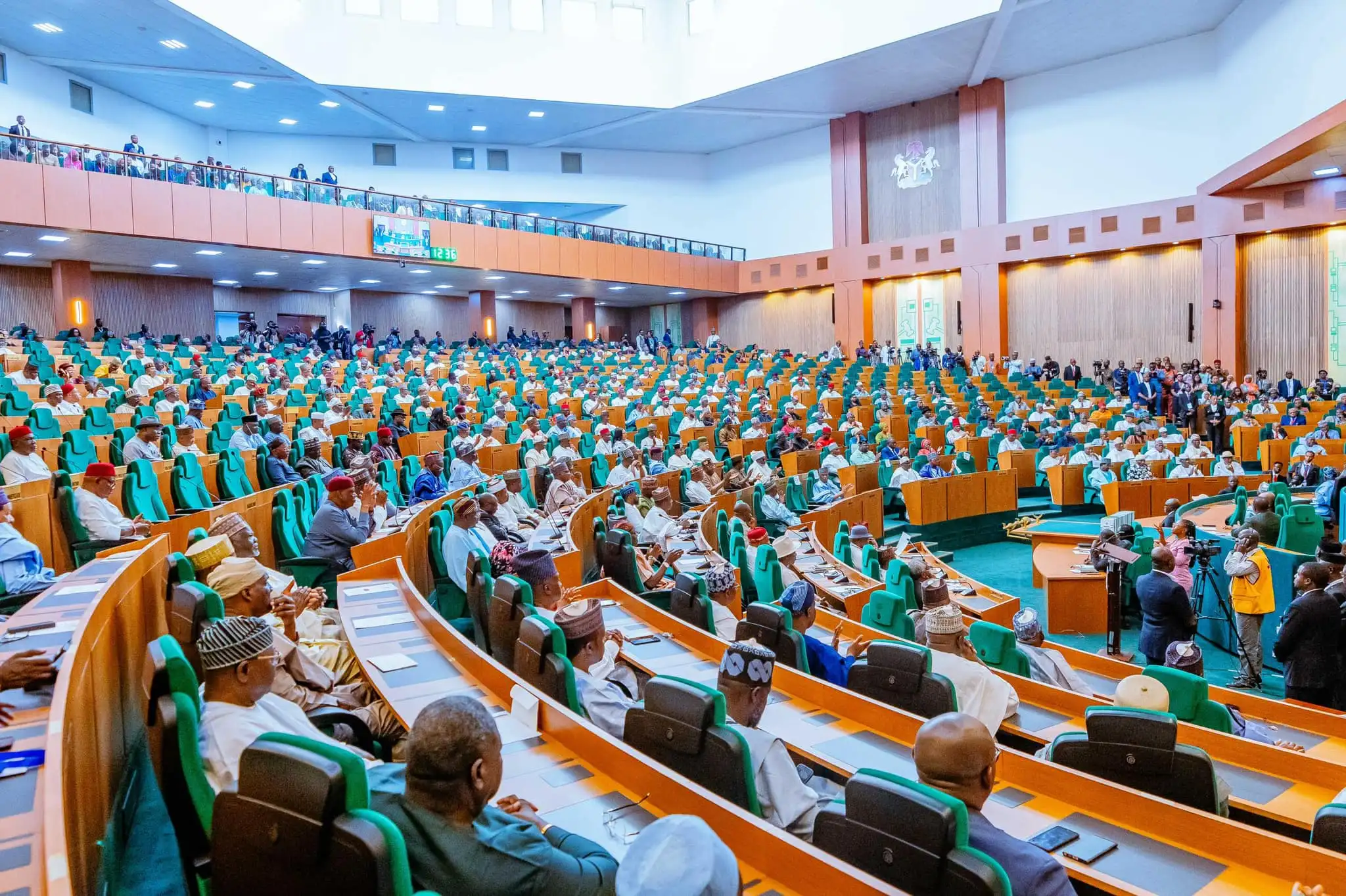
The air in Nigeria’s capital buzzes with anticipation as lawmakers prepare for a landmark vote that could redefine the country’s security architecture. On Thursday, the House of Representatives will cast ballots on a proposal that has ignited fierce debate: the establishment of state-controlled police forces. With Deputy Speaker Benjamin Kalu confirming the bill’s prioritization over other constitutional amendments, the stakes couldn’t be higher.
For decades, Nigeria’s centralized police system has faced criticism for its inefficiencies and inability to curb rising insecurity. Banditry, kidnappings, and communal clashes have surged in recent years, exposing the limitations of a one-size-fits-all approach to law enforcement. Proponents argue that state police could offer localized solutions, tailored to the unique security challenges of each region. Critics, however, warn of potential abuse, political interference, and the risk of deepening ethnic divisions.

At the heart of the controversy lies a fundamental question: Can Nigeria afford to fragment its police force along state lines, or will this move further destabilize a nation already grappling with multiple crises? The answer may hinge on whether lawmakers can strike a balance between autonomy and accountability. The proposed legislation, if passed, would grant states the authority to establish and fund their own police forces, subject to federal oversight. But the devil, as always, lies in the details.
Why This Vote Matters for Nigeria’s Future
The timing of this vote is no coincidence. Nigeria is at a crossroads, with security threats morphing into existential challenges. In the northwest, armed bandits have displaced millions, while in the southeast, separatist agitations have flared into violent confrontations. The northeast remains a battleground for Boko Haram and its splinter factions, despite years of military operations. Against this backdrop, the idea of state police is gaining traction—not just as a policy option, but as a potential lifeline.
Yet the proposal is not without its detractors. Governors from opposition-controlled states have expressed skepticism, questioning whether their administrations could resist the temptation to weaponize police forces for political ends. Human rights activists, too, have raised alarms about the potential for increased brutality, citing examples from other African nations where decentralized policing has led to abuses. The memory of Nigeria’s past military regimes, where state security agencies were often used as tools of oppression, looms large in these debates.
What makes this vote particularly consequential is its potential to either unite or further fracture Nigeria’s already fragile federal structure. The country’s 1999 constitution explicitly vests policing powers in the federal government, a provision that has been a point of contention for years. Proponents of state police argue that this centralization has left many communities vulnerable, unable to respond swiftly to local threats. Opponents counter that devolving policing to states could exacerbate existing inequalities, with wealthier regions able to afford better-equipped forces while poorer areas languish.
The Security Crisis That Sparked the Debate
To understand the urgency behind this vote, one must examine the security landscape that has pushed Nigeria to the brink. In 2023 alone, over 10,000 people were killed in violent conflicts, according to the Nigeria Security Tracker. Kidnappings for ransom have become a lucrative industry, with victims ranging from schoolchildren to politicians. The once-peaceful Middle Belt region has become a flashpoint for farmer-herder clashes, displacing hundreds of thousands. Even Nigeria’s economic hub, Lagos, has not been spared, with armed robberies and cult-related violence on the rise.
Against this grim backdrop, calls for state police have grown louder. Governors in states like Zamfara and Kaduna, which have borne the brunt of banditry, have been vocal advocates. They argue that local police would have a better understanding of terrain, language, and cultural dynamics, enabling faster and more effective responses. But critics point to the failures of similar systems in other countries. In Kenya, for instance, the introduction of county police forces in 2010 led to accusations of ethnic favoritism and corruption. In South Africa, municipal police have been criticized for their lack of resources and training, rendering them ineffective in combating crime.
The Nigerian government has attempted piecemeal reforms, including the creation of special security outfits like the Amotekun in the southwest and the Ebube Agu in the southeast. These regional initiatives, while praised for their localized approach, operate in a legal gray area and have faced resistance from federal authorities. The proposed state police bill seeks to formalize and expand these efforts, but it also risks deepening the rift between the federal government and state leaders.
Who Stands to Gain—and Who Stands to Lose?
The debate over state police is as much about power as it is about security. At the federal level, the ruling party has historically resisted devolving policing powers, fearing a loss of control over a critical tool of governance. The presidency, too, has been cautious, with President Bola Tinubu’s administration yet to take a definitive stance on the issue. Meanwhile, state governors, particularly those from opposition parties, see state police as a way to assert autonomy and challenge federal dominance.
For ordinary Nigerians, the stakes are even higher. In rural areas, where federal police stations are often understaffed and underfunded, the prospect of state-controlled forces offers a glimmer of hope. Residents in states like Benue and Plateau, which have suffered repeated attacks, argue that local police could provide the rapid response they desperately need. In urban centers, however, concerns about corruption and political manipulation are more pronounced. Lagos, with its vast resources, might benefit from state police, but smaller states could struggle to fund and sustain effective forces.
The economic implications are equally complex. Proponents argue that state police could reduce the burden on the federal budget, which currently shoulders the cost of policing the entire country. Critics, however, warn that the transition could be costly, requiring significant investment in training, equipment, and infrastructure. There are also fears that state police could lead to a patchwork of enforcement standards, with some regions prioritizing security while others neglect it.
A closer look at the political dynamics reveals a web of alliances and rivalries. The ruling All Progressives Congress (APC) is internally divided on the issue, with some lawmakers supporting the bill as a way to address security challenges, while others oppose it on constitutional grounds. The main opposition party, the Peoples Democratic Party (PDP), has largely backed the proposal, seeing it as an opportunity to undermine the federal government’s authority. Meanwhile, civil society groups are split, with some advocating for the bill as a necessary reform and others warning of its potential dangers.
What’s Next if the Bill Passes—or Fails
If the House of Representatives approves the state police bill, the next hurdle will be the Senate, where the proposal could face stiff opposition. Even if it clears both chambers, President Tinubu would need to sign it into law—a decision that could hinge on his broader political calculus. A rejection, on the other hand, would leave Nigeria’s security challenges unaddressed, potentially emboldening criminal elements and further eroding public trust in the government.
The potential outcomes are stark. On one hand, state police could revolutionize Nigeria’s approach to security, empowering communities and fostering accountability. On the other, it could deepen divisions, fuel corruption, and create a fragmented law enforcement landscape that is even harder to manage. The vote on Thursday is not just about policing; it’s about the kind of Nigeria that will emerge in the coming decades.
Regardless of the outcome, one thing is clear: Nigeria cannot afford to maintain the status quo. The current system has failed to protect its citizens, and the cost of inaction is measured in lives lost. The question now is whether lawmakers have the courage to make the tough decisions required to steer the country toward a more secure future.
Voices from the Ground: What Nigerians Are Saying
Across Nigeria, reactions to the state police proposal are as diverse as the country itself. In the northern city of Kano, where banditry has become a daily threat, residents express cautious optimism. “We need police who understand our terrain and our people,” says Amina Ibrahim, a trader in Kano’s bustling Sabon Gari market. “But we also need to ensure they are not used to harass us or extort money.” Her sentiments echo those of many in the region, where trust in federal police is at an all-time low.
In the southern city of Port Harcourt, where oil-related violence has plagued communities for years, the debate takes on a different tone. “State police could help, but only if the government is serious about ending corruption,” argues Chidi Nwosu, a community leader. “We’ve seen how politicians use security agencies to intimidate opponents. We can’t let that happen again.” His words reflect a widespread fear that state police could become another tool for political manipulation.
In Abuja, the nation’s capital, the conversation is more academic, focused on constitutional interpretations and federalism. “This is not just about security; it’s about the future of Nigeria’s democracy,” says political analyst Funmi Adebayo. “If we get this wrong, we could set the country back decades.” Her warning underscores the high stakes of the upcoming vote.
Meanwhile, in the restive Niger Delta, where militancy and oil theft have long plagued the region, the proposal has sparked mixed reactions. Some community leaders see state police as a way to regain control over their security, while others worry about the militarization of local law enforcement. “We need protection, but we also need justice,” says a youth leader from Bayelsa State, who asks to remain anonymous. “Will state police bring justice, or will they just bring more guns?”
The Road Ahead: Challenges and Opportunities
Even if the state police bill passes, its implementation will be fraught with challenges. One of the biggest hurdles will be funding. States with limited resources may struggle to recruit, train, and equip police officers, leading to disparities in enforcement quality. Corruption, too, remains a persistent threat. Without robust oversight mechanisms, state police forces could become breeding grounds for graft and abuse.
Another critical issue is coordination. Nigeria’s security architecture is already fragmented, with overlapping responsibilities between the military, police, and various paramilitary groups. Adding state police to the mix could create confusion and inefficiency, particularly in cases that span multiple regions. The federal government will need to establish clear guidelines to ensure seamless collaboration between federal and state forces.
Yet, despite these challenges, the potential benefits of state police cannot be ignored. Localized policing could foster community trust, improve response times, and tailor security strategies to specific regional needs. It could also reduce the burden on the federal police, allowing them to focus on national-level threats like terrorism and organized crime. The key will be designing a system that balances autonomy with accountability, ensuring that state police serve the people rather than political elites.
As Nigeria stands on the precipice of this historic vote, the world watches closely. The outcome will not only shape the country’s security landscape but also influence its political and social fabric. For a nation grappling with multiple crises, the decision to embrace state police is more than a policy choice—it is a defining moment in its journey toward stability and prosperity.
Whatever the result, one thing is certain: Nigeria cannot afford to remain paralyzed by indecision. The time for action is now, and the stakes could not be higher.
- Key players in the debate: Federal government, state governors, opposition parties, civil society groups, and local communities.
- Potential outcomes: Passage of the bill, rejection, or a watered-down compromise.
- Major concerns: Corruption, political interference, funding disparities, and constitutional validity.
The clock is ticking, and Nigeria’s lawmakers face a decision that will echo through generations. Will they seize this moment to forge a new path toward security and unity, or will they succumb to the inertia of the past? The answer lies in the votes cast on Thursday—and in the choices made in the days that follow.
Copyright notice: Images and source material are credited to their respective owners/source (original source where available). If you are the copyright owner and want an image or content removed, please contact us at topix.news/contact-us; we will review and remove it promptly.

Topix News Desk is a digital editorial team focused on delivering clear, timely, and useful news coverage for readers worldwide. Our reporting highlights African news with global context, including politics, business, economy, technology, health, sports, entertainment, travel, and culture. We aim to publish accessible, well-structured, and informative articles that help readers understand the stories shaping Africa and the world.