
The corridors of Nigeria’s National Assembly, usually humming with legislative activity, have instead become the stage for a bitter dispute between parliamentary staff and their own union. In a move that has sent shockwaves through the civil service, the Parliamentary Staff Association of Nigeria (PASAN) has publicly disavowed the organizers of a protest staged by National Assembly workers, branding them as illegitimate representatives with no mandate to speak for the workforce.
This unexpected rift threatens to deepen the crisis engulfing Africa’s largest democracy, where public sector workers have long grappled with systemic neglect, unpaid allowances, and deteriorating workplace conditions. The protest, which erupted over demands for financial redress and improved welfare, now risks being overshadowed by an internal power struggle that exposes the fragility of organized labor in Nigeria’s most critical institution—the legislature itself.

Who Speaks for National Assembly Workers?
The protest, held outside the iconic red-brick edifice of the National Assembly in Abuja, was spearheaded by a group claiming to represent the grievances of thousands of parliamentary staff. Yet PASAN, the officially recognized union for these workers, has come out swinging against the organizers, accusing them of hijacking legitimate labor rights for personal or political agendas.
In a scathing statement released late Monday, PASAN’s leadership declared that the protest organizers were “suspended members” whose actions lacked any legal or moral authority. “These individuals do not represent the will of the majority of National Assembly workers,” the statement read. “Their claims to legitimacy are baseless, and their actions undermine the collective bargaining process that has been painstakingly built over decades.”
The union’s rejection of the protest has added a new layer of complexity to an already volatile situation. With Nigeria’s economy struggling under the weight of inflation and currency devaluation, public sector workers have seen their purchasing power erode dramatically. The protest organizers had cited unpaid allowances, delayed promotions, and unsafe working conditions as the primary drivers of their discontent—issues that resonate deeply across Africa’s most populous nation.
A Union Divided: The Politics of Representation
The schism within PASAN is not merely a bureaucratic squabble; it reflects deeper fractures within Nigeria’s labor movement. For years, public sector unions have been caught between their constitutional mandate to advocate for workers and the political realities of a government that often prioritizes fiscal restraint over social welfare.
Sources within the National Assembly, speaking on condition of anonymity, described a climate of mistrust and infighting among staff. “There’s a sense that the union leadership has become too comfortable with the status quo,” said one mid-level staffer. “They negotiate with the government, but little ever changes on the ground. Meanwhile, workers are left waiting for months, even years, for basic entitlements.”
The protest organizers, meanwhile, have framed their actions as a desperate bid to break the deadlock. In interviews with local media, they accused PASAN of being complicit in a system that perpetuates inequality. “We are not asking for the moon,” said one organizer. “We want what is rightfully ours—allowances that were promised, respect for our roles, and a workplace that doesn’t treat us as an afterthought.”
Yet the union’s dismissal of their claims has left many workers in limbo. With PASAN controlling access to official channels for grievances, the protest organizers have turned to alternative avenues, including social media and civil society groups, to amplify their voices. This shift mirrors a broader trend in African labor movements, where traditional unions are increasingly challenged by grassroots activism that bypasses institutional gatekeepers.
The National Assembly’s Silent Crisis
Behind the headlines of legislative debates and policy announcements, Nigeria’s National Assembly has been grappling with an internal crisis that rarely makes the front pages. Staff shortages, inadequate training, and a culture of impunity have created an environment where even basic administrative functions are at risk of collapse.
Reports have emerged of parliamentary staff working overtime without compensation, facing harassment from supervisors, and operating in buildings with crumbling infrastructure. The protest, which organizers say drew hundreds of workers, was not just about money—it was a cry for dignity in an institution meant to uphold the rule of law.
“This is not just a labor issue; it’s a governance issue,” argued a legal expert familiar with parliamentary operations. “When the staff who keep the legislature running are treated as disposable, it undermines the entire democratic process. How can lawmakers demand accountability from others when their own house is in disarray?”
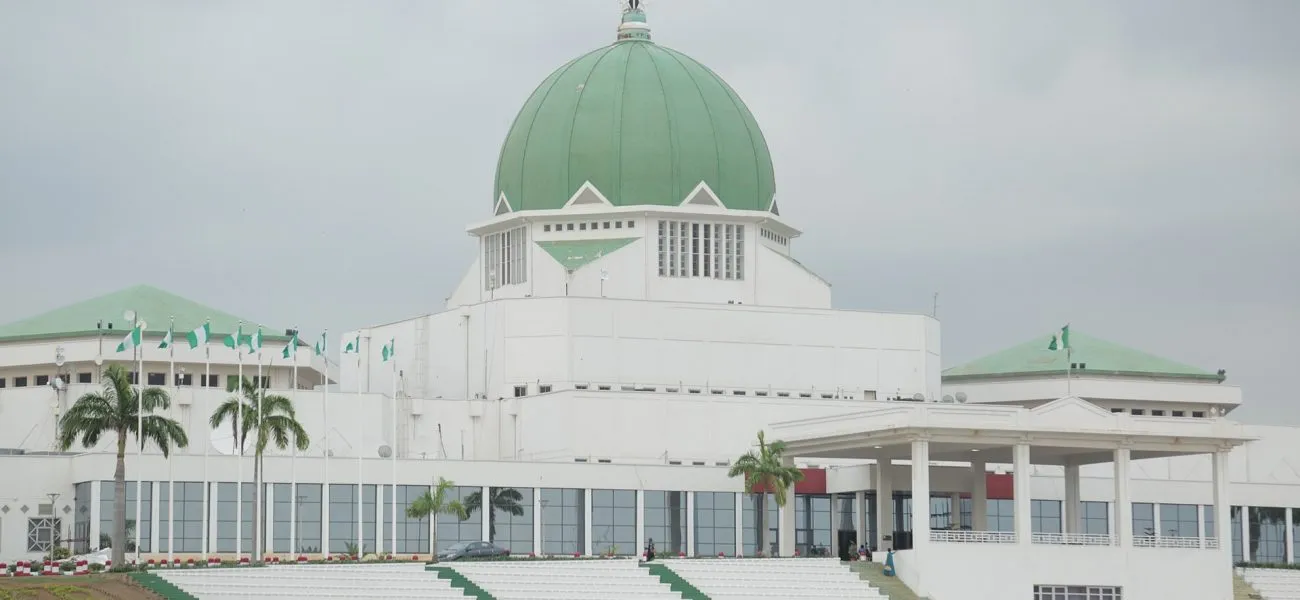
The National Assembly, a symbol of Nigeria’s democratic aspirations, now finds itself at the center of a controversy that exposes the gap between its ideals and reality. The building itself, a towering structure of glass and concrete in Abuja’s Three Arms Zone, stands as a stark contrast to the conditions faced by those who work within its walls.
Government’s Role: Between Silence and Intervention
As the protest unfolded, the Nigerian government remained conspicuously silent. Neither the presidency nor the leadership of the National Assembly has issued a public statement addressing the workers’ demands or the union’s rejection of the protest organizers.
This reticence is not unusual in Nigeria, where labor disputes often drag on for years without resolution. The government’s approach has typically been reactive—issuing palliatives during election years or making ad-hoc payments to avert strikes. Yet such measures do little to address the systemic issues plaguing public sector workers.
Analysts warn that the government’s inaction could fuel further unrest. “Nigeria’s civil service is a powder keg,” said a political economist. “Workers are tired of empty promises. If the government doesn’t act soon, we could see a wave of protests that spill beyond the National Assembly and into other sectors.”
The protest organizers have vowed to escalate their actions if their demands are not met. Among their key requests:
- Immediate payment of outstanding allowances and bonuses.
- Transparent promotion processes based on merit, not favoritism.
- Improved workplace safety standards, including repairs to the National Assembly’s aging infrastructure.
- Recognition of their protest as a legitimate expression of worker rights.
What’s Next for Nigeria’s Labor Movement?
The fallout from this protest could reshape the landscape of labor activism in Nigeria. PASAN’s rejection of the organizers has raised questions about the union’s relevance and its willingness to challenge the government. Meanwhile, the protest itself has emboldened a new generation of workers who see traditional unions as part of the problem, not the solution.
For Africa’s largest economy, the stakes are high. A stable and motivated civil service is essential for governance, economic growth, and social cohesion. Yet the current standoff suggests that Nigeria’s labor movement is at a crossroads—one where the old guard clings to power, and the new guard demands change.
As the National Assembly’s workers weigh their next move, one thing is clear: the status quo is no longer tenable. Whether through dialogue, escalation, or a complete overhaul of labor representation, the resolution of this crisis will have far-reaching implications for Nigeria’s democracy and its people.
For now, the red-brick walls of the National Assembly stand silent, their halls echoing with the unresolved tensions of a workforce fighting for recognition. The union’s denunciation of the protest organizers has only deepened the divide, leaving workers—and the nation—wondering how long the facade of order can hold.
One thing is certain: Nigeria’s labor story is far from over. And in a country where the voices of the marginalized are often ignored, this protest may yet become a turning point—not just for parliamentary staff, but for the future of labor rights in Africa.
Copyright notice: Images and source material are credited to their respective owners/source (original source where available). If you are the copyright owner and want an image or content removed, please contact us at topix.news/contact-us; we will review and remove it promptly.

Topix News Desk is a digital editorial team focused on delivering clear, timely, and useful news coverage for readers worldwide. Our reporting highlights African news with global context, including politics, business, economy, technology, health, sports, entertainment, travel, and culture. We aim to publish accessible, well-structured, and informative articles that help readers understand the stories shaping Africa and the world.