
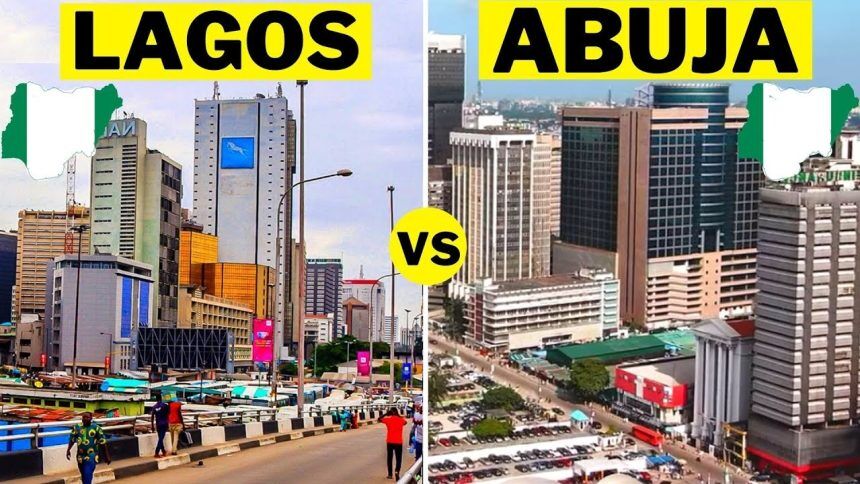
In the glittering skyline of Lagos, where the Atlantic whispers against the shores of Victoria Island, and in the orderly grid of Abuja’s federal enclaves, a silent crisis is reshaping lives. It’s not the kind that makes headlines with sirens or protests—at least, not yet—but it’s one that gnaws at household budgets with relentless precision. Rents in these two cities, the engines of Nigeria’s economy, have surged past income growth, leaving professionals, civil servants, and even high-earning families scrambling to keep a roof over their heads. The numbers tell a stark story: while salaries inch forward, rent prices leap like an overstretched spring, snapping back into the faces of those who thought they had made it.
From Naira to Nowhere: The Rent Hike That Won’t Quit
Take a stroll through the bustling streets of Ikeja in Lagos, and you’ll hear it—the murmurs of tenants swapping horror stories over cups of ₦500 sachet water. A one-bedroom apartment that cost ₦150,000 in 2023 now demands ₦300,000. A two-bedroom in Abuja’s Maitama district, once a steal at ₦400,000, now commands ₦750,000. For those earning the national average salary of ₦300,000, the math is brutal. Even double that income leaves little room for savings, let alone luxuries like school fees or medical emergencies.
The disconnect between earnings and living costs isn’t just a Nigerian phenomenon—it’s a global one, but Africa’s largest economy is feeling the squeeze in a uniquely painful way. Inflation, stubbornly high at over 33%, has turned basic necessities into luxuries, while the naira’s depreciation against the dollar has made imported goods a distant dream for many. Yet, rent isn’t an imported problem. It’s homegrown, a symptom of demand outstripping supply in cities that were never designed to house their current populations.

The Landlords’ Advantage: Supply Crunch in a Demand Surge
Why are rents spiraling out of control? The answer lies in a perfect storm of urbanization, policy failures, and profiteering. Lagos, a city of 20 million people, adds nearly 1,000 new residents daily. Abuja, though smaller, is expanding at an equally alarming rate, with federal workers and private-sector employees flocking to its gated communities and high-rise apartments. Yet, housing construction hasn’t kept pace. The government’s ambitious plans to deliver 100,000 housing units annually remain largely on paper, bogged down by bureaucracy, corruption, and a lack of private-sector incentives.
Meanwhile, landlords—some of whom hold decades-old leases on prime properties—have seized the moment. With demand far outstripping supply, they’ve raised rents with impunity, knowing that desperate tenants have little choice but to pay. The result? A rental market where landlords dictate terms, and tenants are left negotiating with the walls themselves. “We used to joke that Lagos was the city where you paid for the air you breathed,” says a 35-year-old marketing executive in Surulere. “Now, it feels like we’re paying for the privilege of being crushed by the walls.”
Government’s Empty Promises: A Decade of Unfulfilled Vows
If there’s one thing Nigerians have grown weary of, it’s government promises. For over a decade, successive administrations have vowed to tackle the housing crisis, only to deliver half-measures and abandoned projects. The National Housing Programme, launched in 2016, promised 300,000 units but delivered fewer than 10,000. The Lagos State Home Ownership Mortgage Scheme, designed to make housing affordable, has been criticized for its exorbitant interest rates and bureaucratic hurdles. Even the Federal Capital Territory’s Abuja Investment Company has struggled to deliver on its mandate, with many of its projects stuck in litigation or red tape.
Economists argue that the solution requires more than just throwing money at the problem. It demands systemic changes: relaxing zoning laws to allow for higher-density housing, incentivizing private developers to build affordable units, and cracking down on land speculation, which has turned prime real estate into a playground for the wealthy. “This isn’t just a housing crisis,” says Dr. Zainab Usman, a senior fellow at the Africa Center for Strategic Studies. “It’s a governance crisis. Without bold reforms, the gap between the rich and the poor will only widen, and the social fabric of these cities will fray.”

The Human Cost: Families Crushed by the Weight of Walls
Behind the statistics are real lives—lives upended by a system that rewards the few at the expense of the many. Take the story of the Okonkwo family, who moved from Enugu to Lagos in 2020, lured by promises of better opportunities. Today, they share a two-bedroom apartment in Egbeda with three other families, paying ₦250,000 in rent—a sum that consumes nearly 70% of their combined income. Their children sleep on mattresses on the floor, and their meals have been reduced to rice and beans, twice a day. “We thought Lagos would be our breakthrough,” says Mrs. Okonkwo, her voice barely above a whisper. “Instead, it’s become our prison.”
Or consider the case of a senior civil servant in Abuja, who earns ₦500,000 a month. After taxes and deductions, his take-home pay is ₦350,000. His rent? ₦300,000. That leaves ₦50,000 for food, transportation, school fees, and emergencies. It’s a calculation that doesn’t add up, yet he has no choice but to renew his lease—or face the daunting task of finding another home in a city where vacancy rates are near zero.
The psychological toll is just as severe. Sleep deprivation, stress-related illnesses, and family tensions are on the rise. Therapists in Lagos report a surge in patients complaining of anxiety and depression, directly linked to the relentless pressure of keeping up with rent. “People are trapped in a cycle of financial suffocation,” says Dr. Folake Adebayo, a clinical psychologist. “They work harder, take on side jobs, but the walls close in regardless. It’s not just about money—it’s about dignity.”
What’s Next? The Rent Crisis and Nigeria’s Fragile Stability
The rent crisis isn’t just an economic issue—it’s a ticking time bomb for social stability. When people can no longer afford to live in the cities that promise prosperity, they either leave or they revolt. Already, there are signs of unrest. In Lagos, community leaders have begun organizing rent strikes, refusing to pay until landlords agree to fair terms. In Abuja, protests have erupted outside the Federal Capital Territory’s secretariat, with civil servants demanding housing allowances that match the reality of the market.
The government’s response so far has been tepid. The Minister of Housing and Urban Development recently announced a ₦10 billion fund to support low-income housing, a drop in the ocean compared to the need. Meanwhile, the Central Bank of Nigeria has hinted at mortgage reforms, but critics argue that without addressing the root causes—land tenure issues, weak property rights, and a lack of affordable construction materials—any intervention will be too little, too late.
For now, the situation remains precarious. Economists warn that if rent continues to outpace income growth, Nigeria could face a mass exodus from its urban centers, draining the very cities that drive its economy. The alternative—a collapse in living standards—could plunge millions into poverty, eroding the gains of the past decade and destabilizing a region already grappling with insecurity and political uncertainty.
Can Nigeria Build Its Way Out of the Crisis?
The answer, if history is any guide, is a resounding no—unless there’s a fundamental shift in how the country approaches housing. Experts point to models from other African cities that have tackled similar crises with varying degrees of success. In Kigali, Rwanda’s capital, a mix of public-private partnerships and strict zoning laws has helped keep rents relatively stable. In Nairobi, Kenya, the government’s affordable housing initiative has delivered over 50,000 units since 2017, though critics argue the quality and location of these homes leave much to be desired.
What Nigeria needs is a multi-pronged approach:
- Incentivize developers: Offer tax breaks and subsidized land to companies that build affordable housing, particularly in high-demand areas like Lagos and Abuja.
- Reform land laws: Simplify the process of land acquisition and title registration to reduce speculation and encourage investment in new housing projects.
- Expand mortgage access: The current mortgage market is dominated by high-interest loans that exclude most Nigerians. A government-backed mortgage scheme with lower rates could unlock homeownership for millions.
- Invest in infrastructure: No one wants to live in a high-density apartment without reliable electricity, water, or transportation. Improving these basics would make lower-cost housing more viable.
- Crack down on landlords: While market forces drive up rents, some landlords exploit the crisis by hiking prices arbitrarily. Regulation—such as rent control in extreme cases—could provide relief to tenants.
The path forward is clear, but the political will is not. With elections looming and economic pressures mounting, Nigeria’s leaders face a stark choice: act decisively to fix the housing crisis, or watch as the walls close in on millions of its citizens.
For now, the rent crisis rages on, a silent storm reshaping the lives of Africa’s most ambitious. The question isn’t whether Nigeria can afford to solve it—it’s whether it can afford not to.
Copyright notice: Images and source material are credited to their respective owners/source (original source where available). If you are the copyright owner and want an image or content removed, please contact us at topix.news/contact-us; we will review and remove it promptly.

Topix News Desk is a digital editorial team focused on delivering clear, timely, and useful news coverage for readers worldwide. Our reporting highlights African news with global context, including politics, business, economy, technology, health, sports, entertainment, travel, and culture. We aim to publish accessible, well-structured, and informative articles that help readers understand the stories shaping Africa and the world.