
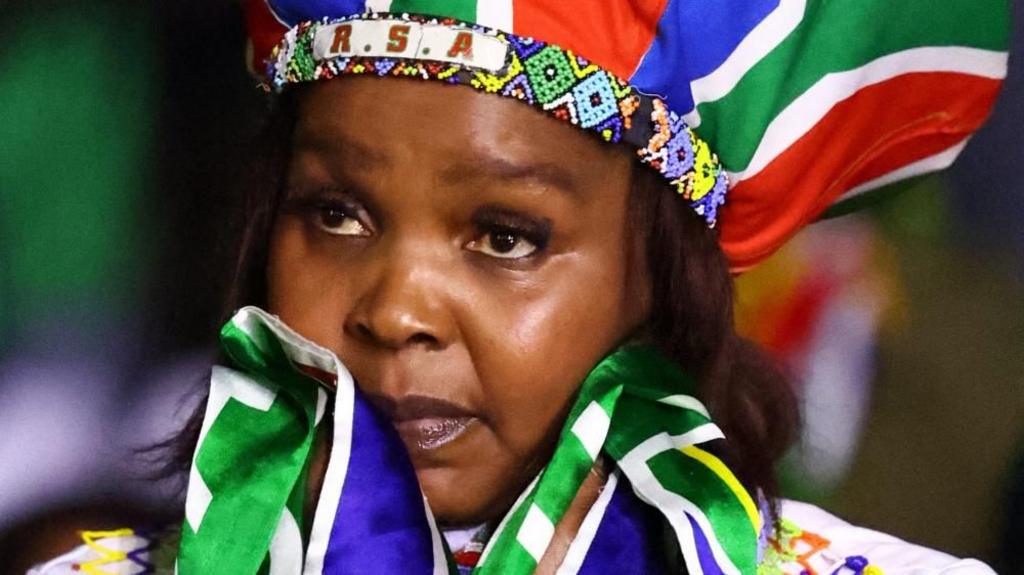
The final whistle had barely faded before the jokes began. From Lagos to Luanda, Accra to Addis Ababa, African football fans turned South Africa’s World Cup exit into a digital roast session that transcended borders and languages. What started as playful banter on social media quickly escalated into a continent-wide commentary on more than just sports—revealing simmering frustrations that extend far beyond the football field.

From cheers to jeers: The continental shift in tone
Just days earlier, South Africa’s Bafana Bafana had been celebrated across Africa as the continent’s darlings. Their opening match against Nigeria drew record viewership in Kenya, Senegalese fans painted their faces in the team’s colors, and Moroccan supporters chanted their names in Casablanca bars. But after a 2-0 defeat to Argentina in the Round of 16, the mood shifted dramatically. Memes flooded timelines—South African fans photoshopped into cartoonishly exaggerated versions of themselves, their celebrations replaced by exaggerated grief. One viral clip showed a fan dramatically fainting in slow motion, captioned: “The only thing heavier than our loss is the weight of our history.”
What made the reaction striking wasn’t just the volume of jokes, but their sharpness. Many African fans didn’t just mock the team’s performance; they tied the defeat to broader issues. “We cheered for you on the pitch,” read one tweet from a Ghanaian user. “But off it? That’s a different story.” The subtext was clear: South Africa’s World Cup exit became a proxy for deeper continental frustrations.

The xenophobia factor: Why the taunts cut deep
Behind the humor lay a painful reality. Reports of xenophobic violence in South Africa have surged in recent months, with foreign nationals—particularly from other African countries—reporting harassment, property seizures, and even physical attacks. The timing of the World Cup loss amplified the sting of these incidents. While South Africans celebrated their team’s progress, migrants from neighboring countries watched from a distance, their hopes for a unifying sporting moment overshadowed by fear.
“Football is supposed to bring us together,” said Amina Diallo, a Senegalese student studying in Johannesburg. “But when you see your neighbor’s shop being looted the same week your team loses, it’s hard to separate the two.” Her words echoed across WhatsApp groups and Twitter threads, where African fans outside South Africa questioned whether their support had ever been truly reciprocated.
The irony wasn’t lost on anyone. South Africa, often seen as the continent’s economic and political powerhouse, was now facing criticism from the very people it had once positioned itself as a leader for. “We’re not laughing at your team,” wrote a Cameroonian commentator. “We’re laughing because the same country that preaches ‘African unity’ can’t even protect Africans within its own borders.”
Africa’s digital stadium: Where humor meets protest
Social media transformed into an impromptu stadium where African fans could voice their frustrations in real time. TikTok videos of South African fans crying became fodder for comedians in Uganda, while Nigerian Twitter users compiled “South Africa’s Worst World Cup Moments”—a mix of on-field errors and off-field controversies. The hashtag #AfricanUnityChallenge trended for 48 hours, with users posting side-by-side comparisons of South African hospitality toward tourists and its treatment of African migrants.
Even the team’s slogan, “One Nation, One Team,” became a target. “One Nation, One Team—except when that team is losing,” quipped a Kenyan fan, sharing a meme of a South African fan holding a sign that read: “We are one… except when we’re not.” The joke landed hard in a continent where national unity is often celebrated as a shared ideal.
What started as lighthearted ribbing quickly evolved into something more substantive. African fans weren’t just mocking a football team; they were challenging a narrative. For decades, South Africa has positioned itself as the continent’s moral compass—a beacon of progress and reconciliation. But the World Cup backlash exposed cracks in that image, forcing a reckoning that transcended sports.
The South African response: Deflection and denial
Back in Johannesburg, Pretoria, and Cape Town, the reaction to the continental taunting was mixed. Some South Africans doubled down on the jokes, embracing the memes as a sign of the team’s relatability. “At least we’re good at laughing at ourselves,” said Sipho Mthembu, a lifelong Bafana Bafana supporter. “That’s more than some teams can say.”
Others, however, saw the backlash as unfair. “We’re being punished for one bad game,” argued Thando Nkosi, a political science student at the University of the Witwatersrand. “The xenophobia issue is real, but it’s not like the whole country is out there attacking foreigners. Most of us are just trying to enjoy the World Cup like everyone else.”
Government officials largely stayed silent, avoiding direct responses to the continental criticism. When pressed, a spokesperson for South Africa’s Department of International Relations and Cooperation stated that the country remained “committed to fostering unity and inclusivity.” But for many African fans watching from abroad, such statements rang hollow in the wake of the World Cup fallout.
The bigger picture: What this reveals about continental relations
The World Cup taunting wasn’t just about football. It was a symptom of deeper tensions that have simmered beneath the surface of Africa’s much-touted “unity.” While the continent often presents a united front in global forums—speaking with one voice at the African Union, for example—the reality on the ground is far more complicated.
Xenophobia in South Africa isn’t a new issue, but the World Cup provided a global stage for it to be highlighted. The backlash from other African nations wasn’t just about sports; it was a reminder that Africa’s unity is often performative. When the cameras are off and the World Cup trophies are packed away, the old wounds of colonialism, economic disparity, and nationalistic pride resurface.
This isn’t to say that Africa is on the brink of collapse. Far from it. The continent’s diversity is its strength, and its people continue to find ways to connect despite these tensions. But the World Cup episode served as a wake-up call: Africa’s unity is not a given. It’s something that must be actively cultivated, day by day, in stadiums and streets alike.
Where do we go from here?
For South Africa, the path forward isn’t just about rebuilding a football team. It’s about addressing the root causes of xenophobia and fostering genuine inclusivity. The government has taken steps in the past—establishing the National Action Plan to Combat Racism, Racial Discrimination, Xenophobia, and Related Intolerance—but critics argue these efforts have been inconsistent and underfunded.
For the rest of Africa, the question is whether this moment will lead to deeper introspection. Will the jokes and criticism spark meaningful conversations about how African nations treat one another? Or will it be forgotten as quickly as the World Cup memes fade from timelines?
- For South Africa: Acknowledge the criticism, not as an attack, but as an opportunity to address systemic issues. Invest in education and community programs that promote tolerance and understanding.
- For other African nations: Recognize that unity isn’t just about standing together in global forums. It’s about how we treat each other within our own borders.
- For the African Union: Use this moment to push for stronger mechanisms to address xenophobia and discrimination across the continent. Football can be a tool for unity—but only if the off-field realities match the on-field ideals.
The human cost behind the jokes
Amid the memes and viral clips, it’s easy to forget the human stories at the heart of this controversy. In Johannesburg’s inner city, a Nigerian shopkeeper named Chinedu Okoro has seen his business targeted twice in the past month. “They say we take their jobs,” he said, wiping down his counter. “But who else is going to sell them groceries at 2 AM?” His story is one of thousands—stories of resilience, frustration, and quiet dignity in the face of adversity.
The World Cup may have ended, but the conversations it sparked are far from over. For Africa, this is more than just a game. It’s a test of whether the continent can live up to the ideals it so often espouses—or whether the divisions will only grow deeper.
As the sun sets over the African continent, one thing is clear: the era of performative unity is over. What comes next will define Africa’s future—not just as a collection of nations, but as a true community.
Copyright notice: Images and source material are credited to their respective owners/source (original source where available). If you are the copyright owner and want an image or content removed, please contact us at topix.news/contact-us; we will review and remove it promptly.

Topix News Desk is a digital editorial team focused on delivering clear, timely, and useful news coverage for readers worldwide. Our reporting highlights African news with global context, including politics, business, economy, technology, health, sports, entertainment, travel, and culture. We aim to publish accessible, well-structured, and informative articles that help readers understand the stories shaping Africa and the world.