
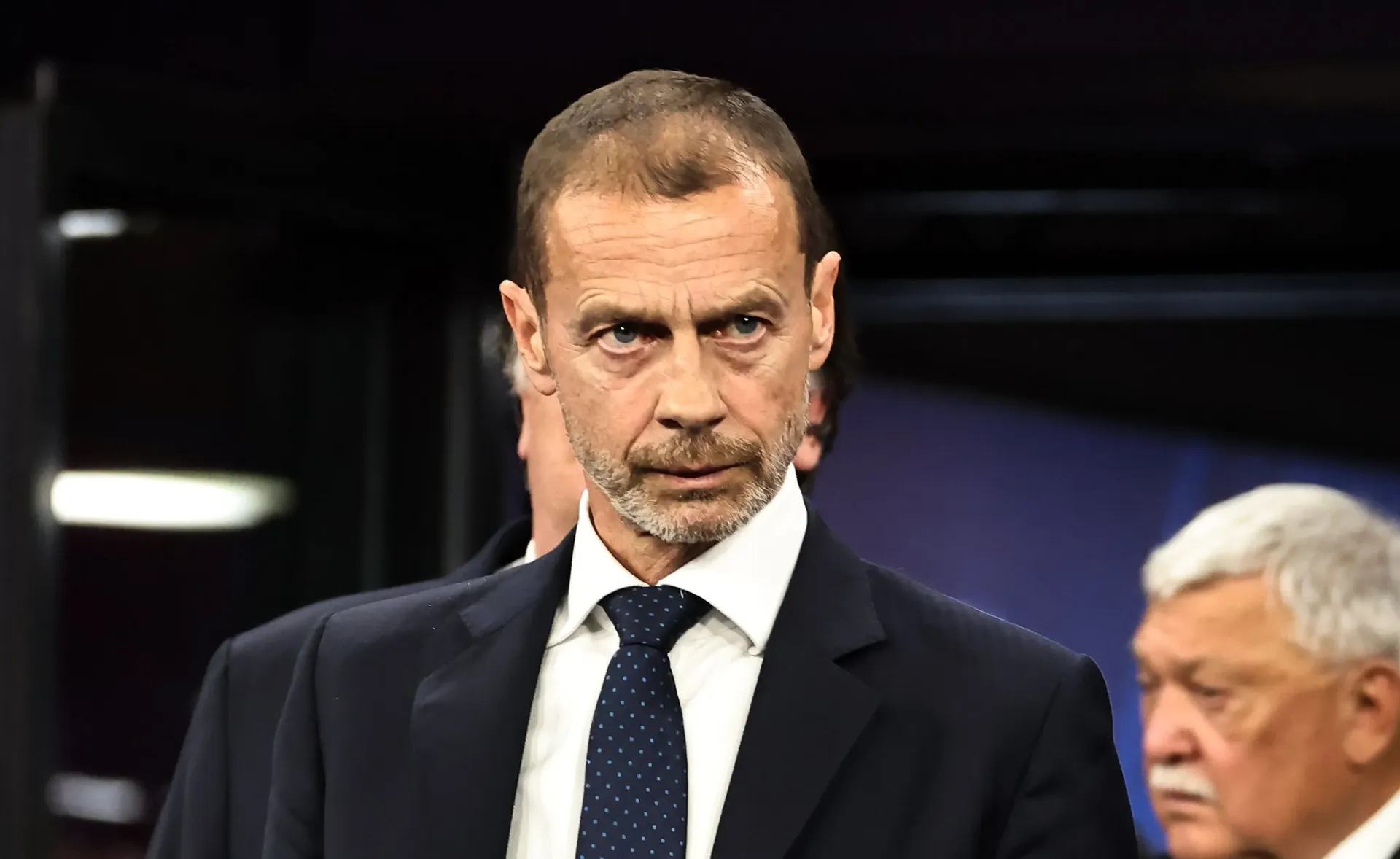
The World Cup just got bigger—and so did the outrage. When UEFA President Aleksander Čeferin dismissed FIFA’s decision to expand the tournament from 32 to 48 teams as a move that would dilute quality, he didn’t just spark a debate. He lit a fire across Africa, where football isn’t just a sport—it’s a lifeline, a unifier, and a stage where every nation, no matter its size, dreams of glory.
From the bustling streets of Lagos to the high-altitude pitches of Addis Ababa, African football federations have united in a rare show of defiance. Their message is clear: Every match matters, and every team deserves a chance. The expansion isn’t a gimmick—it’s a bold step toward making the world’s biggest tournament truly global.

The backlash wasn’t slow in coming. Within hours of Čeferin’s comments, which he made during a press conference in Vienna, African football’s governing body, the CAF, issued a scathing statement. “The World Cup is not just about the traditional powerhouses,” read the statement. “It’s about giving smaller nations a platform to shine, to inspire, and to challenge the status quo.” The sentiment was echoed by federations from Senegal to South Africa, Morocco to Malawi.
What exactly did Čeferin say? Speaking to reporters, he argued that expanding the tournament would lead to “uninteresting games” and dilute the competitiveness of the competition. “Football is not a democracy,” he quipped, a remark that landed poorly in a continent where football is, in many ways, the most democratic institution of all. For Africans, the World Cup isn’t just about winning—it’s about representation, about proving that talent knows no borders.
Take Morocco’s stunning run in the 2022 World Cup, where they became the first African and Arab nation to reach the semi-finals. Their journey captivated millions across the continent, proving that African teams could compete—and win—against the best in the world. Or Senegal’s 2002 upset of France, a moment that transcended sport and became a symbol of African resilience. These aren’t anomalies. They’re testaments to the depth and unpredictability that make football the world’s most beloved game.

But Čeferin’s criticism cuts deeper than just the format. It reflects a long-standing bias in European football circles, where African teams are often dismissed as “entertainers” rather than serious contenders. This narrative ignores the progress African football has made over the past two decades. From Nigeria’s 2018 World Cup triumph over Argentina to Tunisia’s historic win over France in 2022, African teams have repeatedly defied expectations. The expansion of the World Cup is a chance to build on that momentum, not stifle it.
“The World Cup is not just a tournament,” said a senior official from the Ghana Football Association, speaking on condition of anonymity. “It’s a celebration of the game’s diversity. When you have 48 teams, you’re not just adding more matches—you’re adding more stories, more heroes, more moments that will inspire generations.” The official’s words underscore a broader truth: football’s magic lies in its unpredictability. A 48-team tournament doesn’t guarantee dull games—it guarantees more of them, and with that, more opportunities for the unexpected.
The debate over the World Cup’s expansion isn’t new. FIFA’s decision in 2017 to increase the number of teams was met with skepticism from some quarters, particularly in Europe, where tradition often trumps innovation. But the critics are missing the point. The World Cup has always been about evolution. From the first tournament in 1930 to the 32-team format introduced in 1998, each expansion has brought new narratives, new rivalries, and new stars. Why should 2026 be any different?
For African teams, the stakes are particularly high. The continent has long been underrepresented in the World Cup, with only five teams qualifying for the 2022 edition. The expansion means that nations like Zimbabwe, Namibia, and Guinea-Bissau—teams that have never graced the tournament’s stage—now have a realistic shot at qualification. That’s not just good for football. It’s good for the continent’s global profile.
“Football is a mirror of society,” said a former Cameroonian international who now works as a pundit. “When you have more teams from Africa, you’re not just diversifying the competition—you’re diversifying the conversation. And that’s a conversation the world needs to hear.” His words highlight how football can be a tool for social change, a way to challenge stereotypes and celebrate diversity.
The criticism from Čeferin and others also overlooks the logistical and economic benefits of expansion. A 48-team tournament means more matches, more revenue, and more exposure for football in regions like Africa and Asia, where the sport’s growth is outpacing traditional powerhouses. For CAF, the expansion is an opportunity to invest in grassroots football, to build stadiums, and to develop the next generation of stars. It’s a chance to turn dreams into reality—for players and fans alike.
But the debate isn’t just about numbers. It’s about philosophy. Is the World Cup a competition for the elite few, or is it a celebration of the game’s global reach? For African federations, the answer is clear. “Football belongs to everyone,” said a senior official from the Ivory Coast Football Federation. “When you limit access, you limit the game’s potential. When you expand, you open doors.”
The African Response: A United Front
Within days of Čeferin’s remarks, African football’s governing bodies sprang into action. The CAF held an emergency meeting in Cairo, where delegates from 54 member associations drafted a formal response to FIFA and UEFA. The statement was unequivocal: “The World Cup is not the property of any one confederation. It is the property of football itself.”
The response wasn’t just symbolic. It was strategic. African federations have long felt sidelined in FIFA’s decision-making processes, and the expansion debate provided an opportunity to assert their influence. By uniting, they sent a message to FIFA and UEFA: African football is not a sideshow. It’s a driving force.
“We are not asking for handouts,” said a delegate from the Ethiopian Football Federation. “We are asking for a fair shot. The World Cup is the biggest stage in football. Why should we accept anything less than a full seat at the table?” His question cuts to the heart of the issue. The expansion isn’t about lowering standards—it’s about raising them.
African teams have already begun preparing for the expanded tournament. In Senegal, the national team has intensified its training camps, focusing on tactical flexibility to adapt to the increased competition. In Morocco, the focus has been on youth development, with the federation investing in academies to nurture the next generation of talent. Even smaller nations like Cape Verde and Gambia are ramping up their scouting networks, determined to make their mark on the world stage.
The Broader Implications: A World Cup for the Many, Not the Few
The debate over the World Cup’s expansion isn’t just about football. It’s about the future of the sport itself. In an era where football is increasingly dominated by a handful of wealthy clubs and nations, the expansion is a rare attempt to democratize the game. It’s a recognition that talent is not confined to Europe or South America, and that the World Cup’s magic lies in its ability to surprise.
Critics of the expansion argue that it will lead to more mismatches, more blowouts, and ultimately, a diluted product. But the evidence from smaller tournaments suggests otherwise. The Africa Cup of Nations, which expanded to 24 teams in 2019, saw a surge in competitiveness, with underdog teams like Madagascar and Guinea-Bissau making deep runs. The expanded format didn’t water down the competition—it enriched it.
For African fans, the World Cup’s expansion is a cause for celebration. It means more games to watch, more teams to cheer for, and more moments to remember. It means that a child in a remote village in Mali or a bustling market in Lagos can dream of playing on the world’s biggest stage. That’s not just good for football. It’s good for Africa.
“The World Cup is more than a tournament,” said a fan in Nairobi, watching a recent CAF Champions League match on a flickering television screen. “It’s hope. It’s pride. It’s proof that we belong.” His words capture the essence of what the expansion represents—a chance for Africa to take its rightful place on the global stage.
What’s Next for African Football?
The road ahead won’t be easy. African teams will face stiffer competition in the expanded tournament, and the pressure to perform will be immense. But that’s the point. Football is not about comfort—it’s about challenge. And for African teams, the challenge has never been greater, or more exciting.
In the coming months, CAF will finalize its qualification pathways for the 2026 World Cup. The process will be grueling, but it will also be historic. For the first time, nations like Angola, Mozambique, and Burundi will have a realistic shot at qualifying. That’s not just progress—it’s a revolution.
As for Čeferin’s comments, they may have sparked a debate, but they won’t deter African football’s march forward. If anything, they’ve galvanized the continent’s federations, proving that when it comes to defending their sport, African footballers and officials speak with one voice.
The World Cup is changing. And Africa is leading the charge.
Africa’s World Cup: The Stage is Set
As the countdown to the 2026 World Cup begins, one thing is clear: African football is ready. Ready to compete. Ready to inspire. Ready to prove that when it comes to the beautiful game, the continent’s best days are still ahead.
The expansion isn’t a risk. It’s an opportunity—a chance to write a new chapter in football’s history, one where every match truly matters, and every team has a shot at glory. For Africa, that’s not just a dream. It’s a promise.
Copyright notice: Images and source material are credited to their respective owners/source (original source where available). If you are the copyright owner and want an image or content removed, please contact us at topix.news/contact-us; we will review and remove it promptly.

Topix News Desk is a digital editorial team focused on delivering clear, timely, and useful news coverage for readers worldwide. Our reporting highlights African news with global context, including politics, business, economy, technology, health, sports, entertainment, travel, and culture. We aim to publish accessible, well-structured, and informative articles that help readers understand the stories shaping Africa and the world.