
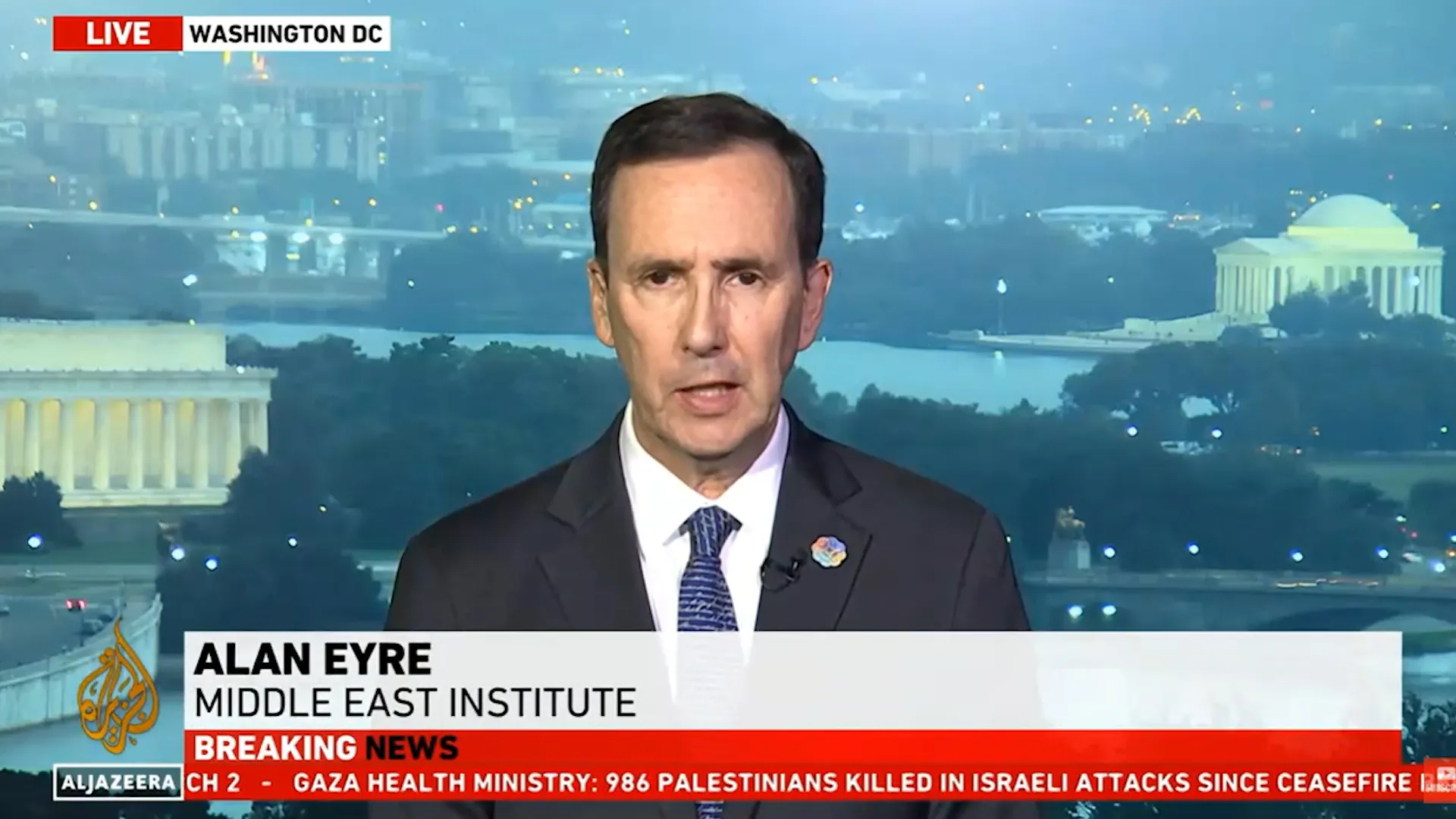
The air over Beirut still hums with the acrid scent of smoke when diplomats in Washington began recalculating their Iran strategy. What started as a targeted strike on Lebanese soil did not merely alter the battlefield calculus—it sent shockwaves through the corridors of power in the United States, where a hastily announced ceasefire with Iran now hangs by a thread. The timing was impossible to ignore: hours after Israel’s precision strike in Beirut, President Trump stood before the cameras to declare a breakthrough in negotiations that had stalled for months. But as US envoy Alan Eyre made clear, no deal is final until the ink dries on the dotted line.
From Beirut to Washington: How a single strike rewrote the script
The strike on Beirut’s southern suburbs was not just another flare-up in the region’s endless cycle of violence. It was a calculated escalation, one that forced Washington to confront a question it had long avoided: Could Israel’s actions inadvertently push the White House toward a policy shift it wasn’t prepared to make? The answer, it seems, was yes. Within 24 hours, the Trump administration had abandoned its previous stance of cautious distance, opting instead for a dramatic pivot toward engagement with Tehran. The move stunned allies and adversaries alike, leaving analysts scrambling to decipher the true motivations behind the sudden reversal.
Eyre’s statement—delivered with the measured precision of a career diplomat—underscored the fragility of the new arrangement. “A ceasefire is not a treaty,” he cautioned during a closed-door briefing with European counterparts. “Until the terms are formalized, signed, and ratified, the guns remain loaded.” His words carried the weight of experience, a reminder that in the Middle East, promises are as fleeting as the desert wind. The question now is whether this fragile pause will hold, or if the Beirut strike was merely the first domino in a chain reaction that could plunge the region back into chaos.

The ceasefire’s fine print: What’s really on the table?
Diplomatic agreements, like sandcastles at high tide, are only as strong as the foundations beneath them. The Trump administration’s announcement promised a “comprehensive halt to hostilities,” but the details remain maddeningly vague. Reports suggest the deal includes a phased withdrawal of Iranian-backed forces from Syria, a freeze on missile tests by both sides, and the release of prisoners held in Iran and its proxy territories. Yet critical questions linger: Who will verify compliance? What penalties await violators? And most importantly, will Israel—whose strike triggered this chain of events—honor the terms?
Analysts point to a pattern in recent Middle Eastern ceasefires: each begins with fanfare, only to collapse under the weight of unmet expectations. The 2023 truce between Israel and Hamas lasted barely three months before violence flared again. The 2025 accord between Saudi Arabia and Yemen’s Houthis barely survived its first Ramadan. The Beirut-triggered ceasefire, analysts warn, faces the same existential threats. “Ceasefires are not peace treaties,” observed Tarek Osman, a senior fellow at the Middle East Institute in Cairo. “They are temporary pauses in a permanent war.”
The devil, as always, lies in the implementation. The ceasefire’s success hinges on two fragile pillars: Iran’s willingness to rein in its proxies and Israel’s restraint in responding to provocations. Neither has a sterling track record. Tehran’s Islamic Revolutionary Guard Corps has spent years cultivating networks of influence across Iraq, Syria, and Lebanon, while Israel’s military doctrine prioritizes preemptive strikes to neutralize perceived threats. The Beirut strike, in this context, was not an anomaly—it was a symptom of a deeper dysfunction that no truce can cure.
Regional reactions: A chorus of skepticism
From Riyadh to Rabat, the announcement of the Iran ceasefire has been met with a mix of cautious optimism and outright skepticism. Saudi Arabia, Iran’s arch-rival, has remained conspicuously silent, a diplomatic tightrope walk that reflects the kingdom’s deep unease over the deal’s terms. Crown Prince Mohammed bin Salman, who has staked his regional strategy on countering Iranian influence, now faces a dilemma: publicly endorse the ceasefire to avoid further isolation, or privately lobby for its failure to preserve Saudi Arabia’s strategic edge.
In Morocco, where King Mohammed VI has positioned the country as a mediator in regional conflicts, the government struck a cautiously hopeful tone. “We welcome any step that reduces tension,” read a statement from the foreign ministry. “But we must see deeds, not words.” The comment echoed sentiments across North Africa, where governments are acutely aware of the risks posed by a resurgent Iran. Algeria, which shares a 1,500-kilometer border with Morocco, has warned that the ceasefire could embolden Tehran to expand its influence in the Maghreb, particularly in Libya, where Iranian-backed militias have already gained a foothold.
South Africa, Africa’s most vocal critic of unilateral US interventions in the Middle East, struck a more defiant note. “This ceasefire is not a solution—it’s a bandage on a gaping wound,” said Naledi Pandor, the country’s minister of international relations. “The international community must address the root causes of conflict, not just the symptoms.” Her remarks underscored a growing divide between African nations and Western powers over how to handle Iran’s regional ambitions. While the US and its allies see the ceasefire as a step toward stability, many African governments view it as a temporary fix that ignores the deeper grievances driving the conflict.
The African angle: What does this mean for the continent?
For African nations, the Middle East’s latest crisis is more than a distant geopolitical storm—it’s a reminder of the continent’s vulnerability to global power plays. Egypt, which has long acted as a mediator in regional conflicts, finds itself in an unenviable position. Cairo has maintained a delicate balance between its strategic partnership with the US and its economic ties to Iran, a relationship that has grown more important since the 2022 opening of the New Suez Canal, which has become a critical transit route for Iranian oil bound for Europe. Any disruption to the Iran ceasefire could force Egypt to choose sides, a decision that could have dire consequences for its already fragile economy.
Nigeria, Africa’s most populous nation, has its own reasons to watch the situation closely. The country’s northern regions, already grappling with insurgencies linked to Boko Haram and Islamic State affiliates, could face renewed instability if the Iran ceasefire collapses. Nigerian officials have privately expressed concern that a resurgent Iran could provide fresh impetus to extremist groups operating in the Sahel, where Tehran has been accused of funneling weapons and funds to militant factions. “We cannot afford another proxy war on our doorstep,” warned a senior Nigerian diplomat who requested anonymity.
In East Africa, the stakes are equally high. Ethiopia, which has emerged as a key player in the Horn of Africa, has invested heavily in its relationship with both Israel and Iran, leveraging its strategic location to position itself as a neutral mediator. The collapse of the ceasefire could force Addis Ababa to take sides, a move that could alienate either Washington or Tehran—neither of which is in Ethiopia’s long-term interests. Meanwhile, in Tanzania, where the government has maintained a non-aligned stance in international conflicts, officials are quietly preparing contingency plans. “We are watching closely,” said a Tanzanian foreign ministry spokesperson. “But we are not banking on this ceasefire lasting.”
Could this be the beginning of the end—or just another false dawn?
The Middle East has a long history of ceasefires that collapse under the weight of unmet expectations. The 2020 Abraham Accords, which normalized relations between Israel and several Arab states, were hailed as a breakthrough—until the Gaza war of 2023 shattered the illusion of peace. The 2021 ceasefire between Israel and Hamas was similarly celebrated, only to be followed by a year of near-constant violence. The Beirut-triggered Iran ceasefire, analysts warn, could follow the same trajectory unless concrete steps are taken to address the underlying grievances that fuel the conflict.
One potential path forward lies in the role of third-party mediators. The European Union, which has long sought to carve out a diplomatic role in the Middle East, has offered to oversee the implementation of the ceasefire. But its credibility is in question after years of perceived ineffectiveness in brokering lasting peace. The African Union, meanwhile, has remained largely silent, despite its growing influence in continental security matters. “Africa cannot afford to be a bystander in this crisis,” said a senior AU official. “The continent’s stability is directly tied to the stability of the Middle East.”
Another critical factor is the stance of regional powers like Turkey and Qatar, both of which have played pivotal roles in past ceasefire negotiations. Ankara, which has deepened its ties with Tehran in recent years, could act as a bridge—or a spoiler. Doha, meanwhile, has positioned itself as a neutral mediator, but its close relationship with Hamas and the Muslim Brotherhood could undermine its credibility in the eyes of Israel and the US. The success of the ceasefire, in other words, may hinge on forces beyond Washington’s control.
As the sun sets over Beirut, the city’s residents are left to grapple with the same question that haunts diplomats in Washington and analysts in Africa: Is this ceasefire a genuine step toward peace, or merely a temporary lull before the next storm? The answer may well determine the trajectory of the Middle East—and the world—for years to come.
What’s next for world news today?
The Beirut strike has set in motion a chain of events that could reshape the geopolitical landscape in ways that are still impossible to predict. For now, the world watches and waits, holding its breath as the fragile ceasefire takes its first tentative steps. But history suggests that in the Middle East, patience is a luxury few can afford.
- Monitor the implementation: Watch for signs of compliance—or violations—from both Iran and Israel. The first 30 days will be critical.
- Track regional reactions: Keep an eye on statements from African and Middle Eastern governments, which could signal shifts in alliances or strategies.
- Assess the mediator’s role: The EU and AU have offered to oversee the ceasefire. Their effectiveness—or lack thereof—will be a key indicator of the deal’s longevity.
- Watch the proxies: Hezbollah, Hamas, and other militant groups hold the fate of the ceasefire in their hands. Their next moves could determine whether this is a turning point or just another false dawn.
One thing is certain: the world news today is more uncertain than it has been in years. The Beirut strike may have pushed Trump toward a dramatic policy shift, but whether that shift will lead to peace—or merely another cycle of violence—remains to be seen. For now, the guns are silent. But the question lingers: For how long?
Copyright notice: Images and source material are credited to their respective owners/source (original source where available). If you are the copyright owner and want an image or content removed, please contact us at topix.news/contact-us; we will review and remove it promptly.

Topix News Desk is a digital editorial team focused on delivering clear, timely, and useful news coverage for readers worldwide. Our reporting highlights African news with global context, including politics, business, economy, technology, health, sports, entertainment, travel, and culture. We aim to publish accessible, well-structured, and informative articles that help readers understand the stories shaping Africa and the world.