
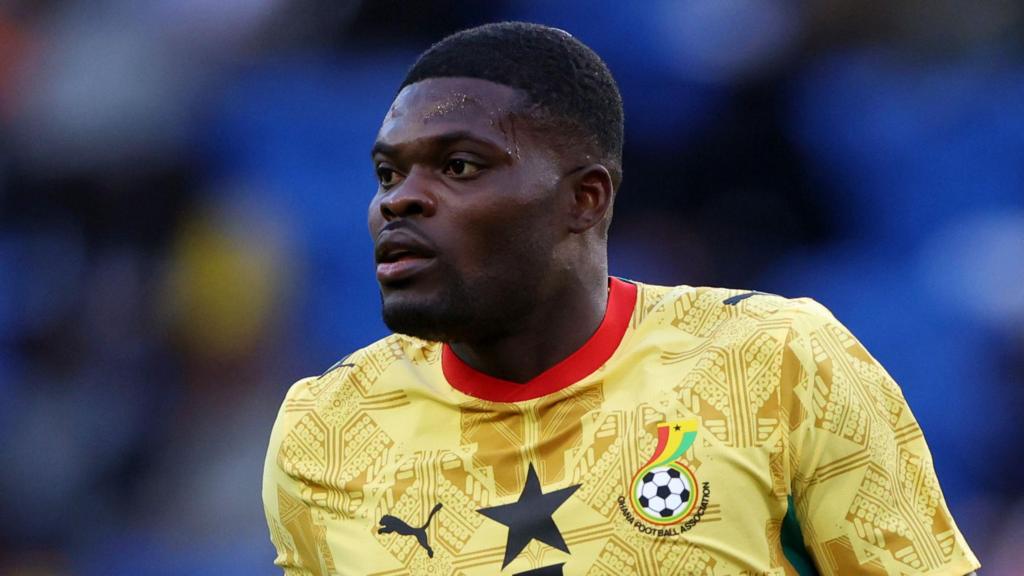
The air in Toronto’s BMO Field is thick with anticipation. Fans clad in Black Stars jerseys wave flags, their chants echoing through the stadium as Ghana prepares to face Panama in the opening match of their World Cup campaign. Yet, one figure will be missing from the fray—a man whose presence in midfield could have shifted the balance entirely. Thomas Partey, Ghana’s midfield anchor and a player whose vision and precision have defined the Black Stars’ recent resurgence, will not be on the pitch. Not today. Not in this crucial opener. The reason? A last-minute visa denial that has left Ghanaian football in turmoil and raised urgent questions about the country’s diplomatic preparedness for global sporting events.
The news broke just hours before the team’s scheduled departure, sending shockwaves through the Ghana Football Association and leaving fans in disbelief. Partey, who had completed all necessary pre-travel medical checks and submitted his documents well in advance, was reportedly denied entry due to unspecified administrative discrepancies. The timing could not have been worse. Ghana’s World Cup campaign, already under scrutiny following a string of inconsistent performances in recent friendlies, now faces an uphill battle without one of its most reliable performers.

For Partey, the disappointment is compounded by the personal toll. A dual citizen of Ghana and Spain, he has long been a pivotal figure for the Black Stars, his ability to dictate play and break down opposition defenses making him indispensable. His absence leaves a gaping void in a midfield that was already navigating the loss of another key player, Mohammed Kudus, to suspension. The Black Stars’ tactical plans, meticulously crafted over months of preparation, now lie in tatters. Coach Chris Hughton, known for his adaptability, must now scramble to reshuffle his lineup, a task made all the more daunting by the high stakes of the tournament’s opening fixture.
The incident has also sparked a broader debate about Ghana’s approach to international sporting events. While the country has made strides in infrastructure and youth development, the Partey visa debacle underscores lingering challenges in diplomatic coordination and logistical planning. Comparisons to other African nations, such as Morocco and Senegal, which have successfully navigated similar hurdles in past tournaments, are inevitable. Ghana’s footballing authorities are now under intense pressure to address these systemic issues before they derail future campaigns. The question on everyone’s lips: How could such a critical oversight occur at this stage?
For the Ghanaian public, the news is a bitter pill to swallow. Football is more than a sport in the country; it is a unifying force, a source of national pride, and a rare beacon of hope in times of economic and political uncertainty. The Black Stars’ performance in this World Cup is being watched not just for sporting outcomes, but as a barometer of the nation’s resilience and unity. Partey’s exclusion, therefore, is more than a tactical setback—it is a psychological blow to a country that has pinned its hopes on this tournament to reignite its footballing legacy.
Diplomatic Stumbles and the Cost of Oversight
The mechanics behind Partey’s visa denial remain murky, but the fallout is undeniable. Officials from the Ghana Football Association have issued statements expressing disappointment and vowing to investigate the circumstances leading to the rejection. Yet, the damage is already done. In an era where global sporting events are as much about diplomacy as they are about athleticism, Ghana’s stumble serves as a cautionary tale. The incident raises pressing questions about the country’s preparedness for high-profile international engagements, particularly in an era where visa policies and travel restrictions can make or break a team’s fortunes.
Canada, despite its reputation as a welcoming host, operates under stringent immigration protocols. Players from African nations, in particular, often face heightened scrutiny due to perceived risks of overstaying or engaging in unauthorized employment. While Ghana has a strong track record of complying with FIFA regulations, the Partey case highlights the fragility of these systems when even minor administrative errors can have outsized consequences. The incident also casts a spotlight on the broader challenges faced by African footballers navigating the bureaucratic labyrinth of international travel, where a single misplaced document or overlooked detail can derail careers and national dreams.
For Partey himself, the denial is a personal setback that extends beyond the pitch. A player of his caliber, with a career spanning top European clubs like Arsenal and Atlético Madrid, is accustomed to the pressures of high-stakes football. Yet, the emotional weight of missing out on a World Cup—arguably the pinnacle of a footballer’s career—cannot be overstated. His absence will be keenly felt not just by Ghana, but by fans across Africa who see him as a symbol of the continent’s growing influence in global football.

Ghana’s Midfield Crisis: A Tactical Nightmare
The loss of Partey is more than a personnel issue; it is a tactical earthquake. Ghana’s midfield, often the engine of their best performances, is now a shadow of its former self. With Kudus suspended and Partey sidelined, Hughton is left with a depleted roster, forcing him to rely on less experienced options. Players like Salis Abdul Samed and Abdul Fatawu Issahaku, while talented, lack the experience and composure that Partey brings to the table. The Black Stars’ game plan, which likely revolved around Partey’s ability to control the tempo and distribute the ball with surgical precision, must now be rewritten on the fly.
Historically, Ghana has thrived when its midfield operates as a well-oiled machine. The 2010 World Cup, where the team reached the quarter-finals, was built on the foundations of a midfield trio that included the likes of Sulley Muntari and Anthony Annan. Partey’s inclusion in this year’s squad was seen as a return to that tradition, a nod to the country’s rich history of producing world-class midfielders. His absence, therefore, is not just a loss of a player but a loss of tactical identity. The question now is whether Ghana can adapt quickly enough to compensate for this setback, or if they will be forced to play catch-up from the first whistle.
For the opposition, Panama, the absence of Partey presents an opportunity. The Central American side, ranked 52nd in the world, will be keen to exploit Ghana’s midfield vulnerabilities. Their coach, Thomas Christiansen, is a tactician known for his emphasis on pressing and quick transitions, a style that could thrive against a Ghanaian team struggling to find its rhythm. The opening match is no longer just about Ghana’s ambitions; it is a litmus test for their resilience and adaptability in the face of adversity.
The Broader Implications for African Football
Partey’s exclusion is not an isolated incident but a symptom of deeper challenges facing African football. The continent’s representatives at major tournaments often arrive with high expectations, only to be hamstrung by logistical hurdles that their European or South American counterparts rarely face. From visa denials to equipment delays, African teams frequently operate under conditions that would be deemed unacceptable in other regions. This disparity underscores the need for FIFA and continental football bodies like CAF to implement stricter protocols to protect participating nations from avoidable setbacks.
The Partey case also highlights the importance of contingency planning. While no team can fully prepare for every eventuality, the absence of a player of his caliber should have triggered immediate discussions about alternative strategies. The fact that Ghana was caught off guard suggests a lack of foresight that could prove costly in a tournament as unpredictable as the World Cup. For African football to truly compete on the global stage, its governing bodies must prioritize not just player development and tactical innovation, but also the logistical and diplomatic safeguards that ensure teams arrive ready to perform.
Beyond the immediate fallout, the incident serves as a reminder of the financial stakes involved. The World Cup is not just a sporting event for African nations; it is an economic opportunity. Sponsorships, broadcasting rights, and fan engagement all hinge on strong performances. A poor showing in the opening match, compounded by off-field controversies, could have long-term repercussions for Ghana’s footballing economy. Sponsors may hesitate to invest, broadcasters could reduce coverage, and the morale of the team—and the nation—may take a hit from which recovery is difficult.

What’s Next for Ghana and Partey?
As Ghana prepares to take on Panama without Partey, the focus shifts to damage control. The team’s immediate priority is to secure a result that at least partially salvages their tournament prospects. A draw would be a respectable outcome, while a win would send a powerful message about their resilience. For Partey, the path forward is less clear. Whether he can re-enter Canada in time for subsequent matches remains uncertain, though diplomatic channels are reportedly working to resolve the issue. His presence in the squad, even as a spectator, could provide a morale boost to his teammates and fans alike.
For the Ghanaian public, the coming days will be a test of patience and faith. The disappointment of Partey’s exclusion is palpable, but so too is the determination to rally behind the team. Football in Africa is often a reflection of the continent’s broader struggles and triumphs, and Ghana’s World Cup campaign is no exception. The outcome of this tournament will not define the nation’s future, but it will certainly shape its narrative in the eyes of the world.
As for Partey, his legacy is already secure. A player of his stature has long since cemented his place in Ghanaian football history. Yet, the World Cup remains the one accolade that has eluded him—a cruel irony for a man who has given so much to the game. Whether he gets the chance to add his name to that list remains to be seen, but one thing is certain: the road ahead for Ghana is fraught with challenges, and every decision, every call, every moment on the pitch will now carry the weight of this unforeseen setback.
Lessons for African Football’s Future
The Partey visa debacle is a wake-up call for African football. It exposes the vulnerabilities that continue to hinder the continent’s progress on the global stage. From administrative oversights to diplomatic missteps, the incident underscores the need for systemic improvements at every level. CAF and national football associations must invest in training for staff handling international travel logistics, establish robust contingency plans, and foster stronger relationships with host nations to preempt such crises.
Moreover, the incident should serve as a catalyst for broader conversations about equity in global football. African teams should not be subjected to the same scrutiny as teams from less scrutinized regions, yet they often face more stringent checks. Advocacy for fairer treatment in visa processes, travel accommodations, and even on-field officiating must become a priority. The goal is not just to level the playing field but to ensure that African nations can compete on their own terms, without the added burden of bureaucratic hurdles.
In the end, Ghana’s World Cup campaign may yet defy the odds. The Black Stars have a history of rising to the occasion when the stakes are highest. But the Partey saga is a reminder that success in football is not solely determined by talent on the pitch. It is also shaped by the unseen forces of diplomacy, logistics, and luck. For African football to truly thrive, these forces must be harnessed with the same precision and dedication as the players themselves.

The road to glory is long, and the obstacles are many. But for a continent that has given the world some of its most electrifying football, the pursuit of greatness is worth every challenge. Ghana’s journey in this World Cup is far from over. And neither, perhaps, is Thomas Partey’s.
Copyright notice: Images and source material are credited to their respective owners/source (original source where available). If you are the copyright owner and want an image or content removed, please contact us at topix.news/contact-us; we will review and remove it promptly.

Topix News Desk is a digital editorial team focused on delivering clear, timely, and useful news coverage for readers worldwide. Our reporting highlights African news with global context, including politics, business, economy, technology, health, sports, entertainment, travel, and culture. We aim to publish accessible, well-structured, and informative articles that help readers understand the stories shaping Africa and the world.