
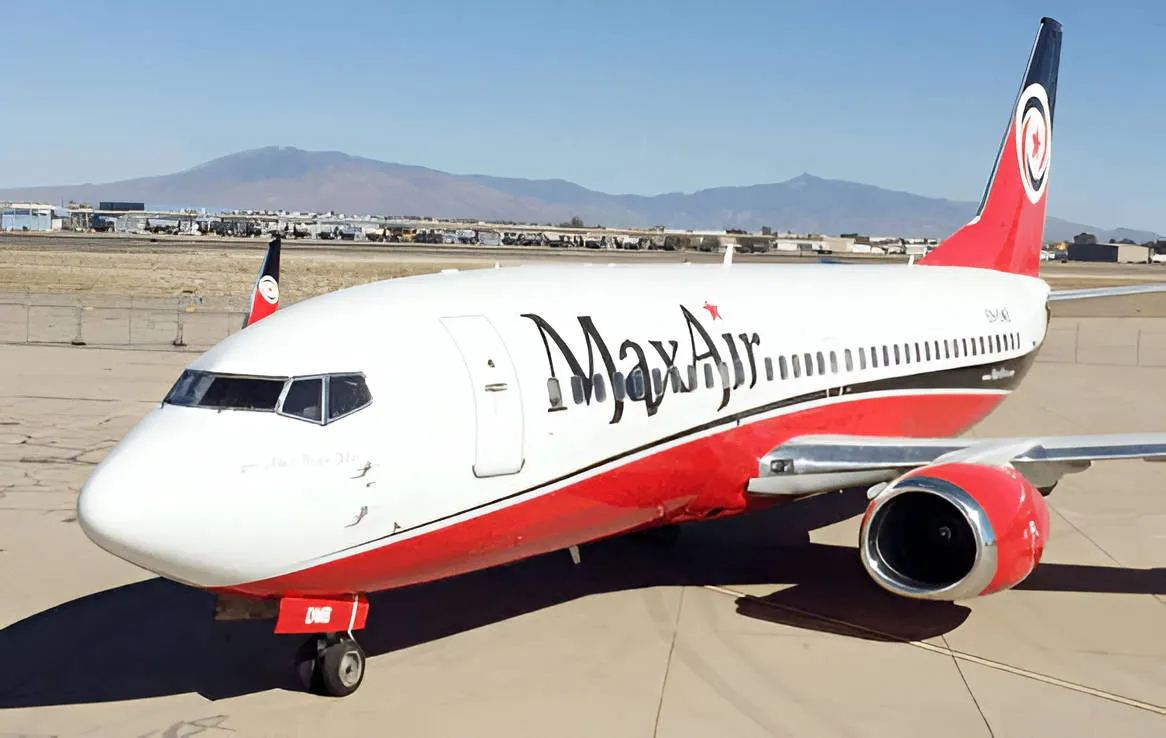
The skies above Nigeria’s busiest airports hummed with relief this week as aviation ground handlers reinstated services for Max Air, a move that spared the airline—and its passengers—from a looming crisis. After weeks of tense negotiations and a partial debt settlement, the crisis that threatened to ground flights and strand travelers appears to have been averted, at least for now. The decision by the Aviation Ground Handlers Association of Nigeria (AGHAN) to lift its suspension signals a fragile but critical step toward stability in an industry battered by economic turbulence and operational challenges.
The suspension, which had left Max Air’s aircraft stranded on tarmacs and forced passengers into last-minute scrambles for alternative flights, was a stark reminder of how quickly financial strain in one corner of the aviation sector can ripple across the entire industry. But behind the headlines of debt talks and partial payments lies a deeper story—one of resilience, negotiation, and the delicate balance that keeps Africa’s aviation ecosystem afloat amid global headwinds.

From suspension to solution: How Max Air navigated the storm
Max Air, a key player in Nigeria’s domestic aviation landscape, found itself in the crosshairs of a financial storm that threatened to derail its operations entirely. The airline’s debt troubles weren’t just a matter of missed payments; they exposed the vulnerabilities of an industry where ground handlers—critical cogs in the aviation machine—hold immense power. These handlers, responsible for refueling, baggage handling, and aircraft maintenance, had little patience for outstanding debts that disrupted their own cash flow.
The standoff reached its peak when AGHAN, representing the interests of these handlers, took the drastic step of suspending services to Max Air. The move was not taken lightly. It was a calculated gamble, a signal that the handlers would no longer absorb the financial brunt of unpaid bills. For Max Air, the suspension was a wake-up call—a moment that forced the airline to confront its debt profile head-on and engage in serious negotiations to restore trust.
What followed was a marathon of discussions, with Max Air’s leadership presenting a revised payment plan that addressed at least part of the outstanding debt. The partial payment, while not a full resolution, was enough to convince handlers that the airline was serious about finding a way forward. It was a compromise born out of necessity, a testament to the fact that in Africa’s aviation sector, survival often depends on creative problem-solving.
The lifting of the suspension doesn’t mean the crisis is over. Far from it. Max Air’s financial woes are far from resolved, and the airline remains under intense scrutiny. But the reprieve offers a glimmer of hope—not just for Max Air, but for the thousands of passengers who depend on its flights to connect Nigeria’s cities and beyond.
Africa’s aviation sector: A web of interdependence
The Max Air saga is more than just a story about one airline’s debt troubles. It’s a microcosm of the challenges facing Africa’s aviation industry, where airlines, ground handlers, regulators, and passengers are all interconnected in a high-stakes dance. The suspension of services by ground handlers highlighted just how fragile this ecosystem can be when financial pressures mount.
In many African countries, aviation is a lifeline. It connects remote regions to economic hubs, facilitates trade, and supports tourism—sectors that are vital for growth. But the industry is also highly sensitive to economic shocks, currency fluctuations, and fuel price volatility. When airlines struggle, the ripple effects are felt across the entire value chain, from pilots and cabin crew to ground staff and airport authorities.
Nigeria, Africa’s largest economy, is a case in point. Its aviation sector is a critical artery, linking Lagos to cities like Abuja, Kano, and Port Harcourt. Yet, it operates in an environment where fuel costs can skyrocket overnight, exchange rates fluctuate wildly, and regulatory hurdles slow down progress. The Max Air crisis underscores the need for stronger financial safeguards and more collaborative approaches to debt resolution in the sector.
Debt negotiations: A lesson in compromise
The partial payment that led to the suspension’s lifting was not a victory for either side—it was a truce. Both Max Air and the ground handlers had to make concessions. For Max Air, it meant acknowledging its financial limitations and committing to a structured repayment plan. For the handlers, it meant accepting that a full recovery of debts might not be possible in the short term, given the airline’s precarious position.
This kind of compromise is not uncommon in Africa’s business landscape, where formal financial systems often struggle to keep pace with the realities on the ground. In many cases, informal agreements and personal relationships play a crucial role in resolving disputes. The Max Air negotiations were no different. Behind the scenes, there were likely countless hours of back-and-forth, with both sides weighing the risks of pushing too hard versus the benefits of finding a middle ground.
For airlines operating in Africa, navigating debt negotiations requires a delicate balance. On one hand, they must maintain their credibility with handlers, regulators, and passengers. On the other, they must avoid sinking deeper into debt in a bid to keep operations running. The Max Air case shows that sometimes, partial solutions are the only viable ones—and that the path to recovery is often a winding one.
The human cost: Passengers caught in the crossfire
While the financial and operational aspects of the Max Air crisis are critical, it’s easy to overlook the human impact. Passengers—commuters, business travelers, families returning home—were the ones who felt the brunt of the suspension most acutely. For many, the sudden disruption meant canceled flights, missed connections, and the stress of rearranging travel plans at the last minute.
In a continent where air travel is often the fastest and most reliable way to traverse vast distances, such disruptions can have far-reaching consequences. A businessman delayed in Lagos might miss a crucial meeting in Accra. A student flying home for the holidays could find themselves stranded in Johannesburg. The ripple effects of a grounded airline extend far beyond the balance sheets of the companies involved.
The lifting of the suspension will bring relief to these passengers, but it also serves as a reminder of the fragility of Africa’s aviation infrastructure. For every crisis averted, there are countless others waiting in the wings—whether it’s another airline teetering on the edge of insolvency or a handler facing its own financial struggles. The Max Air story is a cautionary tale, but it’s also an opportunity to reflect on how the industry can build resilience for the future.
What’s next for Max Air and Nigeria’s aviation sector?
The road ahead for Max Air is still uncertain. The partial debt settlement buys the airline some breathing room, but it doesn’t solve the underlying financial challenges. Max Air will need to demonstrate a sustained commitment to restructuring its debt and improving its operational efficiency if it hopes to regain full trust in the industry.
For Nigeria’s aviation sector, the Max Air crisis should serve as a wake-up call. The industry is at a crossroads, with opportunities for growth but also significant risks. Expanding airport infrastructure, improving regulatory frameworks, and fostering innovation in financing are all critical steps. But perhaps the most important lesson is the need for collaboration. Airlines, handlers, regulators, and passengers must work together to create an environment where financial crises can be managed before they escalate into full-blown disasters.
As Africa’s aviation sector continues to evolve, stories like Max Air’s will become increasingly common. The continent’s air travel market is one of the fastest-growing in the world, but growth brings its own set of challenges. Navigating debt, ensuring financial stability, and maintaining operational excellence will require a combination of strategic foresight and adaptability.
The lifting of the suspension is a small victory, but it’s one that offers hope. It proves that even in the face of daunting challenges, solutions can be found through dialogue, compromise, and a shared commitment to keeping Africa’s skies open for business.
Lessons from Max Air: Building a resilient aviation future in Africa
The Max Air saga offers several key takeaways for Africa’s aviation industry as it looks to the future:
- Financial prudence is non-negotiable. Airlines must prioritize sustainable debt management and avoid overleveraging, especially in an industry as volatile as aviation.
- Collaboration is key. Handlers, regulators, and airlines must work together to create frameworks that prevent crises from escalating. Transparent communication and early intervention can avert disasters.
- Infrastructure and innovation matter. Expanding and modernizing airport infrastructure, investing in technology, and exploring alternative financing models can reduce vulnerabilities in the sector.
- Passenger trust is fragile. Airlines must prioritize reliability and customer service, as disruptions can erode confidence and drive travelers to competitors.
- Regulatory oversight must evolve. Governments and aviation authorities need to implement policies that protect all stakeholders while fostering a competitive and sustainable industry.
These lessons extend beyond Nigeria. From the bustling airports of South Africa to the growing aviation hubs of Ethiopia and Morocco, Africa’s aviation sector is at a pivotal moment. The choices made today will shape its trajectory for decades to come. The Max Air crisis is a reminder that resilience isn’t just about weathering storms—it’s about learning from them and building a stronger, more sustainable future.
As the dust settles on this latest chapter in Max Air’s story, one thing is clear: the skies over Africa remain open for business, but the journey ahead will require vigilance, adaptability, and a shared commitment to excellence. For passengers, airlines, and handlers alike, the goal is the same—to ensure that Africa’s aviation sector continues to soar, even in the face of adversity.
Copyright notice: Images and source material are credited to their respective owners/source (original source where available). If you are the copyright owner and want an image or content removed, please contact us at topix.news/contact-us; we will review and remove it promptly.

Topix News Desk is a digital editorial team focused on delivering clear, timely, and useful news coverage for readers worldwide. Our reporting highlights African news with global context, including politics, business, economy, technology, health, sports, entertainment, travel, and culture. We aim to publish accessible, well-structured, and informative articles that help readers understand the stories shaping Africa and the world.