
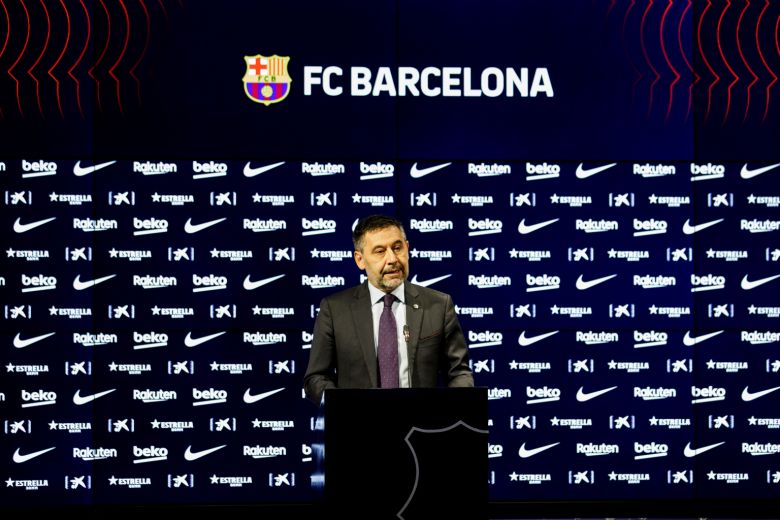
The transfer market has always been a theatre of the absurd, but few deals have ever threatened to rewrite the script quite like the €400 million offer for Lionel Messi that nearly broke the bank in 2017. According to former FC Barcelona president Josep Maria Bartomeu, a mystery club—its identity still shrouded in secrecy—was prepared to activate Messi’s astronomical release clause within weeks of Neymar’s controversial departure to Paris Saint-Germain. The timing, Bartomeu revealed, was no coincidence.
Just days after Barcelona pocketed a then-world-record €222 million for Neymar’s transfer to PSG, whispers began circulating in the corridors of power. A bid of such magnitude for Messi wasn’t just a financial statement; it was a declaration that Europe’s elite clubs were willing to mortgage their futures for the Argentine maestro. The revelation, made public years later, has reignited debates about the financial excesses of modern football and the fragility of even the most storied institutions.

The €222 Million Catalyst: How Neymar’s Exit Unleashed a Financial Earthquake
Neymar’s move to PSG in August 2017 was more than a transfer—it was a seismic shift. The Brazilian’s €222 million price tag shattered the previous transfer record, leaving Barcelona financially exposed and emotionally raw. The club’s hierarchy, already under scrutiny for its financial mismanagement, faced an existential crisis. Bartomeu’s account suggests that the Neymar deal wasn’t just a windfall; it was a catalyst that exposed Barcelona’s vulnerabilities and tempted predators to strike.
The mystery club’s €400 million bid for Messi wasn’t a mere fantasy. Bartomeu’s testimony implies that the offer was serious enough to force Barcelona into a defensive posture. In an era where football clubs are increasingly treated as financial assets rather than sporting entities, such bids blur the line between ambition and folly. For Barcelona, the stakes were existential. The club’s debt was spiraling, and the board’s decision-making came under intense scrutiny. The €400 million bid, if accepted, would have reshaped the club’s future—perhaps even its survival.
Barcelona’s Dilemma: To Sell or To Hold?
The €400 million figure wasn’t just a number; it was a statement. Messi, then 30 years old, was at the peak of his powers. His release clause, set at €300 million in his contract, had been increased to €700 million in 2017—a move critics argued was a deliberate attempt to deter potential suitors. Yet, the mystery club’s bid suggests that even such a staggering figure wasn’t enough to deter ambition. Bartomeu’s revelation raises a critical question: Did Barcelona have a choice?
The club’s financial woes were no secret. By 2017, Barcelona’s debt had ballooned to over €1 billion, a direct consequence of years of lavish spending and poor financial planning. The Neymar sale provided temporary relief, but the club’s reliance on player sales to balance its books was unsustainable. The €400 million bid for Messi, if pursued, would have been both a lifeline and a gamble. Accepting it would have solved Barcelona’s immediate financial crisis but at what cost? The club’s identity, built on La Masia’s youth academy and a philosophy of loyalty, would have been irrevocably altered.
The Mystery Club: Who Were the Suitors?
Bartomeu’s refusal to name the club has only deepened the intrigue. Speculation has swirled around several European giants, each with the financial firepower to make such an offer. Paris Saint-Germain, fresh off their record-breaking Neymar deal, were obvious candidates. However, their financial fair play constraints would have made such a move nearly impossible. Other contenders included Manchester City, whose ownership under Sheikh Mansour had already begun reshaping the Premier League, and Real Madrid, Messi’s arch-rivals, who had the resources and the motivation to make a move.
But the mystery club could also have been a consortium—a group of investors or even a state-backed entity, given the scale of the bid. The €400 million figure was so vast that it transcended traditional football economics, hinting at a broader geopolitical or financial strategy. The fact that the bid was never activated suggests that either the club’s hierarchy resisted the temptation or the suitors themselves backed out. Either way, the episode underscores the blurred lines between sport and finance in modern football.
Messi’s Loyalty: A Contract That Defied Logic
Messi’s decision to stay at Barcelona in 2017 was as much a personal choice as a professional one. His loyalty to the club, forged over two decades, was the stuff of legend. Yet, Bartomeu’s revelation forces a reconsideration of that loyalty. If a club was willing to pay €400 million for him, why did Messi choose to remain? The answer may lie in the emotional and financial incentives Barcelona offered. Reports at the time suggested that Messi’s contract was restructured to include performance-based bonuses and loyalty payments, effectively binding him to the club for life.
The €700 million release clause, introduced in 2017, was a masterstroke of contract negotiation. It sent a clear message to potential suitors: Messi was untouchable. But it also highlighted the absurdity of modern football economics. A player’s value, once measured in trophies and goals, was now quantified in cold, hard cash. The €400 million bid was a testament to Messi’s unparalleled status, but it also exposed the fragility of a system where a single player’s value could destabilize an entire club.
The Aftermath: Financial Fair Play and the Future of Football
The fallout from the €400 million bid extended far beyond Barcelona’s boardroom. It reignited debates about financial fair play (FFP) and the sustainability of football’s economic model. UEFA’s regulations, designed to prevent clubs from spending beyond their means, were already under strain. The Neymar and Messi deals pushed the boundaries of what was permissible, raising questions about enforcement and accountability.
For African football, the episode was a stark reminder of the continent’s peripheral role in the global game. While European clubs engaged in financial warfare, African football continued to grapple with issues of infrastructure, governance, and player development. The contrast was glaring: a single player’s transfer could command €400 million, while entire African leagues struggled to attract investment. The disparity underscores the need for structural reforms in African football, where talent is abundant but resources are scarce.
Bartomeu’s revelation also highlighted the role of agents and intermediaries in shaping football’s financial landscape. The €400 million bid was likely facilitated by a network of advisors, each with their own agendas. The opacity of such deals raises ethical questions about transparency and accountability in football’s transfer market.
Lessons from the €400 Million Bid
The mystery club’s €400 million bid for Messi was more than a financial anomaly—it was a symptom of a larger crisis. Football’s economic model, built on unsustainable spending and short-term gains, was showing cracks. The episode serves as a cautionary tale for clubs, players, and governing bodies alike. For Barcelona, the near-loss of Messi was a wake-up call. The club’s subsequent financial restructuring, including the sale of key assets and a renewed focus on youth development, was a direct response to the crisis of 2017.
For the global game, the bid underscored the need for greater financial regulation and transparency. UEFA’s FFP rules, while imperfect, were a step in the right direction. However, the €400 million offer for Messi demonstrated how easily these rules could be circumvented. The episode also highlighted the growing influence of wealth outside traditional football markets, with state-backed entities and private investors increasingly shaping the game’s financial landscape.
The mystery club’s identity may never be revealed, but their €400 million bid left an indelible mark on football history. It was a moment that exposed the fragility of even the most storied institutions, the absurdity of modern football economics, and the blurred lines between sport and finance. For African football, it was a reminder of the continent’s marginalization in the global game—a challenge that requires urgent attention and reform.
Conclusion: A Turning Point for Football’s Financial Future
The €400 million bid for Messi was not just a financial transaction; it was a turning point. It forced football’s stakeholders to confront uncomfortable truths about the game’s economic model. For Barcelona, it was a near-disaster that ultimately led to a period of soul-searching and restructuring. For the global game, it was a wake-up call about the need for greater transparency and accountability.
As football continues to evolve, the lessons of 2017 remain relevant. The financial excesses of the past cannot be repeated without consequence. Clubs, players, and governing bodies must work together to create a sustainable model that balances ambition with responsibility. For African football, the challenge is even greater: to break free from the periphery and carve out a space where talent can thrive without being exploited.
The mystery club’s €400 million bid may have been a fleeting moment in football history, but its implications will be felt for years to come. It was a reminder that in the world of football, money talks—and sometimes, it shouts.
Copyright notice: Images and source material are credited to their respective owners/source (original source where available). If you are the copyright owner and want an image or content removed, please contact us at topix.news/contact-us; we will review and remove it promptly.

Topix News Desk is a digital editorial team focused on delivering clear, timely, and useful news coverage for readers worldwide. Our reporting highlights African news with global context, including politics, business, economy, technology, health, sports, entertainment, travel, and culture. We aim to publish accessible, well-structured, and informative articles that help readers understand the stories shaping Africa and the world.