
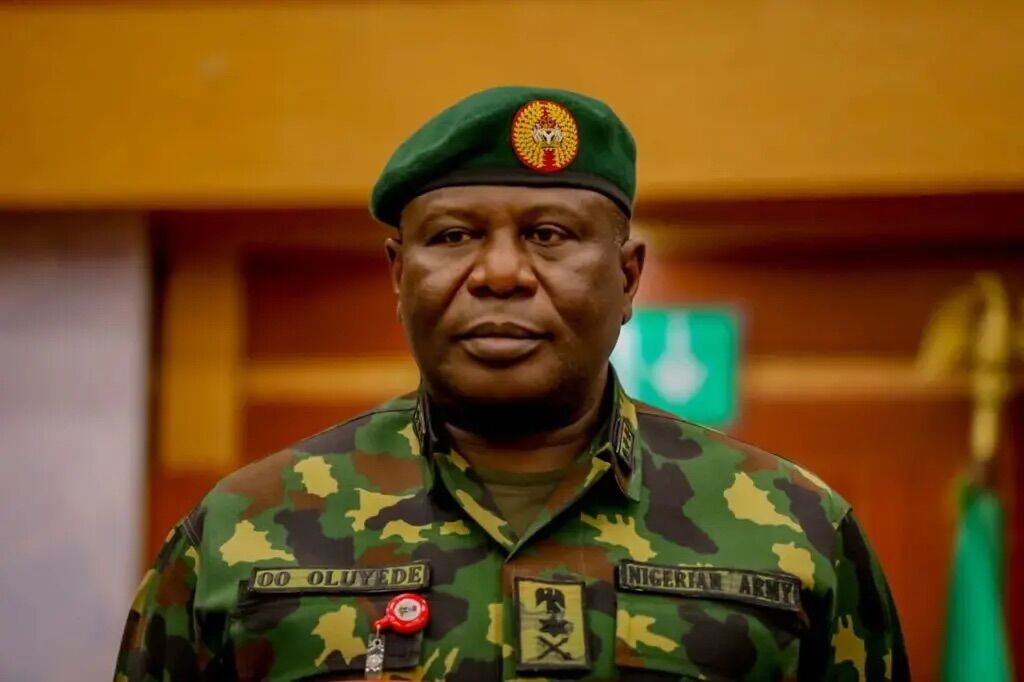
In the dust-choked hinterlands of Nigeria’s North Central states, where the sun bleaches the savannah and the air hums with tension, a new chapter in the nation’s fight against violent extremism is being written. The Chief of Army Staff, Lieutenant General Olufemi Oluyede, has just issued a blunt directive to troops deployed under Operation SAVANNAH SHIELD: go after the kidnappers, hunt the terrorists, and dismantle the criminal networks that have turned communities into battlefields. This is not a call for half-measures. It is a declaration that the era of unchecked banditry in Nigeria’s heartland is over.
The order comes at a time when the North Central region—encompassing states like Benue, Plateau, and Niger—has become a vortex of insecurity, where armed gangs, terrorists, and criminal syndicates operate with near-impunity. Villages have been razed, families displaced, and economic arteries choked by fear. The military’s response, however, is shifting from reactive firefights to a more aggressive, intelligence-driven campaign. The message is clear: Nigeria’s armed forces are no longer playing defense.

What makes this directive particularly significant is its timing. Just months after the federal government declared a state of emergency in parts of the North Central region, the military’s offensive is gaining momentum. Lieutenant General Oluyede’s words carry the weight of a commander who has surveyed the battlefield firsthand. His instructions are not just rhetorical flourishes; they are a blueprint for a sustained campaign that could redefine security in Nigeria’s most volatile corridor.
The operation’s name—SAVANNAH SHIELD—hints at its scope. The savannah is vast, unforgiving, and difficult to police. But it is also a region where every village, every trading post, and every dirt road tells a story of resilience. The military’s challenge is not just to chase down armed groups but to reclaim the trust of communities that have been abandoned by the state for too long. This is a war that will be won as much on the streets as it is on the battlefield.
Why the North Central Region Has Become a Hotspot for Violent Extremism
The North Central region’s descent into chaos did not happen overnight. It is the result of decades of neglect, environmental degradation, and the deliberate exploitation of communal tensions by armed groups. The Fulani herdsmen-farmer clashes that erupted in the early 2000s were the first major fissures, but they were quickly exploited by criminal gangs and terrorist organizations seeking to expand their reach.
Today, the region is a patchwork of armed factions, each with its own agenda. Some are remnants of Boko Haram splinter groups, others are local bandit syndicates that have morphed into quasi-terrorist organizations. Their tactics are brutal: mass kidnappings for ransom, indiscriminate attacks on civilians, and the systematic dismantling of local governance structures. The result is a humanitarian crisis that has displaced hundreds of thousands and left entire communities in a state of perpetual fear.
The Nigerian government’s response has been inconsistent. At times, military operations have succeeded in pushing back armed groups. At others, the insurgents have regrouped, exploiting gaps in security and the slow pace of reconstruction. The latest directive from the Chief of Army Staff suggests a recognition that half-measures will no longer suffice. The military is being asked to do more than just respond to attacks; it is being tasked with dismantling the networks that sustain them.
The Military’s New Strategy: Intelligence, Mobility, and Community Trust
Operation SAVANNAH SHIELD is not just about boots on the ground. It is about a fundamental shift in how the military operates in the North Central region. The key to success lies in three critical components: intelligence, mobility, and community trust.
First, intelligence. The military is increasingly relying on local informants, digital surveillance, and aerial reconnaissance to track the movements of armed groups. The days of relying solely on traditional patrols are over. Today’s battlefield demands real-time data, and Nigeria’s armed forces are investing in the tools to gather it. Drones, satellite imagery, and encrypted communication networks are becoming as vital as rifles and ammunition.
Second, mobility. The North Central region’s terrain is diverse—from the rocky hills of Plateau State to the dense forests of Benue. To counter this, the military is deploying rapid-response units that can be deployed at a moment’s notice. These units are trained to operate in small, highly mobile teams, striking hard and fast before melting back into the landscape. The goal is to deny armed groups the luxury of time and space to regroup.
Third, community trust. No military campaign can succeed without the support of the people it is meant to protect. The military’s new strategy includes outreach programs, local security committees, and economic empowerment initiatives aimed at rebuilding trust. Villagers are being encouraged to report suspicious activity, and in return, they are being promised protection and development. This is not charity; it is a strategic necessity. Without the cooperation of local communities, even the most sophisticated military operation will fail.

The Human Cost of Insecurity in the North Central Region
The human toll of the crisis in the North Central region is staggering. According to the United Nations, over 300,000 people have been displaced in Benue State alone since 2020. Entire villages have been abandoned, their inhabitants fleeing to makeshift camps where food, water, and medical care are scarce. The psychological scars run deep. Children who have witnessed the murder of their parents or the abduction of their siblings are growing up in a world where violence is the norm.
The economic impact is equally devastating. Farming, the region’s traditional economic backbone, has ground to a halt in many areas. Markets that once thrived are now ghost towns. The few businesses that remain are operating at a fraction of their capacity, stifled by constant threats of violence. The Nigerian government has pledged billions in reconstruction funds, but the money has been slow to reach those who need it most. Corruption, bureaucratic inefficiency, and the sheer scale of the crisis have turned aid into a trickle when it should be a flood.
For the families caught in the crossfire, the military’s new offensive is a glimmer of hope. But hope is a fragile thing. It requires not just action from the government but a sustained commitment to rebuilding what has been lost. The road ahead is long, and the challenges are immense. Yet, for the first time in years, there is a sense that the tide may finally be turning.
What’s Next for Operation SAVANNAH SHIELD?
The military’s latest directive is just the beginning. The coming months will be critical in determining whether Operation SAVANNAH SHIELD can deliver on its promises. The first phase of the operation will focus on degrading the operational capacity of armed groups, targeting their leaders, and cutting off their supply lines. But this is only the first step. The real challenge will be in the aftermath—rebuilding trust, restoring governance, and ensuring that the communities that have suffered so much are not left to fend for themselves once again.
There are reasons to be cautiously optimistic. The military’s increased use of intelligence and mobility suggests a more sophisticated approach to counterinsurgency. The government’s recent appointment of a special envoy to the North Central region indicates a recognition that security and development must go hand in hand. And the growing international support for Nigeria’s counterterrorism efforts—including training and equipment from partners like the United States and the European Union—could provide the additional firepower needed to turn the tide.
Yet, optimism must be tempered with realism. The road to lasting peace in the North Central region is littered with the wreckage of past failures. The military’s offensive must be matched by political will, economic investment, and a commitment to justice. Villagers who have lived in fear for years must see tangible improvements in their daily lives. The cycle of violence will not be broken by military action alone; it requires a holistic approach that addresses the root causes of the crisis.
For Lieutenant General Olufemi Oluyede, the stakes could not be higher. His directive to troops is a gamble—a bet that Nigeria’s armed forces can finally wrest control from the armed groups that have held the North Central region hostage for too long. The success or failure of this operation will shape the future of Nigeria’s security landscape for years to come.
A Call to Action: Can Nigeria’s Military Turn the Tide?
The question on everyone’s mind is simple: Can Nigeria’s military turn the tide in the North Central region? The answer depends on several factors:
- Sustained Political Will: The military’s offensive must be backed by consistent government support. This means adequate funding, logistical backing, and a commitment to rooting out corruption that has siphoned off resources meant for security and development.
- Community Engagement: The military cannot succeed without the trust of local communities. Outreach programs, local security committees, and economic empowerment initiatives must be prioritized to ensure that villagers see the military as protectors, not occupiers.
- Regional Cooperation: The crisis in the North Central region does not exist in a vacuum. Armed groups operate across borders, and Nigeria must work closely with its neighbors—particularly Cameroon, Chad, and Niger—to disrupt their supply lines and cut off their escape routes.
- Long-Term Development: Security is not just about guns and soldiers. It is about jobs, education, and infrastructure. The government must invest in rebuilding the North Central region’s economy, ensuring that young people have alternatives to joining armed groups.
The road ahead is fraught with challenges, but the stakes could not be higher. The North Central region is the beating heart of Nigeria’s agricultural and economic potential. If the military’s offensive succeeds, it could pave the way for a new era of stability and prosperity. If it fails, the consequences could be catastrophic—not just for Nigeria, but for the entire West African region.
As Lieutenant General Olufemi Oluyede’s directive makes clear, the time for half-measures is over. Nigeria’s armed forces are being asked to do more than just fight; they are being tasked with reclaiming the soul of a region that has been scarred by years of violence. The world is watching. The people of the North Central region are waiting. The question is whether Nigeria’s leaders—and its military—are ready to deliver.
Copyright notice: Images and source material are credited to their respective owners/source (original source where available). If you are the copyright owner and want an image or content removed, please contact us at topix.news/contact-us; we will review and remove it promptly.

Topix News Desk is a digital editorial team focused on delivering clear, timely, and useful news coverage for readers worldwide. Our reporting highlights African news with global context, including politics, business, economy, technology, health, sports, entertainment, travel, and culture. We aim to publish accessible, well-structured, and informative articles that help readers understand the stories shaping Africa and the world.